Amnesty International has formally called on India's Ministry of Electronics and Information Technology to withdraw the Information Technology (Intermediary Guidelines and Digital Media Ethics Code) Second Amendment Rules, 2026, warning the draft would institutionalise executive control over online expression and enable mass surveillance. The submission follows similar demands from the Press Club of India, DIGIPUB, the Editors' Guild of India, and other journalist bodies. The draft's most consequential change extends the Ministry of Information and Broadcasting's content oversight framework, previously limited to publishers and intermediaries, to ordinary users posting news-related content on X, YouTube, or Facebook. The existing definition of 'news and current affairs content' under Rule 2(m) is already broad; the proposed expansion to cover content by context, substance, and purpose creates a catch-all clause over user-generated content. Takedown windows reportedly compressed to one to three hours compound the risk, as platforms will likely over-remove lawful content to preserve safe harbour protection under Section 79 of the IT Act. Three additional pressure points: proposed Rule 14 changes allow MeitY to route content matters directly to its Inter-Departmental Committee without a user complaint, bypassing independent oversight. A newly inserted sub-rule ties platform safe harbour status to compliance with ministerial advisories and SOPs, instruments that carry no parliamentary scrutiny. Separately, mandatory 180-day data retention with no upper limit conflicts directly with the purpose-limitation principle in the Digital Personal Data Protection Act, 2023. Amnesty argues the rules breach Article 19 of the ICCPR on necessity and proportionality. Bombay and Madras High Courts have previously stayed or criticised analogous oversight mechanisms in earlier IT Rules amendments, and litigation against the 2021 rules remains active.
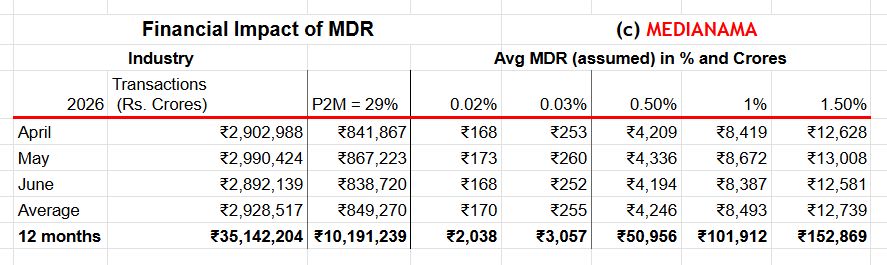
India's government plans to amend the Payment and Settlement Systems Act to restore UPI merchant discount rates, ending the zero-MDR regime in place since January 2020.
India's government has introduced the Taxation and Other Laws (Amendment) Bill, 2026, proposing changes to payments regulation, income tax, and the Finance Act to attract FDI and support Make in India. The Bill's final shape will depend on parliamentary debate and committee review.
The government's Taxation and Other Laws (Amendment) Bill, 2026, proposes to replace the blanket UPI MDR ban with a system allowing the Centre to notify which payment modes stay fee-free.
Prime Minister Narendra Modi inaugurated the Rs 5,000 crore Bhogapuram greenfield airport in Andhra Pradesh, built under a public-private partnership model. He also laid foundation stones for infrastructure projects worth nearly Rs 18,000 crore in the state, signalling a broad investment push for the region.