Marvell Commits $250 Mn to India Chip Expansion
Marvell Technology will invest $250 million in India over three years, doubling its workforce and expanding offices in Bengaluru and Hyderabad to advance AI and cloud chip design.
Key Takeaways
June 6, 2026 · 5 min read · By Rishabh Bhardwaj
·
AI-assisted, human-reviewed · Our editorial standards
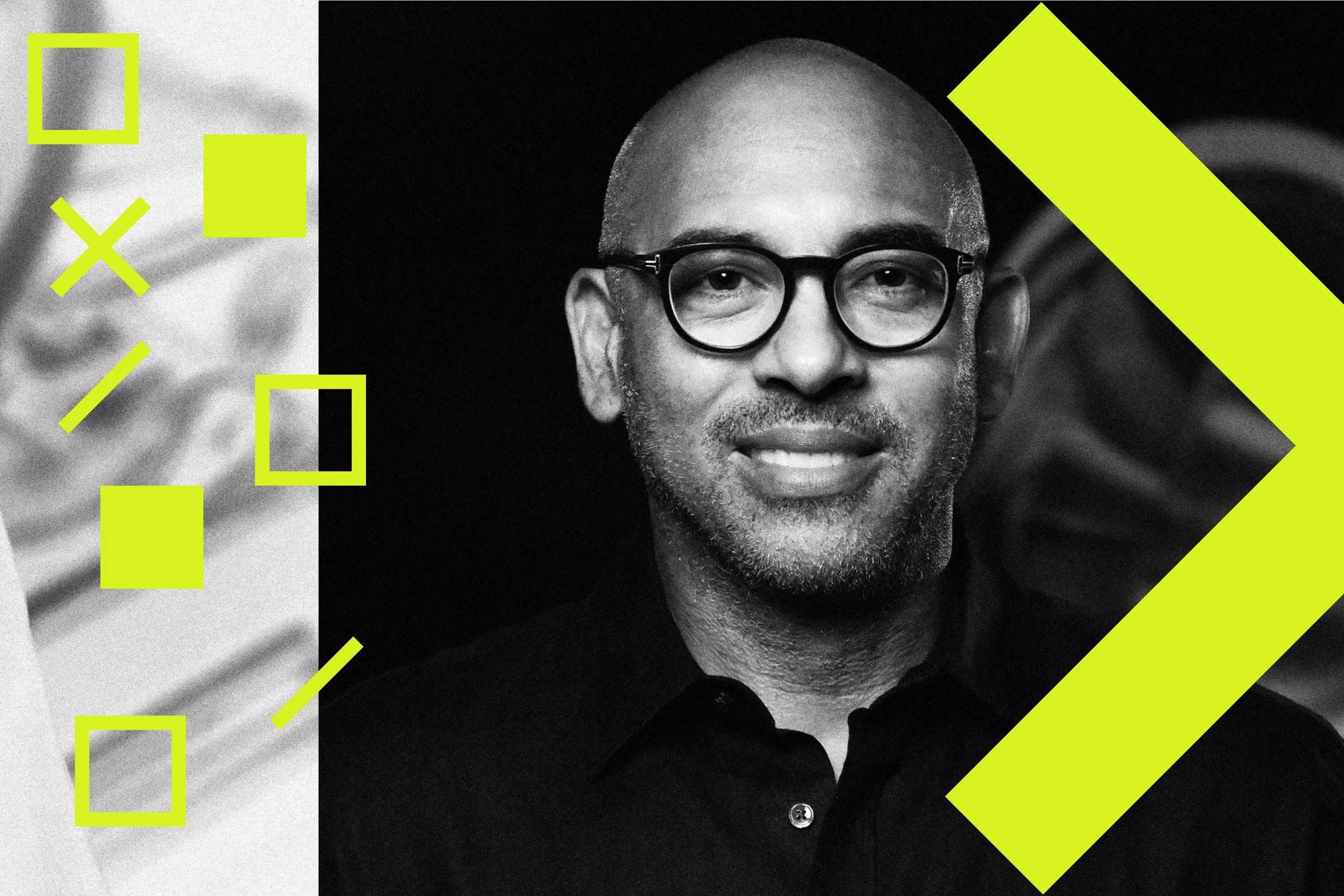
Harvey Mason Jr., CEO of the Recording Academy, says artificial intelligence is now present in virtually every pop and R&B recording session he attends. In an interview, Mason said AI tools are being used to generate chord progressions, drum loops, backing vocals, lyric suggestions, and full song demos, and that the quality of AI-generated music has improved sharply enough to surprise even experienced producers.
Eighteen months ago, Mason doubted AI could produce work comparable to landmark albums. He no longer holds that position. "The quality of what it is able to create has improved dramatically," he said. "People are playing me things and telling me that AI made it, and I am surprised. I am impressed." The shift matters because Mason is not just a commentator. He has produced records for Beyoncé, Janet Jackson, Whitney Houston, and Michael Jackson, and now oversees the institution that sets the industry's quality benchmark.
The Recording Academy's current standard requires "more than a de minimis amount of human creativity" for a submission to qualify. That means AI tools do not automatically disqualify a song, but the human contribution must be meaningful and demonstrable. Under that framework, a track with AI-generated backing vocals can still compete for songwriting awards, and a song written entirely by AI can still earn a performance nomination if a human singer delivered the vocals. Verification relies on screening committees, self-disclosure, and supporting documentation. Mason acknowledged the system is imperfect and that the Academy cannot yet technically detect how much AI was used in any given recording.
The disclosure problem is real. Songwriter Michelle Lewis told Rolling Stone the industry operates a "don't ask, don't tell policy" on AI use. Suno CEO Mikey Shulman described his platform as "the Ozempic of the music industry, everybody is on it, nobody wants to talk about it." The Academy is aware of the gap. Mason said the organization asks submitters whether they used AI, but enforcing honesty depends largely on the community's integrity. Detection technology that could independently assess AI involvement does not yet exist at scale.
The volume pressure is building. Streaming platform Deezer reports more than 50,000 AI-generated songs are uploaded to its platform every single day. The Grammy Awards received roughly 24,000 submissions last year. Mason said that number is creeping up and that the Academy would adapt its process if AI submissions began to overwhelm reviewers or dilute the field.
AI is arriving at a moment when the rest of the music economy is already under stress. Mason confirmed that "blue dot fever," the phenomenon of visible empty seats on Ticketmaster seating charts linked to tour cancellations by artists including Post Malone, is real and concerning. He pointed to rising ticket prices, oversupply of touring activity, and the ongoing federal and state legal cases against Ticketmaster as compounding pressures on live revenue, which has been the industry's primary income stream since streaming compressed recorded music margins to near zero.
Against that backdrop, AI is both a threat and a cost-cutting tool. Mason described film composers feeding individual instrument lines into generative platforms that produce full orchestral arrangements, eliminating the need to hire arrangers or copyists. In country music, songwriters are reportedly using AI voice clones of artists to pitch demos directly, cutting out the traditional session demo economy. In pop and R&B, producers use AI stems as starting points for live musicians to build on, effectively giving every session an infinite-idea writing partner at no additional cost. Each of these uses compresses the number of paid professionals in the chain.
On legislation, Mason returned from Washington saying Congress is unlikely to pass major AI music protections this year despite bipartisan support for measures like the No Fakes Act, which would protect voice, image, and likeness, the TRAIN Act, which would give creators access to training data records, and the CLEAR Act, a transparency measure. In the absence of federal law, platforms are building their own frameworks. YouTube has introduced likeness detection tools. Spotify is developing a human-certified label for royalty purposes. Universal Music Group, under Sir Lucian Grainge, has pursued litigation against Suno and Udio, with settlements focused on restricting how AI-generated audio files can be exported and shared.
Mason is skeptical that platform-level rules are sufficient but sees them as a first step. His clearer bet is on human creativity outlasting the current disruption. He argued that AI will iterate on sounds humans invent rather than generate genuinely new genres, and that live music, with its irreplaceable communal experience, will remain something people are willing to pay for. Coachella, he noted, sold out for next year before announcing a single headliner.
The Recording Academy itself is changing its distribution model. After more than 50 years on CBS, the Grammy Awards will air on ABC and Disney beginning this cycle, with plans to produce documentaries, scripted content, and international music programming through a newly created unit called Grammy Studios. Mason framed the move as a way to reach younger audiences and expand the Grammy brand's global footprint at a moment when genre boundaries are dissolving and artists from markets including India, West Africa, South Korea, and Latin America are competing at the top of global charts.
The question Mason could not answer cleanly is where the line will eventually settle. He said the Academy reviews its AI policy every year and may one day face a binary choice: ban any AI involvement entirely, or accept it as a standard tool the way AutoTune and drum machines became standard. For now, the standard is human creativity at the forefront, verified imperfectly, and updated annually.
Marvell Technology will invest $250 million in India over three years, doubling its workforce and expanding offices in Bengaluru and Hyderabad to advance AI and cloud chip design.
Microsoft, Nvidia, SpaceX, and Palantir have joined the newly formed Open Secure AI Alliance alongside dozens of U.S. and European tech companies. The group aims to set shared AI security standards as fallout from a cyber attack on OpenAI pushes the industry toward coordinated defenses.
Skyroot Aerospace's Vikram-1 became India's first privately built rocket to reach orbit, making India only the third country after the US and China with a private orbital launch capability.
India has approved a ₹1.25 lakh crore ISM 2.0 that replaces the earlier grant-only model with a grant-plus-equity structure, co-investing alongside private venture capital in fabless chip design startups.