
Qatar Signals Progress in US-Iran War Talks
Qatar's foreign ministry said mediators including Qatar, Pakistan, and Oman have reached "very progressive stages" in efforts to end the US-Iran war, pushing Brent crude down more than four percent.
Key Takeaways
May 12, 2026 · 3 min read · By Rishabh Bhardwaj
·
AI-assisted, human-reviewed · Our editorial standards
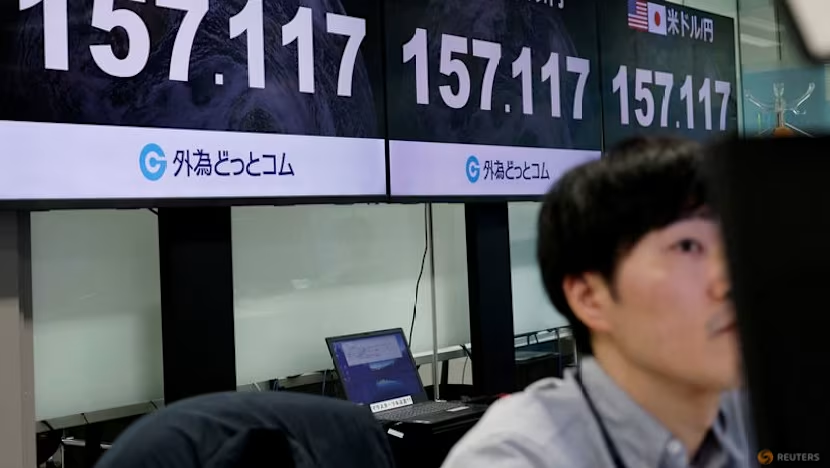
Global financial markets are showing signs of stress as the conflict between the United States and Iran continues to grind forward, with no clear end in sight.
Wars involving major energy-producing regions tend to move markets through a small number of well-understood channels: oil supply risk, safe-haven demand, and shifting expectations about central bank policy. A prolonged US-Iran conflict touches all three at once.
Iran sits along the Strait of Hormuz, the narrow waterway through which roughly one-fifth of the world's traded oil passes. Any sustained military activity in or near the Gulf raises the real possibility of supply disruptions, even if actual output is not immediately affected. That risk premium alone is enough to push crude prices higher, and higher oil feeds directly into inflation data in virtually every major economy.
Equity markets typically respond to geopolitical conflict by rotating out of riskier assets and into traditional safe havens: US Treasury bonds, gold, the Japanese yen, and the Swiss franc. If that pattern is playing out now, it puts pressure on stock valuations at a moment when many markets were already navigating elevated interest rates and slowing growth.
The practical transmission from a Middle East war to everyday economic conditions is faster than many readers expect. Fuel costs rise first, hitting transport, logistics, and manufacturing margins before consumers feel it directly at the pump or in food prices. Central banks then face a difficult choice: treat the inflation as temporary and hold rates steady, or tighten further and risk slowing growth at the wrong moment.
For emerging markets, the pressure is compounded. Countries that import most of their oil, including several large Asian economies, face a simultaneous squeeze on their trade balances and their currencies. A stronger dollar, which often accompanies geopolitical stress, makes dollar-denominated debt more expensive to service.
India sits in a particularly exposed position. It is one of the world's largest crude importers, and a sustained rise in oil prices would widen its current account deficit, put downward pressure on the rupee, and complicate the Reserve Bank of India's inflation management. Indian equity markets, which have been sensitive to global risk-off moves in recent cycles, would likely face headwinds if the conflict drags on and oil stays elevated.
The key variables are the duration and geographic spread of the conflict. A short, contained exchange tends to produce a sharp but brief market spike followed by a recovery. A prolonged campaign, especially one that draws in other regional actors or physically threatens Hormuz shipping lanes, would represent a structurally different risk scenario.
Oil price levels will be the most visible real-time indicator. Analysts and traders will also be watching US Treasury yields and gold prices for signals about how seriously institutional investors are pricing in a longer disruption. Any official statements about Hormuz navigation rights or allied naval deployments would escalate market concern quickly.
For now, the strain on world markets reflects genuine uncertainty rather than a fully priced-in worst case. That gap between current prices and potential outcomes is exactly where volatility tends to build.
Qatar's foreign ministry said mediators including Qatar, Pakistan, and Oman have reached "very progressive stages" in efforts to end the US-Iran war, pushing Brent crude down more than four percent.
Qatar confirmed it is mediating between the US and Iran but said no direct talks are currently planned. The clarification follows conflicting statements from President Trump, who claimed talks are under way, and Tehran, which denied any dialogue is happening.
Saudi Aramco reported sharply higher second-quarter 2026 profits as the Iran war restricts global oil supply and pushes crude prices up. Other oil supermajors also posted outsized earnings, raising concerns about sustained fuel cost pressure for importing economies.
President Trump called current Iran negotiations the "last chance" to end five months of conflict, pushing oil prices higher. Tehran denied formal talks are taking place, raising the risk of a diplomatic breakdown with direct consequences for global energy markets.