
Qatar Signals Progress in US-Iran War Talks
Qatar's foreign ministry said mediators including Qatar, Pakistan, and Oman have reached "very progressive stages" in efforts to end the US-Iran war, pushing Brent crude down more than four percent.
Key Takeaways
May 30, 2026 · 3 min read · By Rishabh Bhardwaj
·
AI-assisted, human-reviewed · Our editorial standards
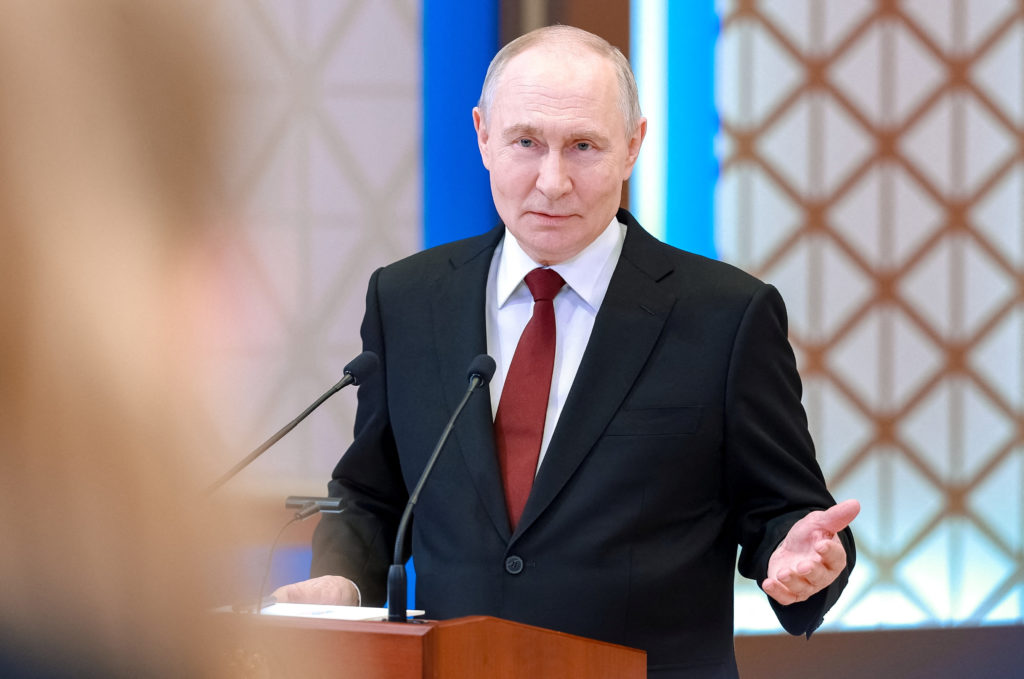
Russia has warned it will carry out "consistent and systematic" missile strikes on Kyiv, and called for foreign embassies to evacuate the Ukrainian capital. The move signals that Vladimir Putin is preparing to intensify the air war against Ukraine rather than seek a negotiated pause.
The embassy evacuation call is significant because it serves a dual purpose. Practically, it gives foreign governments notice to move personnel ahead of anticipated strikes. Politically, it amplifies the psychological pressure on Kyiv and on Western governments watching the conflict. When Russia publicly asks diplomats to leave a capital city, it is, in effect, broadcasting intent to strike harder.
The backdrop matters here. The conflict has settled into a grinding stalemate along much of the front line, with neither side achieving decisive territorial gains. That military deadlock, combined with signs of domestic discontent inside Russia, creates pressure on Putin to show forward momentum of some kind. A sustained aerial campaign against Kyiv offers a visible escalation without requiring a breakthrough on the ground.
Missile campaigns against capital cities carry a different weight than strikes on battlefield infrastructure or energy grids. Targeting Kyiv directly puts civilian government functions, foreign diplomatic presence, and symbolic state institutions in the crosshairs. The international response to casualties involving foreign diplomatic staff could be sharper and faster than responses to front-line fighting.
For Ukraine's allies, the escalation threat forces a practical question: whether existing air defense systems supplied to Kyiv are sufficient to handle a more intensive and systematic barrage. A "consistent and systematic" campaign, as Russia described it, implies sustained pressure over time rather than individual strike packages, which drains air defense munitions faster and raises the cost of protection.
The warning also lands at a moment when Western military support for Ukraine has been subject to political debate in several donor countries. An escalation that overwhelms Ukrainian defenses before new aid packages are delivered could shift battlefield conditions meaningfully. Russia may be calculating that the timing is favorable.
The immediate test is whether Russia follows through. Past Russian warnings of escalation have sometimes preceded actual strikes and sometimes functioned mainly as coercive signaling. The pace and scale of any strikes on Kyiv in the near term will indicate whether this is a genuine operational shift or a pressure tactic designed to force concessions at a potential negotiating table.
Foreign governments' responses to the evacuation call will also be telling. Embassies that move staff out validate the threat and signal they take it seriously. Those that stay are effectively betting on Ukrainian air defenses holding.
For markets and businesses with exposure to Eastern Europe, sustained escalation near Kyiv would likely push energy prices higher, extend uncertainty over Black Sea trade routes, and keep defense spending expectations elevated across NATO member states. None of those effects requires a single catastrophic strike to materialize. A prolonged, systematic campaign would produce them gradually through sustained risk repricing.
Putin's calculation appears to rest on the idea that raising the cost of the war for Ukraine and its backers, while domestic Russian opinion remains manageable, is more viable right now than waiting for a ground offensive to break the stalemate. Whether that calculation holds depends heavily on how much Western air defense support reaches Ukraine and how quickly.
Qatar's foreign ministry said mediators including Qatar, Pakistan, and Oman have reached "very progressive stages" in efforts to end the US-Iran war, pushing Brent crude down more than four percent.
Qatar confirmed it is mediating between the US and Iran but said no direct talks are currently planned. The clarification follows conflicting statements from President Trump, who claimed talks are under way, and Tehran, which denied any dialogue is happening.
Saudi Aramco reported sharply higher second-quarter 2026 profits as the Iran war restricts global oil supply and pushes crude prices up. Other oil supermajors also posted outsized earnings, raising concerns about sustained fuel cost pressure for importing economies.
President Trump called current Iran negotiations the "last chance" to end five months of conflict, pushing oil prices higher. Tehran denied formal talks are taking place, raising the risk of a diplomatic breakdown with direct consequences for global energy markets.