The 131st Constitution Amendment Bill, which would have accelerated women's political reservation by decoupling it from the Census and delimitation process, failed to pass in the Lok Sabha, ending the government's attempt to revisit the timeline set by the original 2023 legislation. The defeat marks a significant reversal for the ruling coalition, which had faced pressure from opposition parties and women's groups demanding faster implementation. The 2023 Women's Reservation Act, formally the 106th Constitutional Amendment, mandated 33 percent reservation for women in the Lok Sabha and state assemblies but tied its activation to the completion of a national Census and subsequent delimitation of constituencies. No Census has been conducted since 2011, and delimitation exercises typically follow years after enumeration concludes, meaning the original law offered no fixed implementation date. The 131st Amendment was framed as a corrective measure to remove that conditionality, but its failure restores the original sequencing: reservation cannot take effect until Census completion, delimitation, and formal notification. With Census timelines still unconfirmed, a realistic implementation window remains unclear. For parties contesting elections and female candidates assessing future seats, the operative constraint is now the Census calendar. Any government commitment to acceleration will require either fresh legislation or confirmation of Census dates, both of which remain unresolved.
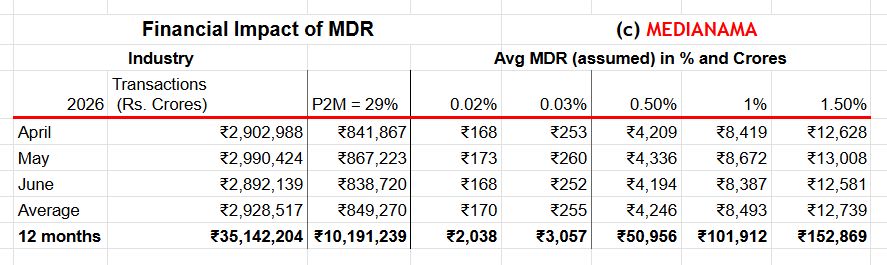
India's government plans to amend the Payment and Settlement Systems Act to restore UPI merchant discount rates, ending the zero-MDR regime in place since January 2020.
India's government has introduced the Taxation and Other Laws (Amendment) Bill, 2026, proposing changes to payments regulation, income tax, and the Finance Act to attract FDI and support Make in India. The Bill's final shape will depend on parliamentary debate and committee review.
The government's Taxation and Other Laws (Amendment) Bill, 2026, proposes to replace the blanket UPI MDR ban with a system allowing the Centre to notify which payment modes stay fee-free.
Prime Minister Narendra Modi inaugurated the Rs 5,000 crore Bhogapuram greenfield airport in Andhra Pradesh, built under a public-private partnership model. He also laid foundation stones for infrastructure projects worth nearly Rs 18,000 crore in the state, signalling a broad investment push for the region.