
Qatar Signals Progress in US-Iran War Talks
Qatar's foreign ministry said mediators including Qatar, Pakistan, and Oman have reached "very progressive stages" in efforts to end the US-Iran war, pushing Brent crude down more than four percent.
Key Takeaways
May 12, 2026 · 4 min read · By Rishabh Bhardwaj
·
AI-assisted, human-reviewed · Our editorial standards
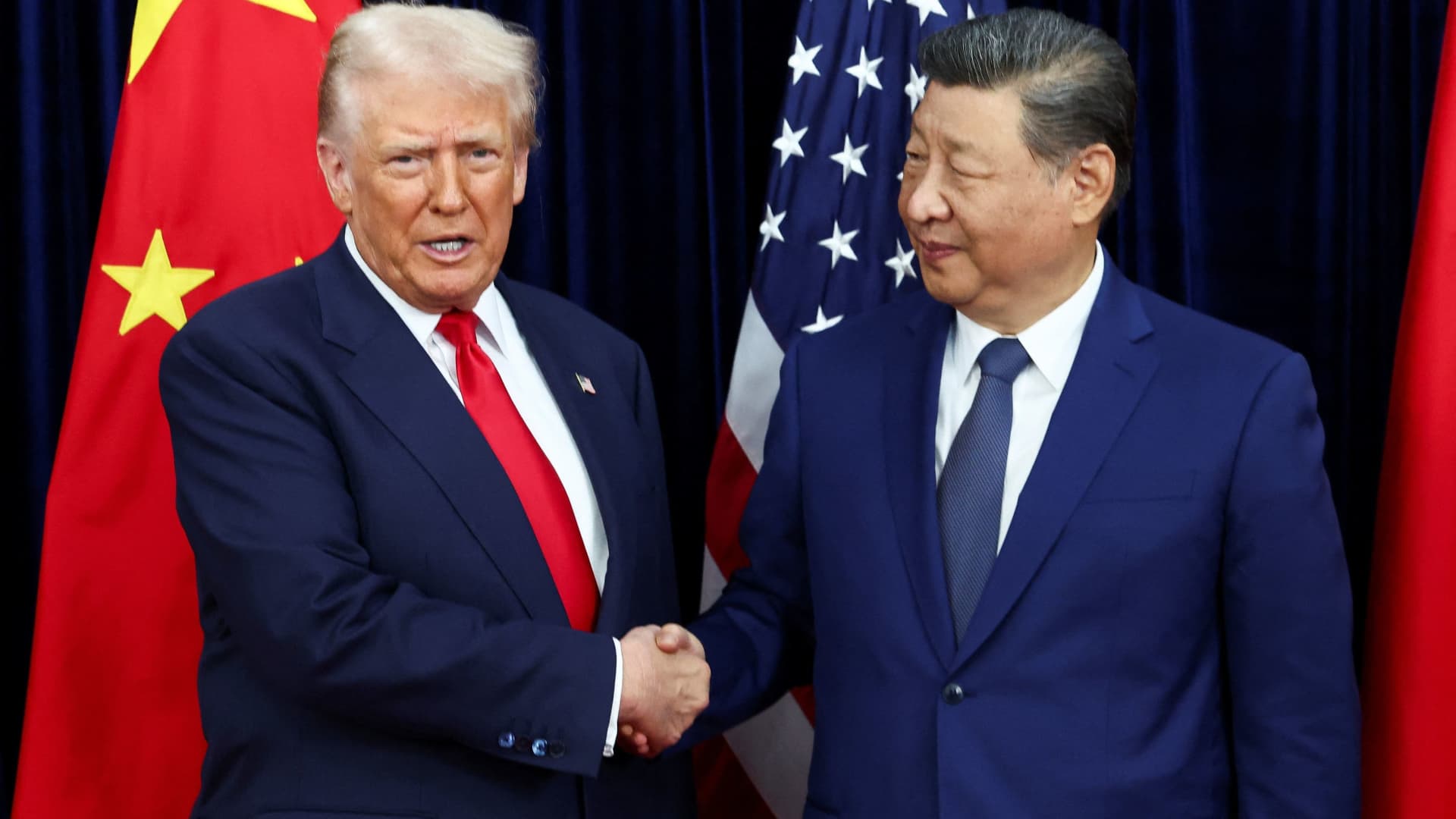
Donald Trump and Xi Jinping are set to meet in a high-stakes summit that could reshape trade flows, arms policy toward Taiwan, and the trajectory of U.S. pressure on Iran. The meeting carries outsized weight because decisions made at the table, or left off it, will ripple through supply chains, defense budgets, and energy markets well beyond the two countries involved.
China experts expect the two leaders may announce concrete trade agreements. The most likely early deliverables are a Chinese commitment to buy U.S. agricultural products or Boeing aircraft. Both categories serve a political purpose on the American side: farm-state voters and manufacturing jobs. For China, visible purchases signal goodwill without requiring deep structural economic reform.
Boeing in particular carries symbolic weight. The company has faced a prolonged slump in Chinese orders, partly due to trade tensions and partly due to China's push to develop its own commercial jets through COMAC. A purchase agreement would give Boeing a short-term revenue boost and hand both governments a headline win. Agricultural purchases would follow a familiar playbook from the Phase One trade deal signed during Trump's first term, which included large but only partially fulfilled Chinese commodity buying commitments.
The gap between announcements and actual delivery has historically been wide in U.S.-China trade talks. Any agreement reached at the summit would need to be watched over months, not days, to assess whether commitments translate into real order flows.
Trade is the more tractable part of the agenda. Taiwan and Iran carry far more geopolitical risk and are less likely to produce clean outcomes.
On Taiwan, the core tension is whether Trump signals any shift in U.S. security commitments in exchange for economic concessions from Beijing. China has consistently pushed to reduce U.S. arms sales to Taiwan and weaken American security guarantees. Any ambiguity in Trump's post-summit statements on Taiwan would be read closely by markets, defense contractors, and governments across the Indo-Pacific as a potential change in posture.
Iran adds a third dimension. The U.S. has pressed China to reduce its purchases of Iranian oil, which have helped Tehran sustain revenue despite American sanctions. China is the largest buyer of Iranian crude and has largely ignored U.S. pressure to cut those flows. Whether Trump raises this directly, and whether Xi offers any meaningful commitment, will affect how effective American sanctions on Iran can realistically be. A vague promise to discuss it later is the most likely outcome, but even marginal shifts in Chinese buying could tighten pressure on Tehran.
The interaction between these three issues is what makes the summit genuinely complex. Trump may be willing to soften rhetoric on Taiwan if China delivers on trade. He may ease up on Iran sanctions enforcement if Beijing buys more soybeans and jets. These are not separate negotiations. They are a single bundled exchange where movement on one front tends to require movement on another.
For markets, the immediate signal to watch is whether any trade agreement is announced at or just after the summit. A credible purchase commitment from China in agriculture or aerospace would likely lift those sectors in the short term. A breakdown with no agreement, or a vague joint statement with no specifics, would reinforce the existing uncertainty premium already baked into U.S.-China exposed equities.
Longer term, the Taiwan dimension matters most for Asia-Pacific defense and semiconductor-sector investors. Any perceived weakening of U.S. commitment to Taiwan's security would accelerate conversations already underway in Tokyo, Seoul, and Taipei about self-reliance and hedging. The summit's outcome on that front may not be announced in a press release but will be read clearly from the details of what is said, and what is conspicuously left unsaid.
Qatar's foreign ministry said mediators including Qatar, Pakistan, and Oman have reached "very progressive stages" in efforts to end the US-Iran war, pushing Brent crude down more than four percent.
Qatar confirmed it is mediating between the US and Iran but said no direct talks are currently planned. The clarification follows conflicting statements from President Trump, who claimed talks are under way, and Tehran, which denied any dialogue is happening.
Saudi Aramco reported sharply higher second-quarter 2026 profits as the Iran war restricts global oil supply and pushes crude prices up. Other oil supermajors also posted outsized earnings, raising concerns about sustained fuel cost pressure for importing economies.
President Trump called current Iran negotiations the "last chance" to end five months of conflict, pushing oil prices higher. Tehran denied formal talks are taking place, raising the risk of a diplomatic breakdown with direct consequences for global energy markets.