Population decline is reshaping fiscal and political structures across multiple Indian states, with demographic divergence between northern and southern regions becoming an increasingly concrete governance problem. States that achieved replacement-level fertility earlier, primarily in the south, now face aging populations, shrinking labor forces, and rising dependency ratios, while northern states continue growing. The fiscal mechanism is direct: aging populations increase demand for pensions, healthcare, and social transfers while simultaneously reducing the working-age tax base. This compresses state revenues and widens inter-state expenditure gaps that central transfers only partially offset. The political dimension is equally consequential. Parliamentary delimitation, frozen since 1976 and due for revision after 2026, threatens to redistribute Lok Sabha seats based on current population counts. Southern states that controlled fertility per national policy guidance stand to lose seats to northern states that did not, creating a structural tension at the heart of India's federal bargain. Pronatalist incentives introduced by some states have shown limited effectiveness globally, and their cost-benefit profile remains poor. The next delimitation exercise will force a direct confrontation between demographic equity and democratic representation.
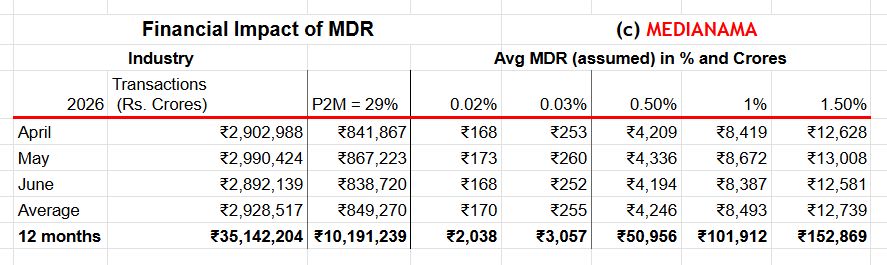
India's government plans to amend the Payment and Settlement Systems Act to restore UPI merchant discount rates, ending the zero-MDR regime in place since January 2020.
India's government has introduced the Taxation and Other Laws (Amendment) Bill, 2026, proposing changes to payments regulation, income tax, and the Finance Act to attract FDI and support Make in India. The Bill's final shape will depend on parliamentary debate and committee review.
The government's Taxation and Other Laws (Amendment) Bill, 2026, proposes to replace the blanket UPI MDR ban with a system allowing the Centre to notify which payment modes stay fee-free.
Prime Minister Narendra Modi inaugurated the Rs 5,000 crore Bhogapuram greenfield airport in Andhra Pradesh, built under a public-private partnership model. He also laid foundation stones for infrastructure projects worth nearly Rs 18,000 crore in the state, signalling a broad investment push for the region.