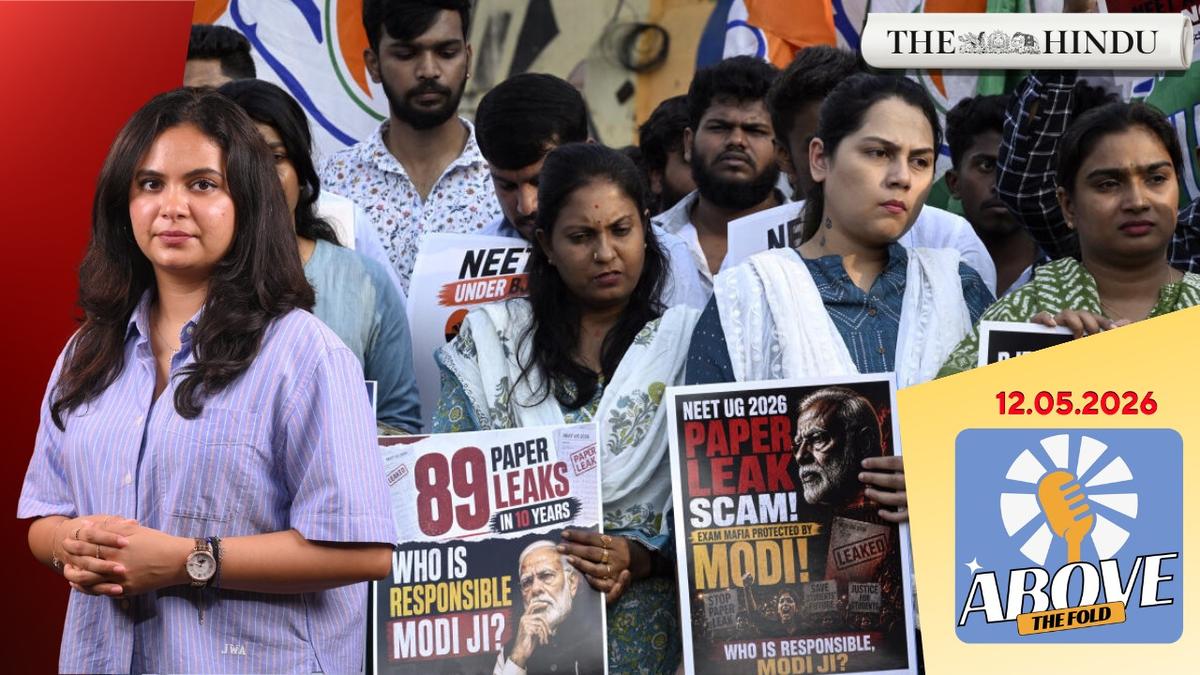
Three major stories are dominating Indian news on May 12, 2026: the cancellation of NEET-UG 2026 following a paper leak, a formal split in the AIADMK party in Tamil Nadu, and Congress leader Rahul Gandhi's attack on appointments in West Bengal.
NEET-UG 2026 Cancelled, CBI Ordered to Probe
The government has cancelled the NEET-UG 2026 examination after a paper leak controversy surfaced. A Central Bureau of Investigation probe has been ordered into the leak. NEET-UG is the national entrance test that determines admission to undergraduate medical and dental programmes across India, making its cancellation a significant disruption for hundreds of thousands of students who had prepared and appeared for the exam.
A paper leak at this scale raises immediate questions about the integrity of the examination system and the security protocols at the agencies responsible for conducting the test. The CBI probe signals that the government is treating this as a criminal matter, not just an administrative failure. Students who had cleared the exam now face uncertainty about timelines for re-examination and their medical college admissions for the current academic year.
This is not the first time NEET has faced a controversy of this nature. The pattern puts pressure on policymakers to overhaul how high-stakes national entrance exams are designed, distributed, and secured. The outcome of the CBI investigation will likely determine whether individual officials or broader institutional failures are held responsible.
AIADMK Splits, Bengal Appointments Controversy
In Tamil Nadu, the AIADMK has undergone a formal split, adding fresh turbulence to the state's opposition politics. The AIADMK has historically been one of the two dominant parties in Tamil Nadu, and any fragmentation within its ranks reshapes the competitive landscape ahead of future state elections. The specifics of who leads each faction and what triggered the formal break are not yet fully detailed, but the split is significant enough to rank among the day's top national stories.
Separately, Rahul Gandhi has publicly attacked the ruling dispensation over appointments in West Bengal. The nature of the appointments and the specific targets of Gandhi's criticism have not been elaborated in available details, but the attack fits a broader Congress strategy of scrutinising governance decisions in states where opposition parties seek to build electoral ground.
Together, these three stories reflect distinct but intersecting pressures on Indian institutions: the credibility of national examination bodies, the structural stability of regional parties, and the ongoing contest over governance accountability in key states.
What to watch: The CBI's first moves in the NEET probe will signal how aggressively the investigation is being pursued. For students, the government's announcement of a re-examination date will be the most consequential near-term development. In Tamil Nadu, watch for formal statements from both AIADMK factions on leadership and electoral alliances. On the Bengal appointments row, expect further political statements as the story develops in Parliament or through official responses.