
Qatar Signals Progress in US-Iran War Talks
Qatar's foreign ministry said mediators including Qatar, Pakistan, and Oman have reached "very progressive stages" in efforts to end the US-Iran war, pushing Brent crude down more than four percent.
Key Takeaways
June 25, 2026 · 4 min read · By Rishabh Bhardwaj
·
AI-assisted, human-reviewed · Our editorial standards
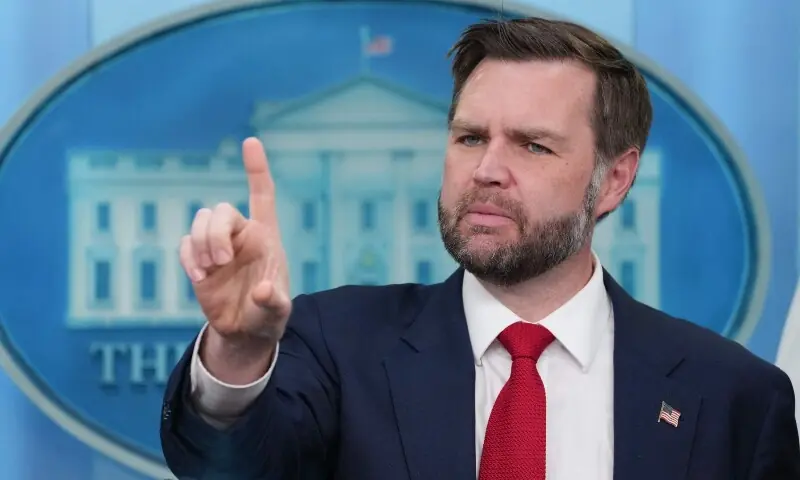
US Vice President JD Vance publicly rebuked Israeli lawmakers on Thursday, warning them not to attack America while depending on it as their sole major ally. Speaking at a White House press briefing, Vance directed sharp words at Israeli cabinet members who had criticised the memorandum of understanding signed between the United States and Iran at Versailles earlier that day.
"If I was in the cabinet of the Israeli government, I might not be attacking the only powerful ally that I have anywhere left in the entire world," Vance told reporters. "Anybody in Israel who thinks their biggest problem is the president of the United States needs to wake up and smell the reality of the situation." The comments are unusually blunt for a sitting US vice president addressing a close ally, and they signal growing friction between the Trump administration and Israeli Prime Minister Benjamin Netanyahu over how the Iran deal was structured.
The memorandum of understanding signed at Versailles establishes a framework to end the war, reopen the Strait of Hormuz, and begin a 60-day window for finalising a longer-term agreement. Vance said that 60-day clock started on Thursday. The deal grants Iran potential access to sanctions relief, resumed oil sales, and a $300 billion reconstruction fund, but Vance was emphatic that none of those benefits are automatic. "If they don't perform as we've said before, they don't get any of the benefits of the bargain," he said. Critics, including Israeli officials, have pointed out that the deal contains no firm mechanism to destroy Iran's nuclear programme, which remains the core concern for Israel's security establishment.
Vance pushed back on that framing directly, arguing that the measure of success is verification, not the words of any agreement. "Words don't matter, ladies and gentlemen, we're about verification," he said. He pointed to early US compliance as evidence of good faith: the US military has already allowed more than a dozen ships through what had been a naval blockade of Iran, and Vance said Washington has formally lifted that blockade as part of the early-stage commitments.
Vance has become the public face of the Iran deal, a notable position for a politician long identified as a sceptic of US military involvement overseas. He is widely expected to run for the presidency in the 2028 election, making this diplomatic effort a defining test. A successful agreement would strengthen his argument that American interests are better served through deal-making than through sustained military engagement. A collapse, however, carries its own risk: President Trump has said publicly he would blame Vance if the deal fails, though Vance brushed off that comment Thursday, calling it a joke.
Vance also confirmed he plans to travel to Switzerland for technical talks aimed at shaping the final long-term deal, with a possible departure this weekend depending on Iranian availability. The technical talks will likely focus on the specific verification mechanisms and timelines that the MoU leaves open. How those details are resolved will determine whether the sanctions relief and reconstruction funds ever materialise for Tehran.
For markets, Vance noted that oil prices are already falling in response to the deal's signing, a direct consequence of the Strait of Hormuz reopening. That waterway handles roughly a fifth of global oil trade, and its closure or disruption has historically been a significant price driver. A sustained opening would ease supply concerns that have kept an upward floor under crude prices during the conflict period.
The immediate question for observers is whether Iran follows through during the 60-day negotiating window. Vance's framing places the entire burden of proof on Tehran: perform and receive benefits, or receive nothing. Whether that conditionality is enforceable, and how the US would respond to partial compliance, are the details that the Switzerland talks will need to address. Israeli opposition to the deal is unlikely to fade, and the public rupture between Washington and Jerusalem adds a volatile political dimension to an already complex diplomatic process.
Qatar's foreign ministry said mediators including Qatar, Pakistan, and Oman have reached "very progressive stages" in efforts to end the US-Iran war, pushing Brent crude down more than four percent.
Qatar confirmed it is mediating between the US and Iran but said no direct talks are currently planned. The clarification follows conflicting statements from President Trump, who claimed talks are under way, and Tehran, which denied any dialogue is happening.
Saudi Aramco reported sharply higher second-quarter 2026 profits as the Iran war restricts global oil supply and pushes crude prices up. Other oil supermajors also posted outsized earnings, raising concerns about sustained fuel cost pressure for importing economies.
President Trump called current Iran negotiations the "last chance" to end five months of conflict, pushing oil prices higher. Tehran denied formal talks are taking place, raising the risk of a diplomatic breakdown with direct consequences for global energy markets.