
Qatar Signals Progress in US-Iran War Talks
Qatar's foreign ministry said mediators including Qatar, Pakistan, and Oman have reached "very progressive stages" in efforts to end the US-Iran war, pushing Brent crude down more than four percent.
Key Takeaways
July 1, 2026 · 4 min read · By Rishabh Bhardwaj
·
AI-assisted, human-reviewed · Our editorial standards
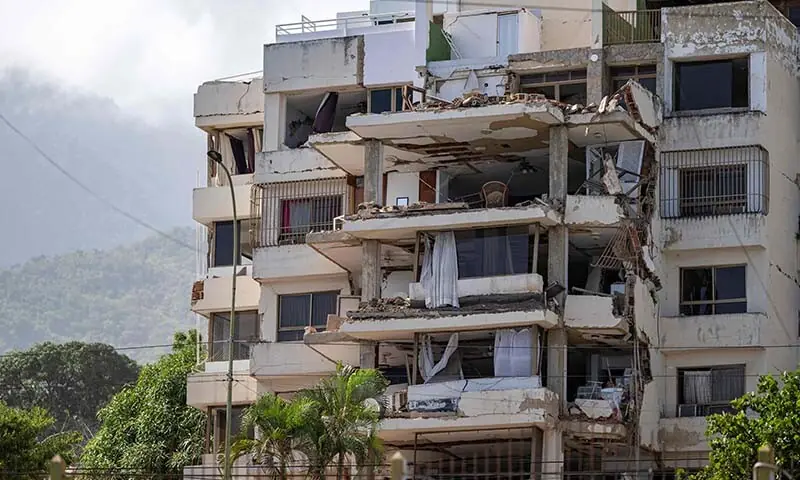
Venezuela's death toll from two powerful earthquakes struck days ago has climbed to 1,430, with rescue teams from at least 17 countries racing against time to find survivors buried in rubble across La Guaira and Caracas. The US Geological Survey has warned that fatalities could exceed 10,000, which would rank this among the deadliest earthquakes in Latin America in a century.
The twin quakes, measuring magnitude 7.2 and 7.5, struck near Moron on Wednesday and caused widespread destruction along the northern coast. La Guaira, a popular beach destination north of Caracas, bore the worst of it. At least 100 buildings there, many of them residential high-rises, were destroyed or damaged. Power remained fully out in La Guaira as of Friday, and residents have spent days digging through rubble with their hands, frustrated by a lack of heavy equipment and limited official presence.
The first 72 hours after a major disaster are widely considered the critical window for finding survivors alive. That window has now closed, making each additional rescue increasingly rare. One moment of relief came Friday when residents of La Guaira pulled an infant alive from the wreckage roughly 32 hours after the quakes hit. A rescue team from El Salvador also extracted a 15-year-old girl from the debris, according to that country's President Nayib Bukele.
The United States confirmed that one runway at Simon Bolivar International Airport is now operational, with C-17 military cargo planes landing there. A US naval vessel has also arrived off the Venezuelan coast. Washington said it is mobilising $150 million in aid and easing some sanctions to allow assistance to flow more freely. The US military sent two ships and said helicopters and aircraft would support rescue efforts.
Foreign ministry official Oliver Blanco said Venezuela had received 17 flights carrying more than 1,600 foreign rescue workers by early Saturday, with 25 more flights expected within 24 hours. The UN humanitarian agency OCHA said search-and-rescue teams from at least 17 countries were being mobilised. The UN estimates nearly 7 million people could be affected and puts direct damage at roughly $6.7 billion.
US-backed interim leader Delcy Rodriguez, speaking on state television overnight, said 10 more countries were still to join rescue operations and that 14,000 military and police personnel were deployed in La Guaira for security and sanitation. She noted that 60 percent of electricity had been restored nationally, though La Guaira itself remained dark. Authorities closed the main road between La Guaira and Caracas on Friday evening, citing heavy traffic blocking emergency vehicles. Civilians without official credentials were barred from using it.
The disaster lands at a sensitive moment for Rodriguez politically. She has tried to position herself as a reforming leader, yet she served as vice president under Nicolas Maduro, who was ousted and arrested by the United States in January. Public anger over the pace of the official response adds pressure to a leadership still working to establish credibility. Rodriguez spoke directly with US President Donald Trump and Secretary of State Marco Rubio on Friday, signalling an unusual degree of coordination between Washington and Caracas given their historically adversarial relationship.
One area that has escaped damage is Venezuela's oil sector. Oil Minister Paula Henao confirmed production was unaffected and that fuel distribution would continue normally. Oil executives and workers said infrastructure avoided major harm, which matters for a country whose economy is almost entirely dependent on crude exports.
The gap between official and unofficial missing-persons figures is striking. The government says hundreds are missing or trapped, but the opposition-promoted website lists more than 54,000 people as unaccounted for. That discrepancy points to the chaos on the ground and the limits of official tracking when entire neighborhoods lose power and communications.
Looting has been reported at several sites in La Guaira, adding complexity for security forces already stretched across a disaster zone. Venezuela's power grid was already fragile before the quakes, battered by years of underinvestment and economic sanctions that caused daily multi-hour blackouts across many regions. Restoring it fully in the affected areas will take time, complicating medical care, water treatment, and communications for residents.
The coming days will test whether the incoming international teams and US military assets can be deployed fast enough to shift outcomes on the ground. With more than 54,000 people still unaccounted for and the critical rescue window closed, the operation is shifting from search-and-rescue toward recovery, shelter, and disease prevention.
Qatar's foreign ministry said mediators including Qatar, Pakistan, and Oman have reached "very progressive stages" in efforts to end the US-Iran war, pushing Brent crude down more than four percent.
Qatar confirmed it is mediating between the US and Iran but said no direct talks are currently planned. The clarification follows conflicting statements from President Trump, who claimed talks are under way, and Tehran, which denied any dialogue is happening.
Saudi Aramco reported sharply higher second-quarter 2026 profits as the Iran war restricts global oil supply and pushes crude prices up. Other oil supermajors also posted outsized earnings, raising concerns about sustained fuel cost pressure for importing economies.
President Trump called current Iran negotiations the "last chance" to end five months of conflict, pushing oil prices higher. Tehran denied formal talks are taking place, raising the risk of a diplomatic breakdown with direct consequences for global energy markets.