India to Restore UPI Merchant Fees, PhonePe Gains Most
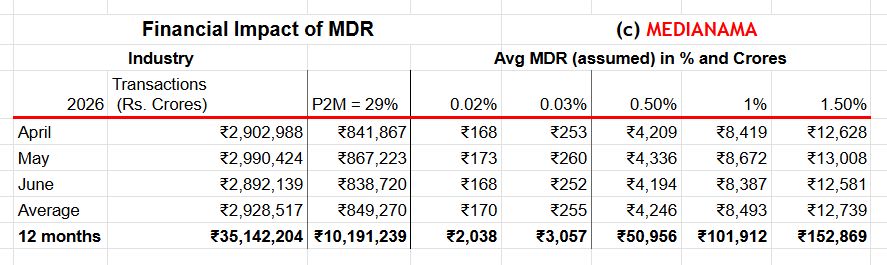
India's government plans to amend the Payment and Settlement Systems Act to restore UPI merchant discount rates, ending the zero-MDR regime in place since January 2020.
Key Takeaways
May 11, 2026 · 2 min read · By Rishabh Bhardwaj
·
AI-assisted, human-reviewed · Our editorial standards

The Indian government has announced that the Vibrant Bharat Gram Rozgar Mitra (VB-G RAM G) Act will come into force on July 1, replacing the Mahatma Gandhi National Rural Employment Guarantee Act (MGNREGA), which will be formally repealed on the same date.
MGNREGA, in place since 2005, guarantees 100 days of wage employment per year to rural households. The new Act appears to replace this framework entirely, though the government has not yet made detailed provisions of the legislation widely public.
The Ministry of Rural Development stated that the shift from MGNREGA to the new framework will be seamless and without disruption to workers. This assurance is aimed at the roughly 150 million rural workers who depend on the scheme each year for income support, particularly during agricultural lean seasons.
A hard repeal date of July 1 gives implementing agencies, state governments, and district-level administrators very little runway to prepare. State governments handle much of the on-ground delivery of employment guarantee work, so the pace of their readiness will determine whether the transition holds to the Ministry's promise.
The legal shift matters because MGNREGA is a demand-driven, rights-based law, meaning any rural household that asks for work is entitled to it within 15 days, or the state must pay an unemployment allowance. Whether the new Act preserves this entitlement structure is the central question that has not yet been answered publicly.
For rural households, any gap in wage payments or work allocation during the switchover could directly affect income and consumption, especially ahead of the kharif sowing season. For state governments, the change may also affect how funds are allocated, tracked, and audited, all of which run on MGNREGA's existing digital infrastructure, the MIS portal.
Watch for the full text of the VB-G RAM G Act to be released ahead of July 1, along with revised operational guidelines for state agencies. The continuity of worker job cards, wage payment timelines, and the unemployment allowance provision are the three things most worth tracking in the new legislation.
India's government plans to amend the Payment and Settlement Systems Act to restore UPI merchant discount rates, ending the zero-MDR regime in place since January 2020.
India's government has introduced the Taxation and Other Laws (Amendment) Bill, 2026, proposing changes to payments regulation, income tax, and the Finance Act to attract FDI and support Make in India. The Bill's final shape will depend on parliamentary debate and committee review.
The government's Taxation and Other Laws (Amendment) Bill, 2026, proposes to replace the blanket UPI MDR ban with a system allowing the Centre to notify which payment modes stay fee-free.
Prime Minister Narendra Modi inaugurated the Rs 5,000 crore Bhogapuram greenfield airport in Andhra Pradesh, built under a public-private partnership model. He also laid foundation stones for infrastructure projects worth nearly Rs 18,000 crore in the state, signalling a broad investment push for the region.