
Qatar Signals Progress in US-Iran War Talks
Qatar's foreign ministry said mediators including Qatar, Pakistan, and Oman have reached "very progressive stages" in efforts to end the US-Iran war, pushing Brent crude down more than four percent.
Key Takeaways
May 11, 2026 · 3 min read · By Rishabh Bhardwaj
·
AI-assisted, human-reviewed · Our editorial standards
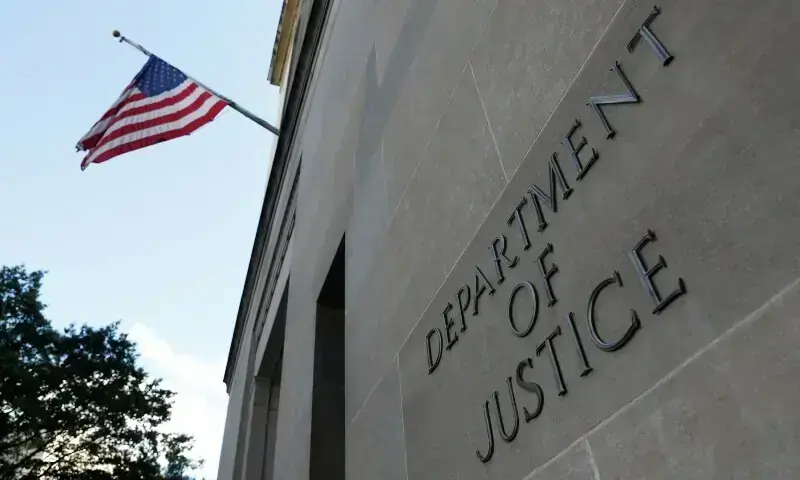
The US Justice Department announced Friday it has opened denaturalisation proceedings against roughly a dozen naturalised American citizens, accusing them of fraud, terrorism links, war crimes, and firearms trafficking. The move marks a notable expansion of a tool that has historically been used sparingly.
Among those named is Debashis Ghosh, a native of India, who the Justice Department accuses of running an investment fraud scheme involving approximately $2.5 million. Prosecutors allege Ghosh conspired to defraud investors before he became a US citizen and continued the scheme after naturalisation by misrepresenting how and where investor funds were held. The government's case rests on the argument that he concealed material facts during his immigration proceedings, facts that would have blocked his citizenship had they been disclosed.
Denaturalisation requires a federal court proceeding and carries a high legal bar. The government must prove either intentional misrepresentation or deliberate concealment of disqualifying information during the naturalisation process. Between 1990 and 2017, nearly three decades, US authorities filed just over 300 such cases in total, averaging about 11 per year. The current wave, a dozen cases filed in a single announcement, signals a deliberate shift in pace and priority.
The cases were coordinated across the Justice Department's Office of Immigration Litigation, US Citizenship and Immigration Services, and federal prosecutors in multiple states. Officials framed the effort as protecting the integrity of the naturalisation process, arguing that citizenship obtained through deception should be revocable once proven in court.
The Trump administration has positioned denaturalisation as part of a broader immigration enforcement strategy, not an isolated legal remedy. That framing matters: it signals that historical naturalisation files may be reviewed for potential fraud, not just cases where new evidence has surfaced. Enhanced background reviews and re-examination of older records are reportedly already underway.
For South Asian communities in the United States, one of the largest and fastest-growing diaspora groups, the inclusion of an Indian-origin defendant is being read as a signal about the reach of this crackdown, even though the latest filings did not target citizens from Pakistan or other South Asian nations specifically. Civil liberties groups have warned that an expanded use of denaturalisation creates a climate of uncertainty among naturalised citizens and may discourage eligible green card holders from applying for citizenship at all.
The Justice Department did not disclose how many of the current proceedings are expected to result in criminal charges or deportation. Each case still requires a federal court ruling, meaning outcomes will vary and timelines could stretch over years. What is clear is that the administration intends to use this mechanism with greater frequency, and that naturalised citizens with any gaps or misstatements in their immigration records face a new level of scrutiny.
Qatar's foreign ministry said mediators including Qatar, Pakistan, and Oman have reached "very progressive stages" in efforts to end the US-Iran war, pushing Brent crude down more than four percent.
Qatar confirmed it is mediating between the US and Iran but said no direct talks are currently planned. The clarification follows conflicting statements from President Trump, who claimed talks are under way, and Tehran, which denied any dialogue is happening.
Saudi Aramco reported sharply higher second-quarter 2026 profits as the Iran war restricts global oil supply and pushes crude prices up. Other oil supermajors also posted outsized earnings, raising concerns about sustained fuel cost pressure for importing economies.
President Trump called current Iran negotiations the "last chance" to end five months of conflict, pushing oil prices higher. Tehran denied formal talks are taking place, raising the risk of a diplomatic breakdown with direct consequences for global energy markets.