
Qatar Signals Progress in US-Iran War Talks
Qatar's foreign ministry said mediators including Qatar, Pakistan, and Oman have reached "very progressive stages" in efforts to end the US-Iran war, pushing Brent crude down more than four percent.
Key Takeaways
May 2, 2026 · 2 min read · By Rishabh Bhardwaj
·
AI-assisted, human-reviewed · Our editorial standards
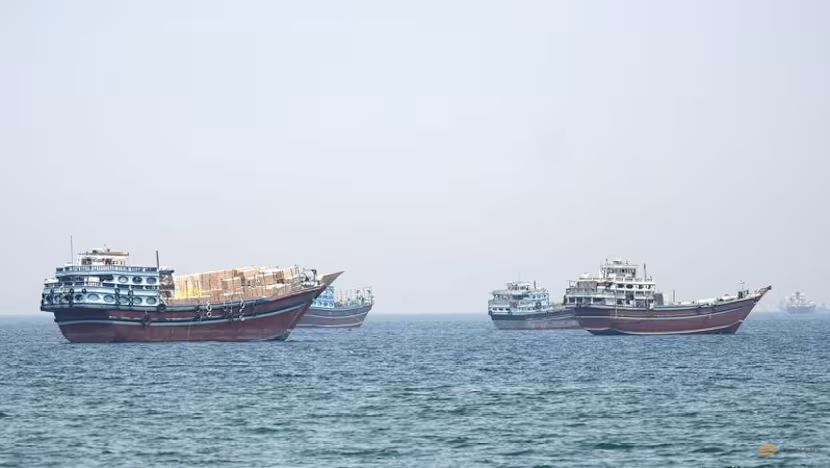
The US government has warned shipping companies that paying any kind of toll to Iran for safe passage through the Strait of Hormuz could expose them to sanctions. The warning, issued on Friday, May 1, covers a broad range of payment methods, not just cash transfers but also digital assets, offsets, informal swaps, and other in-kind payments.
The Strait of Hormuz is one of the most critical chokepoints in global energy trade. Roughly 20% of the world's oil passes through this narrow waterway between Iran and Oman. Any disruption, or compliance cost, in this corridor has direct knock-on effects for energy prices, freight rates, and insurance premiums worldwide.
Iran has periodically threatened to close or control access to the strait during periods of heightened tension with the West. The US warning suggests Tehran may be attempting to extract tolls from commercial vessels transiting the area, and Washington wants to cut off that revenue stream before it becomes routine.
By naming digital assets and in-kind payments explicitly, the US is closing potential loopholes that sanctions-hit countries have used before to move value without triggering traditional financial monitoring. This signals that US authorities are watching for creative workarounds, not just straightforward dollar payments.
Shipping firms, insurers, and commodity traders that operate in or near the strait now face a clear compliance question: any payment arrangement, formal or informal, that benefits Iran in exchange for passage could be treated as a sanctions violation. That category is broad enough to include barter-style deals or cargo offsets, which are sometimes used in complex trade routes.
The practical burden falls on compliance teams at shipping companies, P&I clubs (the insurers that cover most of the world's merchant fleet), and commodity trading houses that charter vessels. They will need to review their existing arrangements and ensure nothing in their contracts with agents or local operators amounts to a toll payment to Iranian authorities.
Energy markets will be watching closely. If major shipping firms re-route vessels away from the strait to avoid compliance risk, freight costs on Gulf crude shipments could rise. That would affect buyers in Asia, particularly India, China, Japan, and South Korea, who are the largest importers of Gulf oil.
No deadline or grace period was mentioned in the US statement. Companies should expect the warning to be in effect immediately.
Qatar's foreign ministry said mediators including Qatar, Pakistan, and Oman have reached "very progressive stages" in efforts to end the US-Iran war, pushing Brent crude down more than four percent.
Qatar confirmed it is mediating between the US and Iran but said no direct talks are currently planned. The clarification follows conflicting statements from President Trump, who claimed talks are under way, and Tehran, which denied any dialogue is happening.
Saudi Aramco reported sharply higher second-quarter 2026 profits as the Iran war restricts global oil supply and pushes crude prices up. Other oil supermajors also posted outsized earnings, raising concerns about sustained fuel cost pressure for importing economies.
President Trump called current Iran negotiations the "last chance" to end five months of conflict, pushing oil prices higher. Tehran denied formal talks are taking place, raising the risk of a diplomatic breakdown with direct consequences for global energy markets.