India to Restore UPI Merchant Fees, PhonePe Gains Most
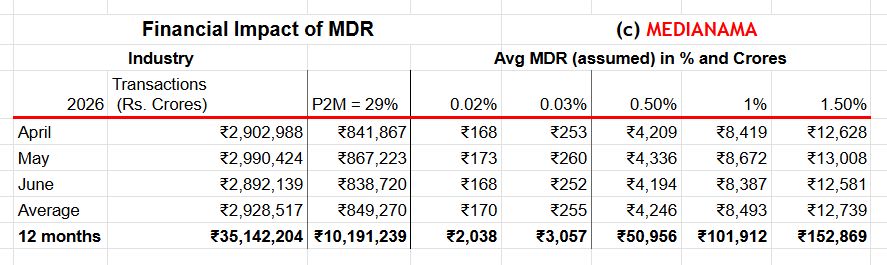
India's government plans to amend the Payment and Settlement Systems Act to restore UPI merchant discount rates, ending the zero-MDR regime in place since January 2020.
Key Takeaways
June 26, 2026 · 4 min read · By Rishabh Bhardwaj
·
AI-assisted, human-reviewed · Our editorial standards
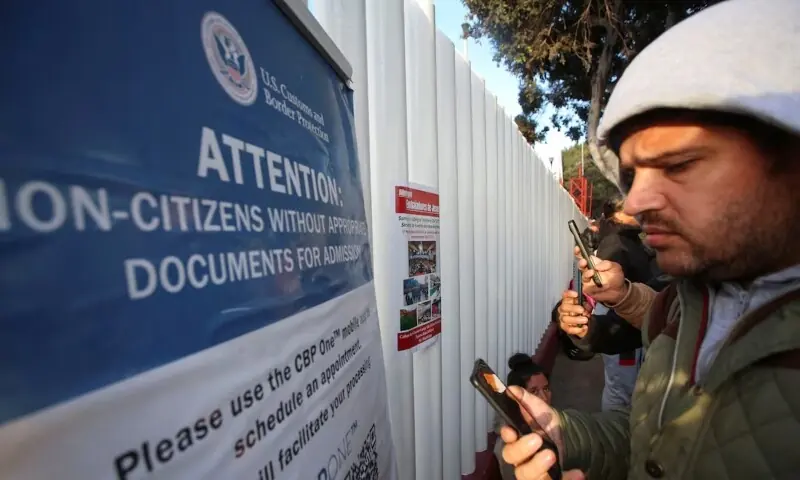
The US Supreme Court ruled 6-3 on Thursday that federal immigration officials can turn away asylum seekers waiting on the Mexican side of the border without processing their claims, handing the Trump administration a significant win on its core immigration agenda.
The case centered on a policy known as "metering," which allows border officials to indefinitely pause the processing of asylum claims when they decide ports of entry are too overwhelmed to handle additional applicants. The legal question was narrow but consequential: does a migrant who is physically stopped on the Mexican side of a border crossing count as having "arrived in the United States" under federal law, which would trigger a right to apply for asylum?
Conservative Justice Samuel Alito, who wrote the majority opinion, said no. "In ordinary speech, no one would say that a person 'arrives in' a place before the person enters that place," Alito wrote. That reading effectively closes a legal door that lower courts had kept open. The US Supreme Court overturned a 2024 ruling by the San Francisco-based 9th US Circuit Court of Appeals, which had found that federal law required border agents to inspect all asylum seekers at designated crossings regardless of whether they had physically crossed.
Metering is not a blanket ban on asylum. It is a queue management tool that lets officials pause intake at a port of entry, leaving migrants waiting in Mexico indefinitely with no set date to be processed. The policy was first used in 2016 under President Barack Obama during a migrant surge, was formalised under Trump's first term in 2018, and was rescinded by President Joe Biden in 2021. The Trump administration has said it would likely revive it once border conditions warrant, though it has not set a specific timeline.
This policy is separate from a broader Trump directive, announced after he returned to office last year, that seeks to deny entry to asylum seekers at the border altogether. That wider policy still faces its own active legal challenge.
Justice Sonia Sotomayor read her dissent aloud from the bench, a move that signals strong opposition. Joined by Justices Elena Kagan and Ketanji Brown Jackson, she wrote that the ruling authorises officials to refuse asylum applications by "physically blocking applicants from stepping foot onto US soil." She warned the consequences would be direct: more deaths, more illegal crossings, more people exposed to violence while searching for a port that would accept them. In an unusual move, Alito responded from the bench to Sotomayor's oral dissent, saying he would have addressed her points in his summary had he known she planned to read it publicly.
Thursday's metering decision was one of two immigration rulings the court issued on the same day. The second, also written by Alito, cleared the way for the Trump administration to strip Temporary Protected Status from more than 350,000 Haitian immigrants and roughly 6,100 Syrian immigrants. That status had shielded them from deportation on humanitarian grounds.
James Percival, general counsel at the US Department of Homeland Security, called the metering ruling "an important tool to continue securing our southern border." Melissa Crow, a lawyer for the plaintiffs, said the decision "should sound the alarm for anyone who cares about human rights and the rule of law," arguing it suggests the president can unilaterally override decades of established asylum protections.
The advocacy group Al Otro Lado, which launched the legal challenge in 2017, brought the case on behalf of asylum seekers who were physically turned back at ports of entry. The case was captioned Noem v Al Otro Lado.
The Supreme Court has now backed the Trump administration on several immigration matters decided on both emergency and full-merits bases since January 2025, including allowing deportations to third countries and revoking temporary legal status for hundreds of thousands of Venezuelan migrants. One major immigration question still pending is whether Trump's directive to restrict birthright citizenship is constitutional, with a ruling expected by the end of June 2026.
For migrants at the southern border, Thursday's ruling means the legal pathway to force the US government to process an asylum claim, even at a designated port of entry, no longer exists if officials decide capacity is exhausted. Whether and when the administration formally reinstates metering will determine how quickly that legal change translates into policy at the border.
India's government plans to amend the Payment and Settlement Systems Act to restore UPI merchant discount rates, ending the zero-MDR regime in place since January 2020.
India's government has introduced the Taxation and Other Laws (Amendment) Bill, 2026, proposing changes to payments regulation, income tax, and the Finance Act to attract FDI and support Make in India. The Bill's final shape will depend on parliamentary debate and committee review.
The government's Taxation and Other Laws (Amendment) Bill, 2026, proposes to replace the blanket UPI MDR ban with a system allowing the Centre to notify which payment modes stay fee-free.
Prime Minister Narendra Modi inaugurated the Rs 5,000 crore Bhogapuram greenfield airport in Andhra Pradesh, built under a public-private partnership model. He also laid foundation stones for infrastructure projects worth nearly Rs 18,000 crore in the state, signalling a broad investment push for the region.