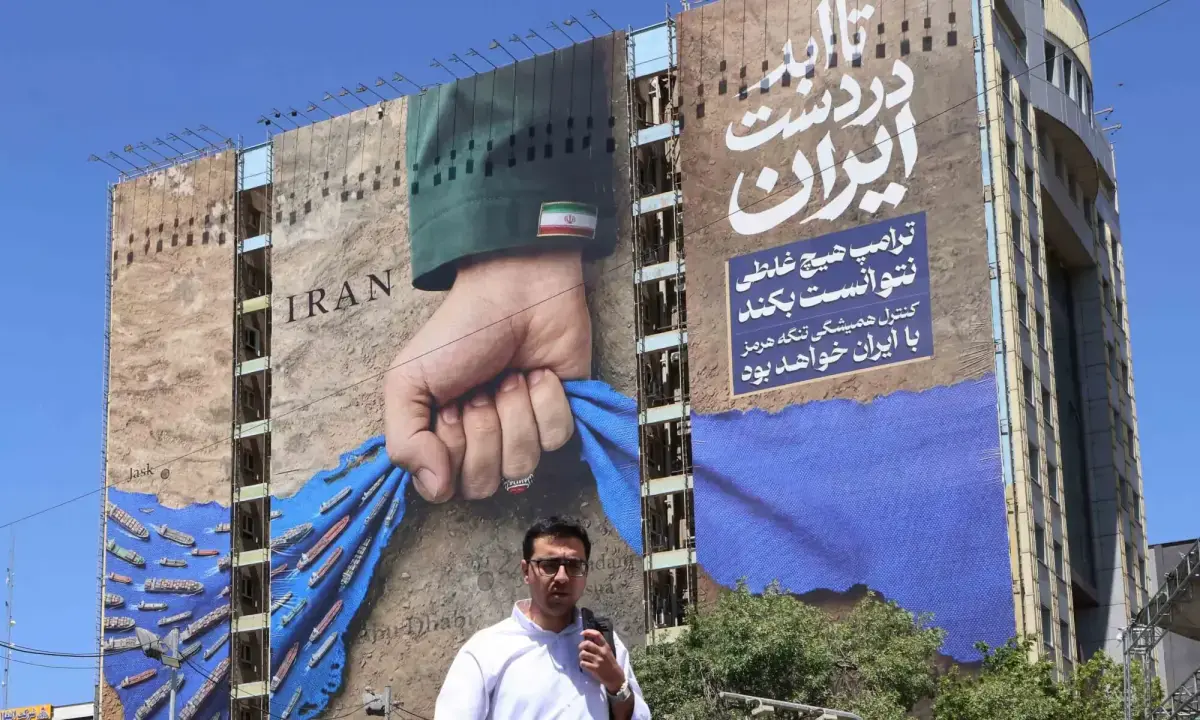
The United States military struck an Iranian drone operation near the Strait of Hormuz on Thursday, and Iran's Revolutionary Guard responded by targeting a US airbase, pushing the two countries closer to direct confrontation and sending oil prices sharply higher.
A US official described the American actions as defensive. The military shot down four Iranian attack drones and destroyed a ground control station in the port city of Bandar Abbas that was preparing to launch a fifth drone. "These actions were measured, purely defensive and intended to maintain the ceasefire," the official said. The ceasefire between the US and Iran has been in place since early April.
Iran's Revolutionary Guard confirmed it struck a US airbase in response, saying it targeted the base from which the American attack near Bandar Abbas airport was launched. The Guard did not identify the base's location. Kuwait's military said its air defences were responding to an "enemy" attack on Thursday, suggesting the Iranian strike may have hit or threatened a base in the region. Israel also reported sirens and hostile aircraft activity in its north, where it has been fighting Hezbollah.
Oil jumps as ceasefire looks fragile
Oil markets moved fast. Prices had dropped more than 5 percent on Wednesday, but US crude futures gained more than 3 percent after Thursday's exchange. Stocks fell and the dollar rose. The volatility reflects how directly the Strait of Hormuz conflict feeds energy prices: before the war started on February 28 with US and Israeli strikes on Iran, the strait carried a fifth of the world's oil and liquefied natural gas traffic. Any sign the ceasefire is cracking is enough to reprice energy globally.
The escalation came hours after President Donald Trump publicly rejected an Iranian state TV report that the two sides were close to a deal. The reported draft framework would have restored commercial shipping through the strait to prewar levels within a month, with Iran and Oman jointly managing traffic, the US lifting its blockade of Iranian ports, and American forces pulling back from Iran's vicinity.
Trump flatly denied it. "Nobody's going to control the strait," he said at a cabinet meeting. "It's international waters." He also appeared to threaten Oman, a long-standing US partner that has served as a back-channel intermediary, saying the country would "behave just like everybody else or we'll have to blow them up." The White House separately called the Iranian TV report a "complete fabrication."
Key sticking points block a deal
Three issues are holding up any agreement: control of the Strait of Hormuz, Iran's nuclear programme, and sanctions relief. Trump said at the cabinet meeting the US is not discussing easing sanctions on Iran. Secretary of State Marco Rubio was direct: "The bottom line is Iran's never going to have a nuclear weapon." Iranian officials say their nuclear work is for peaceful purposes only, and parliamentary security committee head Ebrahim Azizi said Trump's threats would not push Iran to abandon its demands, which include the right to enrich uranium, authority over the strait, and full sanctions removal.
Adding pressure to Iran's side, the US Treasury Department sanctioned the Persian Gulf Strait Authority, the Iranian body set up to manage passage through the waterway, listing it as a threat to US national security. Iranian sources say nuclear talks would come in a second round of negotiations, a sequencing that may not satisfy Washington's hardliners.
The reported draft deal did not mention the nuclear programme at all, a significant gap given how central Washington has made it. The Strait of Hormuz is covered by international law guaranteeing foreign vessels the right of passage, making any Iranian claim of management authority legally contested from the start.
The conflict, now three months old, has killed thousands and kept global energy prices elevated. Trump has repeatedly said a deal is close, but Thursday's exchange of strikes makes that claim harder to sustain. Watch whether either side moves to re-establish ceasefire communications, whether Kuwait or Gulf states clarify the airbase targeting, and whether oil prices hold their gains or push further as markets price in a longer conflict.