The US State Department has revoked or restricted visas for 26 individuals across the Western Hemisphere, citing actions the Trump administration characterizes as undermining American interests or supporting adversaries. Secretary of State Marco Rubio announced the measures, framing them as part of a broader effort to use visa policy as a foreign policy enforcement tool. The affected individuals were not publicly named, and the State Department provided no detailed breakdown by country or offense category, limiting external verification. The mechanism here is straightforward: visa privileges are an executive-branch instrument that bypasses legislative action and can be deployed rapidly against foreign nationals without judicial review. For governments and political figures across Latin America and the Caribbean, the announcement signals that Washington is actively monitoring affiliations and conduct it classifies as adversarial alignment. The practical consequence is a chilling effect on political figures, officials, or business actors in the region who maintain ties with states the US designates as adversaries, particularly Cuba, Venezuela, Nicaragua, and China. Further designations are likely if the administration treats this as a replicable enforcement template.
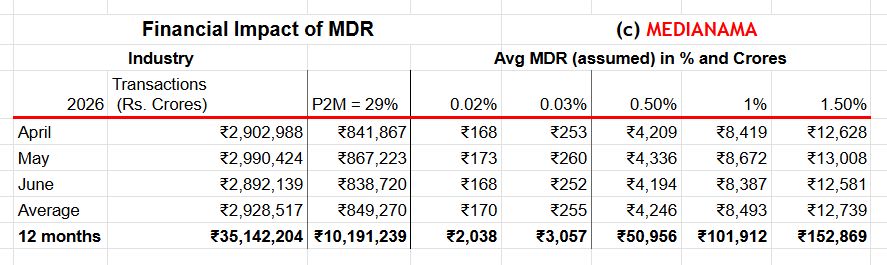
India's government plans to amend the Payment and Settlement Systems Act to restore UPI merchant discount rates, ending the zero-MDR regime in place since January 2020.
India's government has introduced the Taxation and Other Laws (Amendment) Bill, 2026, proposing changes to payments regulation, income tax, and the Finance Act to attract FDI and support Make in India. The Bill's final shape will depend on parliamentary debate and committee review.
The government's Taxation and Other Laws (Amendment) Bill, 2026, proposes to replace the blanket UPI MDR ban with a system allowing the Centre to notify which payment modes stay fee-free.
Prime Minister Narendra Modi inaugurated the Rs 5,000 crore Bhogapuram greenfield airport in Andhra Pradesh, built under a public-private partnership model. He also laid foundation stones for infrastructure projects worth nearly Rs 18,000 crore in the state, signalling a broad investment push for the region.