
Qatar Signals Progress in US-Iran War Talks
Qatar's foreign ministry said mediators including Qatar, Pakistan, and Oman have reached "very progressive stages" in efforts to end the US-Iran war, pushing Brent crude down more than four percent.
Key Takeaways
May 10, 2026 · 2 min read · By Rishabh Bhardwaj
·
AI-assisted, human-reviewed · Our editorial standards
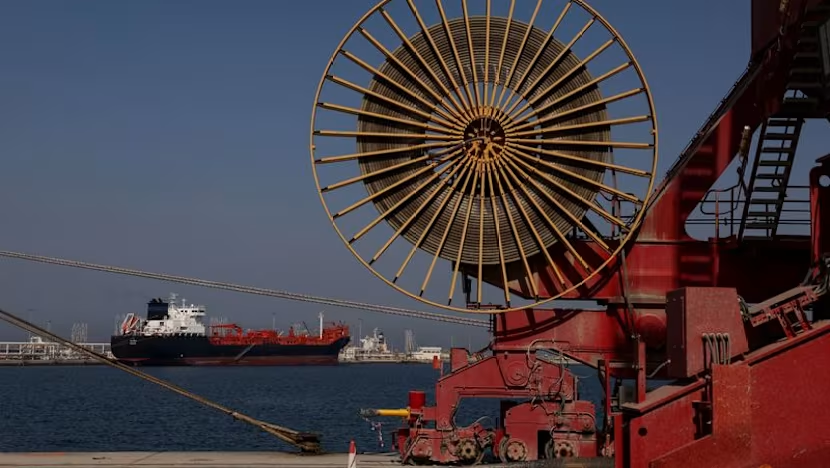
US oil prices rose sharply after tensions between the United States and Iran escalated, raising concerns about potential disruptions to oil supply from one of the world's most strategically sensitive energy corridors.
Iran sits along the Strait of Hormuz, the narrow waterway through which roughly 20% of global oil trade passes. Any military confrontation or naval standoff in the region raises the immediate risk that shipments could be delayed or blocked, which markets price in quickly through higher crude benchmarks.
When geopolitical risk rises in the Middle East, oil traders typically bid up prices as a precaution, even before any actual supply disruption occurs. The move reflects the cost of uncertainty rather than confirmed production or shipping losses.
Higher US crude prices, if sustained, tend to feed through to gasoline prices at the pump within days to weeks. They also affect airline fuel costs, freight rates, and the input costs of manufacturers who rely on petrochemicals.
For broader financial markets, an oil price spike driven by geopolitical fear is watched closely because it can push inflation higher at a time when central banks are already managing price pressures. Sustained elevated oil prices could complicate interest rate decisions in the US and other major economies.
Emerging market economies that import most of their oil, including several in Asia, face the sharpest exposure. A stronger oil price means a larger import bill, pressure on their currencies, and tighter fiscal conditions.
The key variable to watch is whether the hostilities remain rhetorical or escalate into action that physically threatens shipping lanes or Iranian export terminals. Markets will also track any response from OPEC+ members, who could in theory adjust output to stabilize prices if the situation worsens.
Qatar's foreign ministry said mediators including Qatar, Pakistan, and Oman have reached "very progressive stages" in efforts to end the US-Iran war, pushing Brent crude down more than four percent.
Qatar confirmed it is mediating between the US and Iran but said no direct talks are currently planned. The clarification follows conflicting statements from President Trump, who claimed talks are under way, and Tehran, which denied any dialogue is happening.
Saudi Aramco reported sharply higher second-quarter 2026 profits as the Iran war restricts global oil supply and pushes crude prices up. Other oil supermajors also posted outsized earnings, raising concerns about sustained fuel cost pressure for importing economies.
President Trump called current Iran negotiations the "last chance" to end five months of conflict, pushing oil prices higher. Tehran denied formal talks are taking place, raising the risk of a diplomatic breakdown with direct consequences for global energy markets.