
Qatar Signals Progress in US-Iran War Talks
Qatar's foreign ministry said mediators including Qatar, Pakistan, and Oman have reached "very progressive stages" in efforts to end the US-Iran war, pushing Brent crude down more than four percent.
Key Takeaways
June 13, 2026 · 4 min read · By Rishabh Bhardwaj
·
AI-assisted, human-reviewed · Our editorial standards
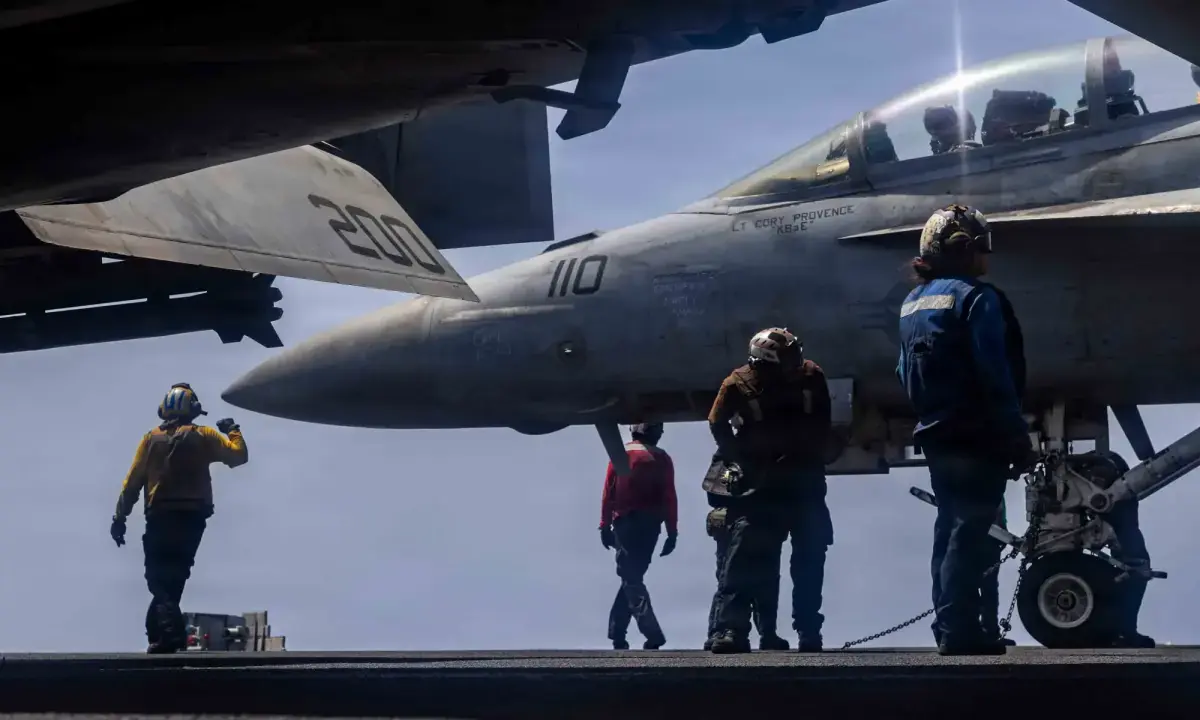
The United States and Iran struck each other for a second consecutive day on Thursday, with American forces targeting Iranian military infrastructure and Tehran firing back at US bases in Kuwait and Bahrain. The exchange has pushed oil prices higher and narrowed hopes for a swift diplomatic resolution to the three-month war that began in February 2026.
US Central Command (Centcom) said American forces began "additional self-defence strikes" at 5:15pm Wednesday Washington time, hitting what it described as Iranian military surveillance capabilities, communication systems, and air defence sites. Centcom said its forces "fired precision munitions on Iranian targets that posed a threat to US forces and international commercial ships" in the region. Iranian media reported explosions near the Strait of Hormuz, with blasts heard in Bandar Abbas, Qeshm, and Minab, and sources citing hits in Kargan and Sirik.
Iran's Islamic Revolutionary Guard Corps (IRGC) said it struck US targets in Kuwait and Bahrain in retaliation, claiming to have "hit and destroyed" Sheikh Isa air base. Iranian media reported drone strikes on communications antennas and radar facilities linked to the US Fifth Fleet in Bahrain. Bahrain's interior ministry issued an air raid alert urging residents to seek shelter, while Kuwait temporarily closed its airspace as its military said air defence systems were intercepting "hostile aerial targets".
The most consequential flashpoint remains the Strait of Hormuz, the narrow waterway through which a large share of global oil and gas moves. Iran has essentially closed the strait, and its military operational command declared it "completely closed," warning that any vessel traffic would be targeted. The Iranian navy said it struck two ships attempting to transit. Centcom pushed back, saying "commercial ships are continuing to transit in and out" Thursday night. President Donald Trump said US forces had covertly helped 100 million barrels of oil pass through the contested waterway.
The competing claims matter because even partial disruption to Hormuz traffic tightens global oil supply and lifts prices. Oil jumped as much as two percent on Thursday, extending similar gains from the previous day. Asian stocks tracked Wall Street losses as the renewed hostilities unsettled markets already on edge since the war started in February.
Trump has repeatedly signalled that a deal was close, but his tone shifted sharply this week. He accused Iranian negotiators of "playing us for suckers" and told reporters Wednesday morning, "We were really close to a deal, but they keep tapping us along." Fox News quoted Trump as saying US forces hit Iran with 49 Tomahawk missiles, with some targets as close as 60 kilometres from Tehran. He warned that if Iran did not accept US terms, "We'll bomb the S out of them tomorrow night."
Pentagon chief Pete Hegseth amplified the posture, saying the US would "negotiate with bombs" if Trump required it, and suggested strikes could extend into a third night. Iran's UN Ambassador Amir Saeid Iravani rejected the approach, saying no sustainable agreement could be reached through threats or force. Iran has also linked any deal to a separate ceasefire in Lebanon, where Israeli and Hezbollah forces are fighting, adding another layer of complexity.
Despite the escalation, a diplomatic channel remains open. Qatari negotiators travelled to Tehran to meet Iranian officials and try to close remaining gaps, according to a diplomat with knowledge of the talks. UN Secretary-General Antonio Guterres warned against a return to "full war." The escalation is also drawing international attention because the United States is co-hosting the FIFA World Cup, which Iran is participating in.
The war began in February 2026 with US-Israeli strikes on Iran. A ceasefire took effect on April 8 but has since unravelled, with the latest cycle of strikes partly triggered by Iran downing an American helicopter. The renewed fighting this week marks the most intense exchange since that ceasefire and raises the risk of the conflict expanding beyond Iran's borders into Gulf states hosting US military infrastructure.
The next 24 to 48 hours will be defining. Hegseth's comment about a potential third night of strikes, Trump's direct language about escalation, and Iran's threats to target any vessel in the Strait of Hormuz all point toward a period of maximum pressure before any deal is possible. Whether Qatar's mediation effort can produce enough movement to pause the cycle is the immediate question for markets and governments watching from the sidelines.
Qatar's foreign ministry said mediators including Qatar, Pakistan, and Oman have reached "very progressive stages" in efforts to end the US-Iran war, pushing Brent crude down more than four percent.
Qatar confirmed it is mediating between the US and Iran but said no direct talks are currently planned. The clarification follows conflicting statements from President Trump, who claimed talks are under way, and Tehran, which denied any dialogue is happening.
Saudi Aramco reported sharply higher second-quarter 2026 profits as the Iran war restricts global oil supply and pushes crude prices up. Other oil supermajors also posted outsized earnings, raising concerns about sustained fuel cost pressure for importing economies.
President Trump called current Iran negotiations the "last chance" to end five months of conflict, pushing oil prices higher. Tehran denied formal talks are taking place, raising the risk of a diplomatic breakdown with direct consequences for global energy markets.