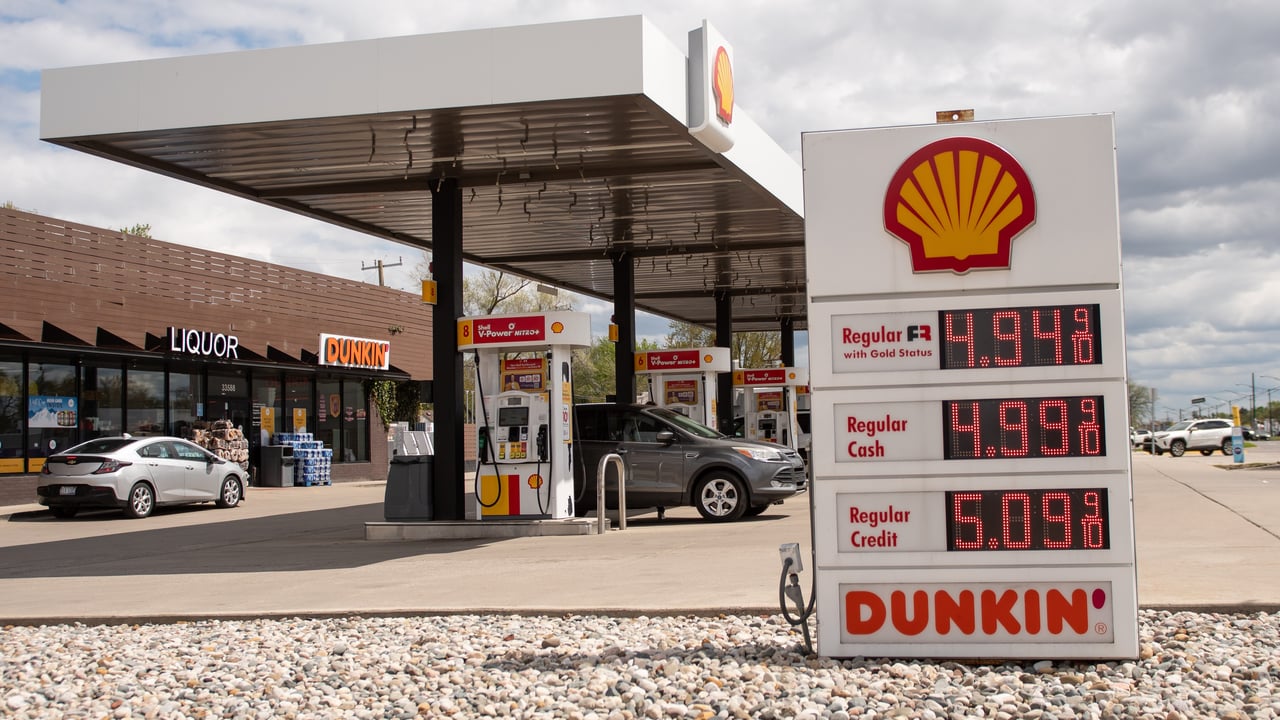
Average U.S. gasoline prices have crossed $4.50 a gallon, reaching their highest level since 2022. The move puts fresh pressure on household budgets at a time when consumers are already managing elevated costs across food, rent, and other essentials.
Why Prices Are Rising
The source does not specify the precise drivers behind this latest surge, but $4.50-plus prices represent a meaningful threshold. The last time the U.S. saw prices at this level was during the post-pandemic supply crunch and the energy market disruption that followed Russia's invasion of Ukraine in 2022, when national averages briefly topped $5 a gallon.
Gasoline prices are shaped by crude oil costs, refinery capacity, regional supply constraints, and seasonal demand patterns. A move above $4.50 typically signals tightness in at least one of these areas, whether rising crude benchmarks, refinery outages, or stronger-than-expected summer driving demand.
What It Means for Consumers and the Economy
At $4.50 a gallon, a driver filling a 15-gallon tank pays roughly $67.50 per fill-up. For households that commute or drive frequently, that adds up quickly, and unlike discretionary spending, fuel costs are hard to cut entirely.
Higher gas prices also feed into broader inflation. Trucking and logistics costs rise when diesel and gasoline are expensive, which can push up prices on goods that depend on road transport. The Federal Reserve watches energy prices closely because sustained fuel cost increases can complicate its effort to bring inflation back to its 2% target.
Politically, pump prices are one of the most visible economic signals for ordinary Americans. Sustained readings above $4.50 tend to weigh on consumer confidence and can become a significant issue heading into election cycles.
Watch for whether prices stabilize near current levels or continue climbing toward the 2022 peaks. Any update on crude oil supply decisions from OPEC+ or shifts in U.S. refinery output will be key signals in the weeks ahead.