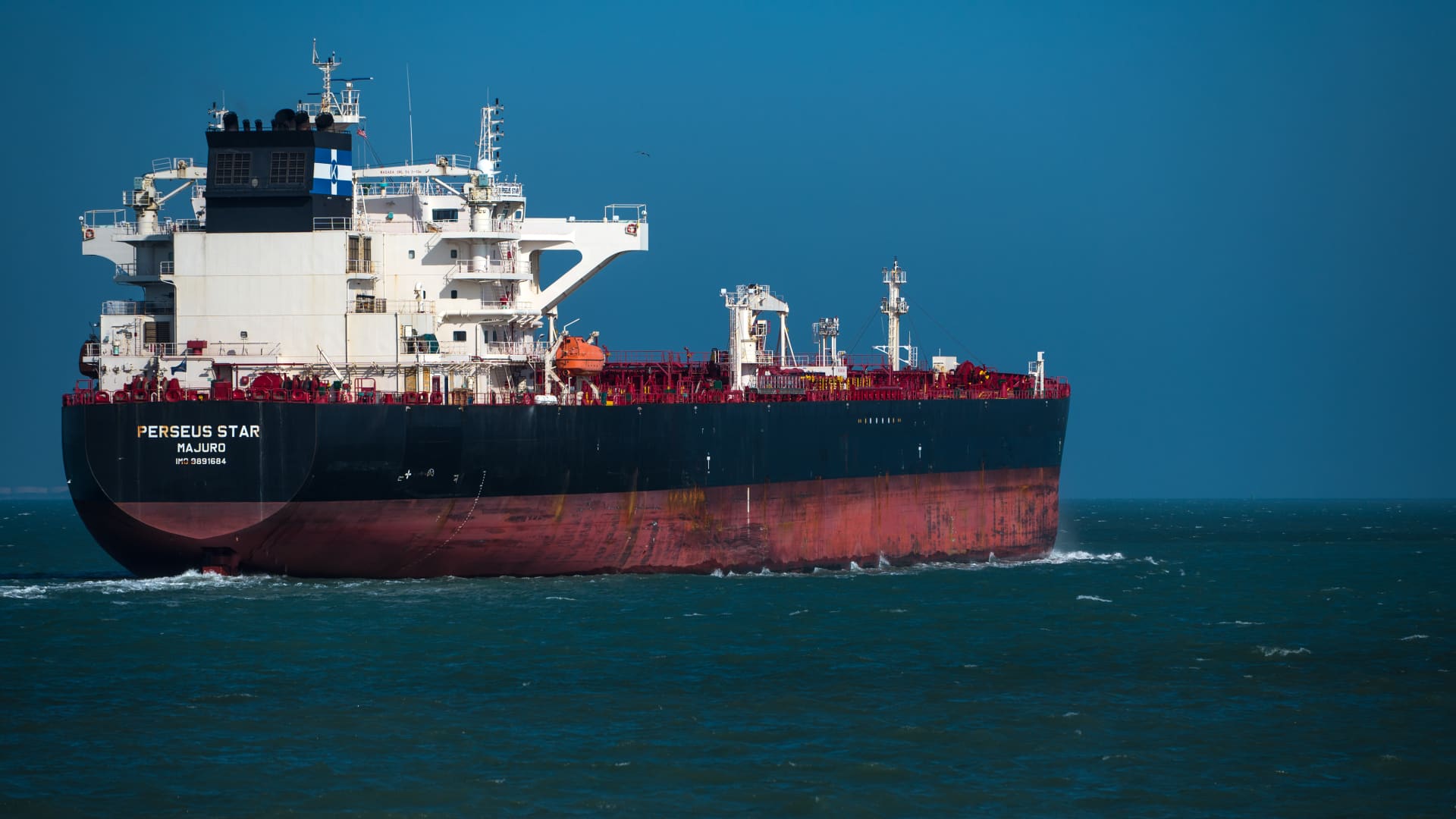
U.S. crude oil exports have hit a record high as tankers crowd the Gulf Coast, with buyers rushing to lock in American supply amid disruptions tied to the conflict involving Iran.
The surge reflects a familiar dynamic in global oil markets: when a major producing region faces instability, buyers pivot toward more stable suppliers. The U.S. Gulf Coast, home to the nation's largest export terminals, is the natural beneficiary. American producers, already operating at high output levels, are well-positioned to fill the gap left by tightened flows from the Middle East.
Why Gulf Coast Exports Are Climbing
Iran is a significant oil producer, and any conflict that disrupts its output or threatens shipping lanes through the Strait of Hormuz, a chokepoint through which roughly a fifth of the world's oil passes, forces buyers to seek alternatives fast. European and Asian refiners, in particular, tend to replace lost barrels with U.S. crude, which is priced and shipped competitively from Gulf Coast terminals like those at Houston, Beaumont, and Corpus Christi.
When tanker traffic to a region spikes, it usually signals that buyers have already signed new contracts and are moving quickly. The fact that vessels are clustering at Gulf Coast ports points to real, near-term demand rather than speculative positioning.
What This Means for Markets and Producers
Record export volumes are a direct revenue lift for U.S. producers and midstream operators, companies that move and store crude before it reaches export docks. Higher export demand tends to tighten domestic supply, which can nudge U.S. benchmark prices upward and support producer margins.
For global oil prices, the picture is more complex. American supply helps offset some of the disruption caused by the Iran conflict, which could limit how far prices spike. But if Hormuz shipping lanes face sustained pressure, U.S. export capacity alone cannot fully replace what the region normally supplies to world markets.
Refiners in Europe and Asia that have shifted to U.S. crude face longer shipping routes and higher freight costs, which eat into their margins. That tradeoff is acceptable when Middle East supply is genuinely at risk, but it raises costs across the supply chain.
Watch for whether export volumes hold at record levels or ease as the conflict situation evolves. Any diplomatic resolution or ceasefire that restores Iranian output and Hormuz transit could quickly reduce demand for U.S. crude, reversing some of the current export boom.