Qatar Signals Progress in US-Iran War Talks
Qatar's foreign ministry said mediators including Qatar, Pakistan, and Oman have reached "very progressive stages" in efforts to end the US-Iran war, pushing Brent crude down more than four percent.
Key Takeaways
May 28, 2026 · 3 min read · By Rishabh Bhardwaj
·
AI-assisted, human-reviewed · Our editorial standards

U.S. forces carried out fresh strikes against Iran on Wednesday, marking another escalation in what has become an active military conflict between the two countries. President Donald Trump, speaking alongside the action, made clear that the approach of November's midterm elections will not push him toward a quick settlement.
Trump's statement on the midterms is notable because domestic political pressure often shapes the pace of foreign policy decisions. By explicitly ruling out election-driven urgency, the administration is signaling it intends to set the terms of any resolution on its own timeline, not one driven by the congressional calendar.
The description of the strikes as defensive is significant from a legal and strategic standpoint. Framing military action as defensive is the standard basis the U.S. uses to justify force without a formal congressional declaration of war. It also shapes how allies and international bodies interpret the legality of the operations.
The fact that these are described as new strikes suggests prior rounds have already taken place, meaning the conflict has moved beyond a single incident into a sustained exchange. That shift matters because sustained military operations carry different diplomatic, economic, and market consequences than a one-time event.
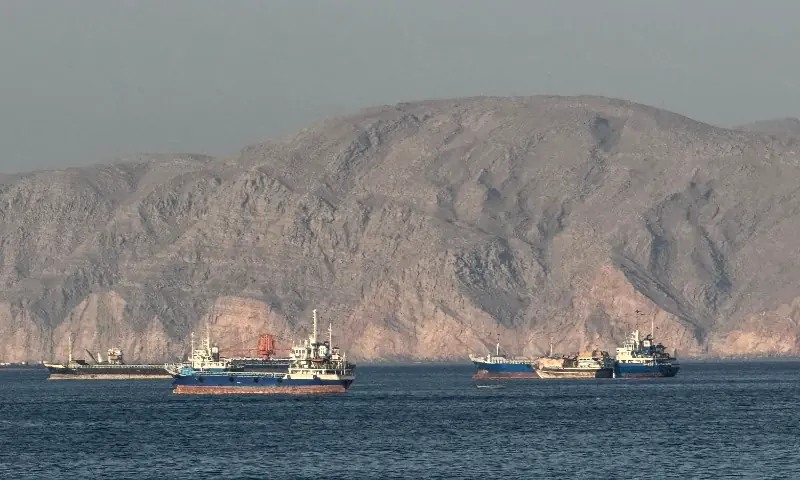
Iran sits at the center of several global supply chains and chokepoints, most critically the Strait of Hormuz, through which a substantial share of the world's seaborne oil passes. Any sustained military engagement in the region puts upward pressure on energy prices and raises insurance and freight costs for vessels transiting the area. Commodity markets, oil traders, and energy-dependent industries will be watching the tempo and geography of these strikes closely.
The midterm elections comment from Trump points to the single most important near-term variable: whether the conflict intensifies, holds at its current level, or moves toward negotiation before November. If the administration believes a prolonged conflict plays well politically, the pace of strikes could continue or increase. If public opinion shifts, the calculus changes.
Iran's response posture will be the other key signal. Defensive framing by the U.S. only holds if Iran's counter-moves remain limited. A broader Iranian escalation, whether direct or through regional partners, would force a sharper policy choice from Washington and could pull in other actors.
For markets, the core risk is oil supply disruption. Energy stocks and crude futures typically price in a risk premium during Persian Gulf tensions. Broader equity markets, particularly those sensitive to fuel and logistics costs, could face pressure if the conflict expands. Defense sector stocks often move in the opposite direction during sustained military engagements.
On the policy side, Congress will face renewed pressure over war powers. Extended military operations without formal authorization tend to generate legislative pushback, though that process moves slowly. The midterm framing Trump introduced also means domestic politics are already part of how this conflict is being narrated at the highest level.
The details available right now are limited: the specific targets, the scale of the strikes, Iranian casualties or damage, and any diplomatic back-channel activity are not confirmed. As those facts emerge, the picture of whether this is a contained pressure campaign or a broader military engagement will become clearer.
Qatar's foreign ministry said mediators including Qatar, Pakistan, and Oman have reached "very progressive stages" in efforts to end the US-Iran war, pushing Brent crude down more than four percent.
Qatar confirmed it is mediating between the US and Iran but said no direct talks are currently planned. The clarification follows conflicting statements from President Trump, who claimed talks are under way, and Tehran, which denied any dialogue is happening.
Saudi Aramco reported sharply higher second-quarter 2026 profits as the Iran war restricts global oil supply and pushes crude prices up. Other oil supermajors also posted outsized earnings, raising concerns about sustained fuel cost pressure for importing economies.
President Trump called current Iran negotiations the "last chance" to end five months of conflict, pushing oil prices higher. Tehran denied formal talks are taking place, raising the risk of a diplomatic breakdown with direct consequences for global energy markets.