
Qatar Signals Progress in US-Iran War Talks
Qatar's foreign ministry said mediators including Qatar, Pakistan, and Oman have reached "very progressive stages" in efforts to end the US-Iran war, pushing Brent crude down more than four percent.
Key Takeaways
May 13, 2026 · 3 min read · By Rishabh Bhardwaj
·
AI-assisted, human-reviewed · Our editorial standards
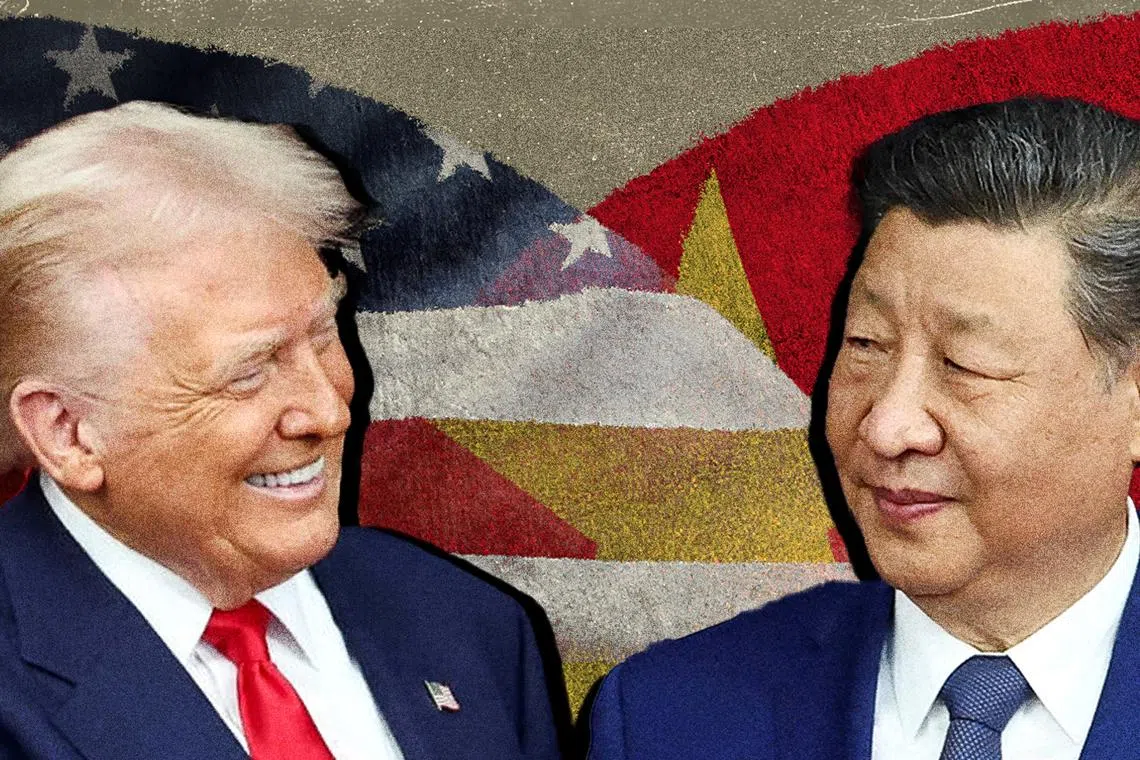
US and Chinese leaders met in Beijing for a summit that produced no major breakthroughs but gave both sides enough to claim progress at home. An analyst described it as a carefully managed balancing act, where deep rivalry continues but both governments found room to frame modest outcomes as diplomatic wins.
The meeting reflects a broader pattern in US-China relations: direct engagement at the highest level, designed less to resolve core disputes and more to prevent them from spiraling into open conflict. Both powers remain fundamentally at odds on trade, technology, Taiwan, and military posture, yet neither side wants those tensions to become unmanageable.
A state banquet in Beijing carries weight beyond protocol. It signals that Beijing was willing to host the meeting on its own soil and extend full ceremonial treatment, which it uses strategically to signal the relationship's temperature. For Washington, accepting that setting communicates a willingness to engage even amid ongoing disputes over semiconductors, export controls, and Taiwan security.
The analyst's framing, that both leaders could sell modest outcomes as wins, is the operative political logic here. Domestic audiences in both countries are skeptical of the other side. Any leader returning home with visible concessions risks political backlash. So summits at this level are often structured to produce just enough, a restored communication channel, a working group reactivation, a joint statement on a narrow issue like climate or fentanyl, to justify the meeting without forcing either side to give ground on bigger fights.
That structure is not failure. It is the deliberate design of managed competition, a posture both governments have signaled as their preferred mode for handling a relationship too large and too intertwined to simply contain or confront head-on.
The underlying rivalry does not pause for summits. US restrictions on advanced chip exports to China remain in place. Chinese military activity near Taiwan continues. The competition for influence across Southeast Asia, the Middle East, and Africa runs in the background regardless of what is said over a banquet table.
What summits can do is reduce the risk of miscalculation. When senior officials are not talking, small incidents, a naval encounter in the South China Sea, a spy balloon drifting over US territory, can escalate faster than either side intends. A functioning communication line at the top gives both governments a way to signal intent and lower the temperature before events get out of hand.
For markets and businesses operating across both economies, the signal from this kind of summit is cautiously stabilizing. It does not reverse decoupling in sensitive technology sectors, and it does not restore the open investment climate that defined the 2000s and 2010s. But it reduces the probability of a sudden sharp deterioration, the kind of event that would force companies to make rapid, costly operational changes.
India and other major economies in Asia watch these meetings closely. A more stable US-China channel reduces the pressure on middle powers to pick sides quickly, giving them more room to manage their own economic relationships with both Washington and Beijing without being caught in an escalating crossfire.
The test of this summit's real value will come in the months after. Watch for whether the communication channels opened or reaffirmed here actually get used when the next friction point arises, and whether either government follows through on any specific working-level commitments made alongside the headline meeting.
Qatar's foreign ministry said mediators including Qatar, Pakistan, and Oman have reached "very progressive stages" in efforts to end the US-Iran war, pushing Brent crude down more than four percent.
Qatar confirmed it is mediating between the US and Iran but said no direct talks are currently planned. The clarification follows conflicting statements from President Trump, who claimed talks are under way, and Tehran, which denied any dialogue is happening.
Saudi Aramco reported sharply higher second-quarter 2026 profits as the Iran war restricts global oil supply and pushes crude prices up. Other oil supermajors also posted outsized earnings, raising concerns about sustained fuel cost pressure for importing economies.
President Trump called current Iran negotiations the "last chance" to end five months of conflict, pushing oil prices higher. Tehran denied formal talks are taking place, raising the risk of a diplomatic breakdown with direct consequences for global energy markets.