
Qatar Signals Progress in US-Iran War Talks
Qatar's foreign ministry said mediators including Qatar, Pakistan, and Oman have reached "very progressive stages" in efforts to end the US-Iran war, pushing Brent crude down more than four percent.
Key Takeaways
May 2, 2026 · 3 min read · By Rishabh Bhardwaj
·
AI-assisted, human-reviewed · Our editorial standards
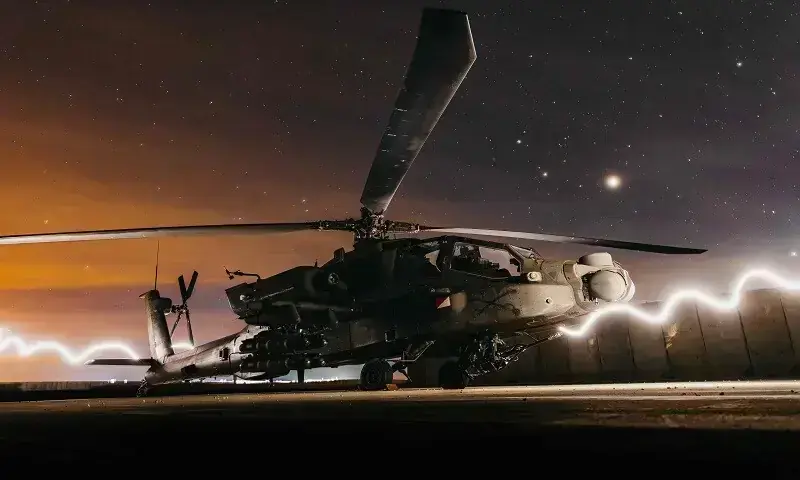
The Trump administration has approved more than $8.6 billion in military sales to Israel, Qatar, Kuwait, and the UAE, bypassing the normal congressional review process. Secretary of State Marco Rubio invoked an emergency waiver to clear all four deals simultaneously, a rarely used mechanism that removes the standard 30-day window during which Congress can block or scrutinize arms transfers.
The emergency declaration came nine weeks into the US-Israeli military campaign against Iran, which began on February 28, and more than three weeks after a fragile ceasefire took hold. Iran responded to the initial strikes with its own attacks targeting Israel and Gulf states that host American military bases, sharpening the demand for air defence and precision weapons across the region.
APKWS are laser-guided rockets used to convert unguided munitions into precision weapons at relatively low cost. Patriot systems defend against ballistic missiles and aircraft. The integrated battle command system sold to Kuwait links sensors, weapons, and command networks into a single operational picture. Together, the package suggests the administration is prioritising layered air and missile defence across Gulf partners at speed.
BAE Systems is the principal contractor for the APKWS sales to Qatar, Israel, and the UAE. RTX and Lockheed Martin lead the Patriot replenishment and Kuwait command-system contracts. Northrop Grumman is also listed as a principal contractor on the Kuwaiti deal. All four companies stand to benefit directly from the bypassed review.
The decision to waive congressional review concentrates approval power in the executive branch at a sensitive moment. US support for Israel has drawn criticism from human rights experts over the Gaza conflict, where Palestinian deaths have exceeded 70,000 according to the article. Scholars and a UN inquiry have raised assessments of genocide and starvation. Israel maintains its military operations are lawful self-defence following the Hamas-led attack in October 2023 that killed approximately 1,200 people. Washington has continued to back its regional allies throughout.
For defence investors and contractors, the scale and speed of these approvals signal continued strong US arms demand across the Middle East. For policymakers, the use of emergency waivers on deals of this size raises questions about the durability of legislative oversight in active conflict environments. Congressional reaction, if any, is now the key variable to watch.
Qatar's foreign ministry said mediators including Qatar, Pakistan, and Oman have reached "very progressive stages" in efforts to end the US-Iran war, pushing Brent crude down more than four percent.
Qatar confirmed it is mediating between the US and Iran but said no direct talks are currently planned. The clarification follows conflicting statements from President Trump, who claimed talks are under way, and Tehran, which denied any dialogue is happening.
Saudi Aramco reported sharply higher second-quarter 2026 profits as the Iran war restricts global oil supply and pushes crude prices up. Other oil supermajors also posted outsized earnings, raising concerns about sustained fuel cost pressure for importing economies.
President Trump called current Iran negotiations the "last chance" to end five months of conflict, pushing oil prices higher. Tehran denied formal talks are taking place, raising the risk of a diplomatic breakdown with direct consequences for global energy markets.