Congress president Mallikarjun Kharge declared that the United Opposition defeated a bid to harm the Constitution, framing the outcome as a collective victory against what he characterized as an assault on foundational democratic structures. The statement came alongside remarks from CPI general secretary D. Raja, who described the situation as a decisive setback for the Modi government's attempt to redraw India's political map under the guise of women's reservation. The opposition's unified posture signals a coordinated effort to contest legislative or procedural moves they argue serve electoral rather than constitutional ends. The women's reservation framing is significant: opposition parties are contesting not the principle of reservation but the mechanism and timing, suggesting the political battle will continue through parliamentary debate and public mobilization. Observers should watch whether the ruling coalition responds with procedural countermoves or recalibrates the legislative timeline heading into the election cycle.
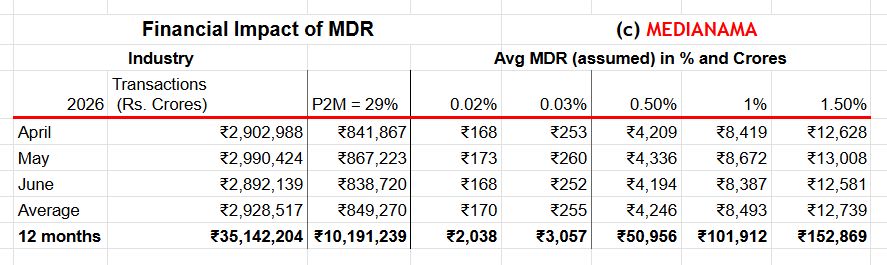
India's government plans to amend the Payment and Settlement Systems Act to restore UPI merchant discount rates, ending the zero-MDR regime in place since January 2020.
India's government has introduced the Taxation and Other Laws (Amendment) Bill, 2026, proposing changes to payments regulation, income tax, and the Finance Act to attract FDI and support Make in India. The Bill's final shape will depend on parliamentary debate and committee review.
The government's Taxation and Other Laws (Amendment) Bill, 2026, proposes to replace the blanket UPI MDR ban with a system allowing the Centre to notify which payment modes stay fee-free.
Prime Minister Narendra Modi inaugurated the Rs 5,000 crore Bhogapuram greenfield airport in Andhra Pradesh, built under a public-private partnership model. He also laid foundation stones for infrastructure projects worth nearly Rs 18,000 crore in the state, signalling a broad investment push for the region.