
Qatar Signals Progress in US-Iran War Talks
Qatar's foreign ministry said mediators including Qatar, Pakistan, and Oman have reached "very progressive stages" in efforts to end the US-Iran war, pushing Brent crude down more than four percent.
Key Takeaways
May 10, 2026 · 2 min read · By Rishabh Bhardwaj
·
AI-assisted, human-reviewed · Our editorial standards
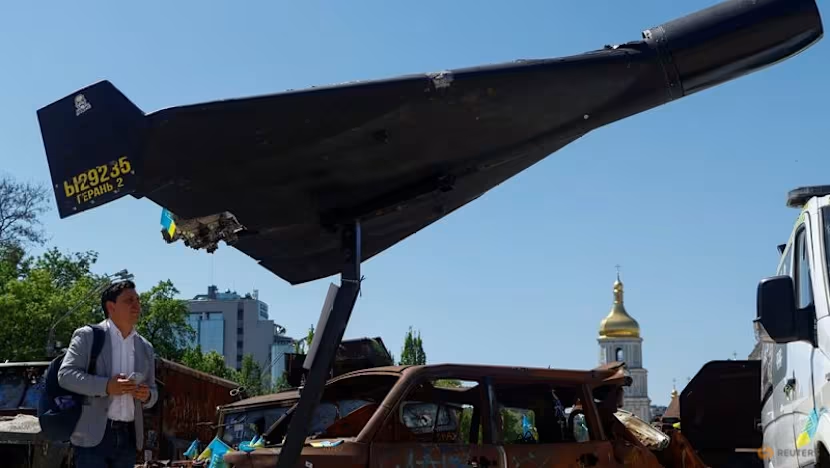
Ukraine and Russia are trading accusations over who violated the US-backed ceasefire, raising fresh doubts about whether the truce can hold as both sides push toward a permanent settlement.
Both countries publicly blamed each other for breaching the ceasefire terms shortly after it took effect. The mutual accusations follow a US-backed push to stabilize the front lines and create space for longer-term peace negotiations.
The pattern is familiar: ceasefire agreements between the two sides have repeatedly broken down over disputed violations, with each government framing the other as the aggressor. Without an independent monitoring mechanism named in the source, it is difficult for outside observers to assign responsibility.
A ceasefire that neither side trusts is fragile by definition. When both parties claim the other fired first, the political incentive to hold fire weakens, and tactical commanders on the ground face pressure to respond to perceived provocations. That dynamic can unravel a truce faster than formal negotiations can repair it.
For the US, which brokered this arrangement, the breakdown in credibility is a direct test of its diplomatic leverage. Washington's ability to hold both parties to agreed terms shapes how seriously future guarantees are taken, by Kyiv, Moscow, and European allies watching closely.
The broader peace process depends on the ceasefire surviving long enough for negotiators to define a permanent framework. If front-line violations escalate before that framework is agreed, the window for a negotiated end to the war narrows significantly.
Watch for whether the US responds with public pressure on one or both sides, and whether any third-party monitoring is proposed to reduce the he-said-she-said dynamic that is currently undermining the truce.
Qatar's foreign ministry said mediators including Qatar, Pakistan, and Oman have reached "very progressive stages" in efforts to end the US-Iran war, pushing Brent crude down more than four percent.
Qatar confirmed it is mediating between the US and Iran but said no direct talks are currently planned. The clarification follows conflicting statements from President Trump, who claimed talks are under way, and Tehran, which denied any dialogue is happening.
Saudi Aramco reported sharply higher second-quarter 2026 profits as the Iran war restricts global oil supply and pushes crude prices up. Other oil supermajors also posted outsized earnings, raising concerns about sustained fuel cost pressure for importing economies.
President Trump called current Iran negotiations the "last chance" to end five months of conflict, pushing oil prices higher. Tehran denied formal talks are taking place, raising the risk of a diplomatic breakdown with direct consequences for global energy markets.