India to Restore UPI Merchant Fees, PhonePe Gains Most
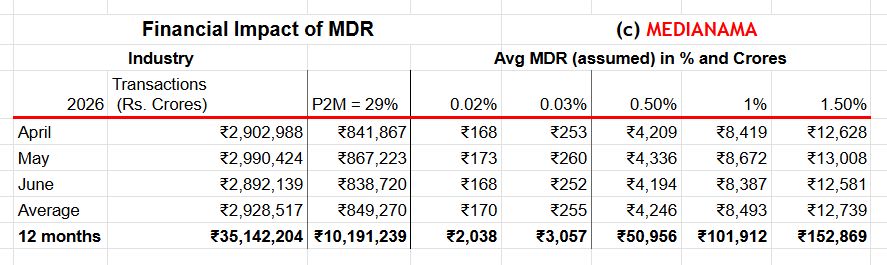
India's government plans to amend the Payment and Settlement Systems Act to restore UPI merchant discount rates, ending the zero-MDR regime in place since January 2020.
Key Takeaways
May 9, 2026 · 2 min read · By Rishabh Bhardwaj
·
AI-assisted, human-reviewed · Our editorial standards

Actor-turned-politician Chandrasekar Joseph Vijay, founder and chief of the Tamilaga Vettri Kazhagam (TVK), has been appointed Tamil Nadu Chief Minister by Governor Rajendra Arlekar. He will be sworn in on May 10, after TVK secured enough support to cross the majority threshold of 118 seats in the state assembly.
The majority mark in Tamil Nadu's 234-seat legislative assembly stands at 118. TVK clinched the numbers needed for a majority by pulling together key political support, clearing the constitutional requirement for government formation. The article does not specify the exact seat count or the nature of coalition arrangements, but the Governor's appointment signals that the alliance was formally verified.
Vijay's rise marks a significant shift in Tamil Nadu politics. Best known as one of South India's biggest film stars, he founded TVK and entered electoral politics, positioning the party as a new force in a state long dominated by the AIADMK and DMK. A victory at this scale, if confirmed by final seat tallies, would represent one of the more dramatic political debuts in recent Indian state politics.
The swearing-in ceremony is set for May 10, at which point Vijay will formally assume the office and begin the process of forming a cabinet. Cabinet composition will be the first major signal of how TVK intends to govern and which allies it plans to reward or include.
For markets and business, Tamil Nadu is one of India's most industrially active states, home to major manufacturing, automobile, and technology clusters. A new government's early policy signals on infrastructure spending, investor relations, and labour rules will be closely watched by domestic and foreign investors with exposure to the state.
Watch for: the cabinet list after May 10, TVK's first budget and policy agenda, and how the new government positions itself on centre-state relations and investment attraction.
India's government plans to amend the Payment and Settlement Systems Act to restore UPI merchant discount rates, ending the zero-MDR regime in place since January 2020.
India's government has introduced the Taxation and Other Laws (Amendment) Bill, 2026, proposing changes to payments regulation, income tax, and the Finance Act to attract FDI and support Make in India. The Bill's final shape will depend on parliamentary debate and committee review.
The government's Taxation and Other Laws (Amendment) Bill, 2026, proposes to replace the blanket UPI MDR ban with a system allowing the Centre to notify which payment modes stay fee-free.
Prime Minister Narendra Modi inaugurated the Rs 5,000 crore Bhogapuram greenfield airport in Andhra Pradesh, built under a public-private partnership model. He also laid foundation stones for infrastructure projects worth nearly Rs 18,000 crore in the state, signalling a broad investment push for the region.