India to Restore UPI Merchant Fees, PhonePe Gains Most
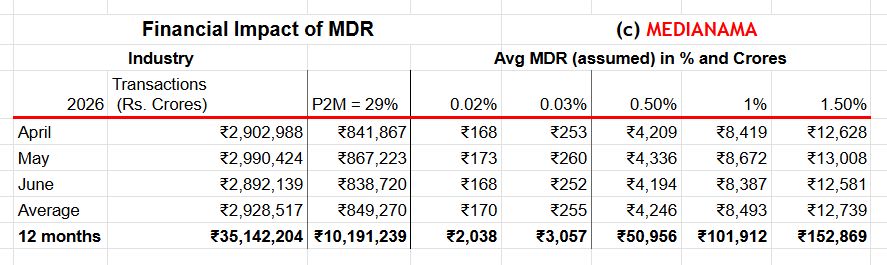
India's government plans to amend the Payment and Settlement Systems Act to restore UPI merchant discount rates, ending the zero-MDR regime in place since January 2020.
Key Takeaways
May 9, 2026 · 2 min read · By Rishabh Bhardwaj
·
AI-assisted, human-reviewed · Our editorial standards
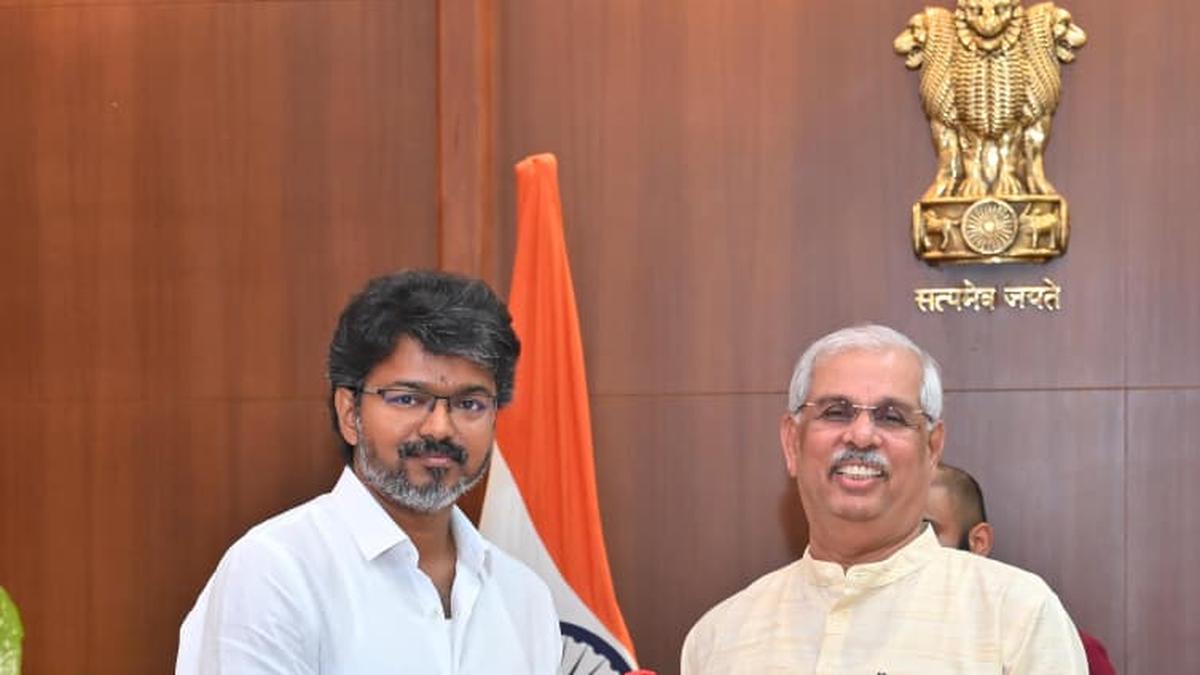
Actor-turned-politician Vijay, president of the Tamilaga Vettri Kazhagam (TVK), will be sworn in as Tamil Nadu's Chief Minister on May 10, following a coalition victory that gives his alliance enough seats to form a government.
TVK's own seat tally is not specified in the results, but the party has secured outside support from five Congress MLAs-elect, two each from the Communist Party of India (CPI), Communist Party of India (Marxist) (CPI-M), Viduthalai Chiruthaigal Katchi (VCK), and Indian Union Muslim League (IUML). That allied support alone adds 13 seats, bringing the coalition's combined tally to 120.
A majority in the 234-seat Tamil Nadu Assembly requires 118 seats, so the coalition clears that bar with 120. However, the slim margin means Vijay will govern with limited room for political defections or mid-term rebellions. Managing five distinct alliance partners, spanning left parties, a Dalit rights party, and a Muslim minority party, will be a constant balancing act for the new administration.
Vijay's entry into politics is recent. He founded TVK only a few years ago and fought this election as his first major electoral test. A win at this scale would represent one of the fastest political rises in Tamil Nadu's history, a state known for producing powerful regional leaders from the film industry, including the late J. Jayalalithaa and M. G. Ramachandran.
Cabinet formation will be the first signal of how Vijay distributes power across alliance partners. Each of the five parties in the coalition will expect ministerial representation proportional to their contribution. Congress, with five MLAs, is the largest partner and will likely seek prominent portfolios.
Fiscally, Tamil Nadu already carries a significant debt load, and any new government typically faces pressure to announce populist schemes early. How Vijay balances coalition demands against the state's finances will define his administration's early credibility.
The swearing-in date of May 10 gives the new government little transition time. Watch for announcements on cabinet composition and early policy signals in the days immediately following.
India's government plans to amend the Payment and Settlement Systems Act to restore UPI merchant discount rates, ending the zero-MDR regime in place since January 2020.
India's government has introduced the Taxation and Other Laws (Amendment) Bill, 2026, proposing changes to payments regulation, income tax, and the Finance Act to attract FDI and support Make in India. The Bill's final shape will depend on parliamentary debate and committee review.
The government's Taxation and Other Laws (Amendment) Bill, 2026, proposes to replace the blanket UPI MDR ban with a system allowing the Centre to notify which payment modes stay fee-free.
Prime Minister Narendra Modi inaugurated the Rs 5,000 crore Bhogapuram greenfield airport in Andhra Pradesh, built under a public-private partnership model. He also laid foundation stones for infrastructure projects worth nearly Rs 18,000 crore in the state, signalling a broad investment push for the region.