A federal appeals court has ruled that President Trump's ban on asylum applications at the U.S. border is illegal. A three-judge panel from the U.S. Court of Appeals for the District of Columbia Circuit said immigration law gives people the right to apply for asylum at the border, and the president does not have the power to override that right. The ruling directly challenges one of the Trump administration's core immigration enforcement tools. The D.C. Circuit is one of the most influential federal appeals courts in the country, and its rulings carry significant weight in legal battles involving executive power. The court's reasoning is straightforward: Congress wrote the right to seek asylum into law, and that statutory right cannot be removed by a presidential order alone. The administration would need an act of Congress to close that pathway legally. The decision is likely to face further challenge. The administration could appeal to the Supreme Court, which has already shown willingness to weigh in on immigration enforcement questions. Watch for whether the White House seeks an emergency stay to keep the ban in place while legal proceedings continue.
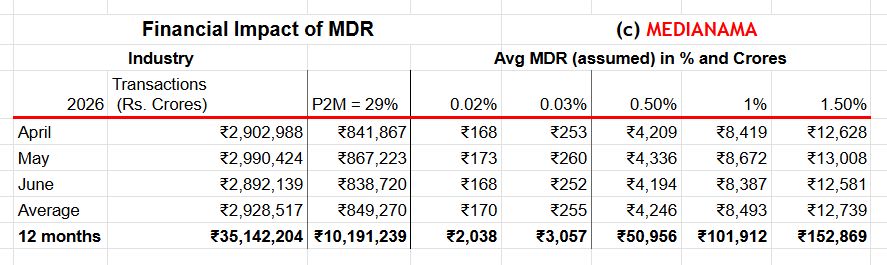
India's government plans to amend the Payment and Settlement Systems Act to restore UPI merchant discount rates, ending the zero-MDR regime in place since January 2020.
India's government has introduced the Taxation and Other Laws (Amendment) Bill, 2026, proposing changes to payments regulation, income tax, and the Finance Act to attract FDI and support Make in India. The Bill's final shape will depend on parliamentary debate and committee review.
The government's Taxation and Other Laws (Amendment) Bill, 2026, proposes to replace the blanket UPI MDR ban with a system allowing the Centre to notify which payment modes stay fee-free.
Prime Minister Narendra Modi inaugurated the Rs 5,000 crore Bhogapuram greenfield airport in Andhra Pradesh, built under a public-private partnership model. He also laid foundation stones for infrastructure projects worth nearly Rs 18,000 crore in the state, signalling a broad investment push for the region.