India to Restore UPI Merchant Fees, PhonePe Gains Most
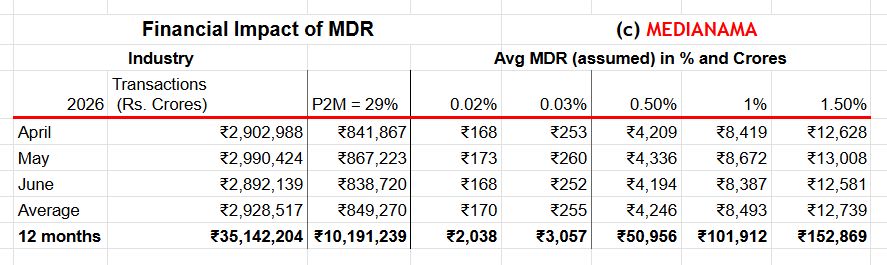
India's government plans to amend the Payment and Settlement Systems Act to restore UPI merchant discount rates, ending the zero-MDR regime in place since January 2020.
Key Takeaways
May 1, 2026 · 2 min read · By Rishabh Bhardwaj
·
AI-assisted, human-reviewed · Our editorial standards
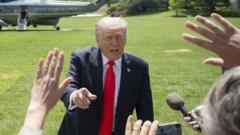
President Donald Trump has told Congress that the ceasefire between Israel and Iran means he no longer needs legislative approval to continue or expand military action involving Iran. In a formal communication to lawmakers, Trump argued that hostilities have "terminated" under the ceasefire, effectively closing the question of whether congressional authorisation was required in the first place.
The argument rests on the War Powers Resolution, the 1973 law that requires a president to notify Congress within 48 hours of deploying U.S. forces into hostilities and limits unauthorised military engagement to 60 days. Trump's position is that because a ceasefire is now in place, no active hostilities exist, and therefore the clock on congressional authorisation has stopped, making the question moot rather than resolved.
This is a significant legal manoeuvre. It does not mean Trump conceded he needed approval; rather, he is asserting he never did, and that the ceasefire confirms it. The distinction matters because it preserves executive authority for any future action without setting a precedent of seeking Congress's blessing first.
The move puts Congress in a difficult position. Lawmakers who wanted a formal vote on whether the U.S. should be involved in strikes on Iran now face an argument that the moment has passed. If the ceasefire holds, the political urgency for a congressional vote fades. If it breaks down, the White House has already laid the groundwork for acting again without legislative sign-off.
The broader pattern here is consistent with how recent administrations, across both parties, have interpreted the War Powers Resolution, narrowly, in ways that expand presidential discretion. Trump's framing goes a step further by using the ceasefire itself as the legal off-ramp.
For markets and geopolitics, the immediate read is that a ceasefire framing reduces the near-term risk of escalation. But the legal architecture Trump has constructed leaves the door open for rapid re-engagement if the situation changes, with no requirement to return to Congress first. That makes the durability of the ceasefire the single most important variable to watch.
India's government plans to amend the Payment and Settlement Systems Act to restore UPI merchant discount rates, ending the zero-MDR regime in place since January 2020.
India's government has introduced the Taxation and Other Laws (Amendment) Bill, 2026, proposing changes to payments regulation, income tax, and the Finance Act to attract FDI and support Make in India. The Bill's final shape will depend on parliamentary debate and committee review.
The government's Taxation and Other Laws (Amendment) Bill, 2026, proposes to replace the blanket UPI MDR ban with a system allowing the Centre to notify which payment modes stay fee-free.
Prime Minister Narendra Modi inaugurated the Rs 5,000 crore Bhogapuram greenfield airport in Andhra Pradesh, built under a public-private partnership model. He also laid foundation stones for infrastructure projects worth nearly Rs 18,000 crore in the state, signalling a broad investment push for the region.