
Qatar Signals Progress in US-Iran War Talks
Qatar's foreign ministry said mediators including Qatar, Pakistan, and Oman have reached "very progressive stages" in efforts to end the US-Iran war, pushing Brent crude down more than four percent.
Key Takeaways
May 3, 2026 · 2 min read · By Rishabh Bhardwaj
·
AI-assisted, human-reviewed · Our editorial standards
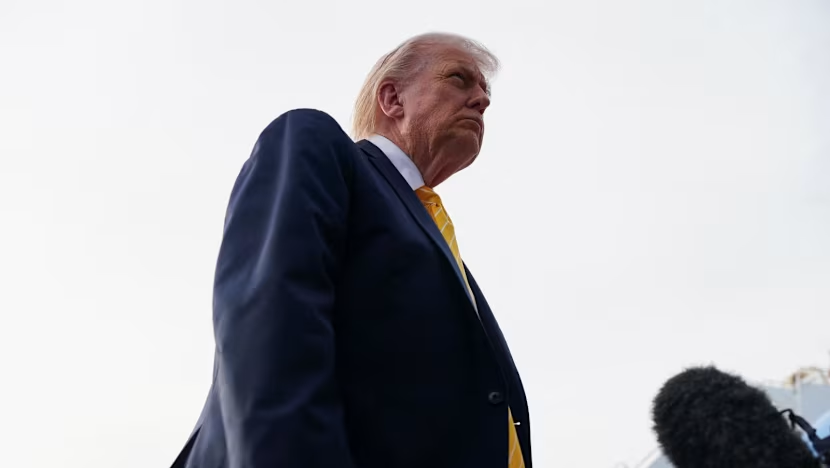
Donald Trump said he is likely to reject a peace proposal related to Iran, arguing that Iran has "not yet paid a big enough price." The statement signals that the U.S. is not moving toward a diplomatic resolution in the near term.
Trump's framing is deliberate: by publicly setting a threshold of pain before talks can succeed, he is making clear that any deal must come after further pressure, not before it. That pressure likely refers to a combination of economic sanctions, military posturing, and the threat of direct action against Iranian assets or interests.
The comment raises the risk of a prolonged confrontation. When a leading party publicly says a peace offer is likely to be rejected, it removes the diplomatic ambiguity that usually keeps back-channel talks alive. Iran, for its part, now faces a sharper choice: absorb more economic and military pressure, or offer concessions that Trump considers sufficient.
The practical cost is already visible in energy markets. Any escalation involving Iran, the world's seventh-largest oil producer, tends to push crude prices higher, since the Strait of Hormuz, through which roughly 20% of global oil flows, runs along Iran's coast. Investors and traders treat a hardening U.S. stance as a reason to price in supply risk.
For U.S. allies in the Middle East, particularly Israel and Gulf states, Trump's statement will read as continued backing for a pressure-first approach. For European governments still trying to preserve some form of diplomatic channel with Tehran, it narrows the space to operate.
The statement also adds uncertainty to Iran's nuclear timeline. If diplomacy is off the table for now, Tehran's incentive to pause or roll back its nuclear activity weakens. That makes the situation harder to manage for weapons non-proliferation efforts globally.
Watch for Iran's formal response and any movement in oil futures in the days ahead. A sharp reaction from Tehran, or silence, will signal how much room remains before the standoff moves into a more dangerous phase.
Qatar's foreign ministry said mediators including Qatar, Pakistan, and Oman have reached "very progressive stages" in efforts to end the US-Iran war, pushing Brent crude down more than four percent.
Qatar confirmed it is mediating between the US and Iran but said no direct talks are currently planned. The clarification follows conflicting statements from President Trump, who claimed talks are under way, and Tehran, which denied any dialogue is happening.
Saudi Aramco reported sharply higher second-quarter 2026 profits as the Iran war restricts global oil supply and pushes crude prices up. Other oil supermajors also posted outsized earnings, raising concerns about sustained fuel cost pressure for importing economies.
President Trump called current Iran negotiations the "last chance" to end five months of conflict, pushing oil prices higher. Tehran denied formal talks are taking place, raising the risk of a diplomatic breakdown with direct consequences for global energy markets.