India to Restore UPI Merchant Fees, PhonePe Gains Most
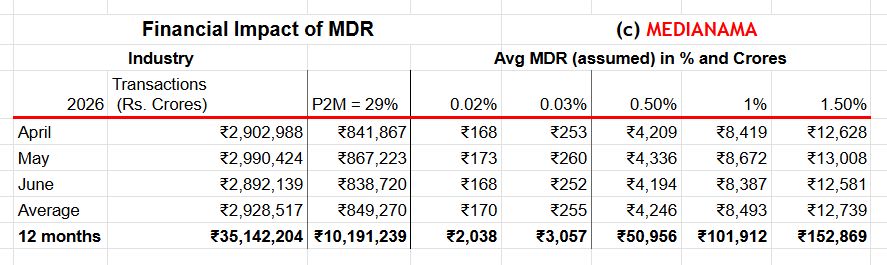
India's government plans to amend the Payment and Settlement Systems Act to restore UPI merchant discount rates, ending the zero-MDR regime in place since January 2020.
Key Takeaways
June 1, 2026 · 3 min read · By Rishabh Bhardwaj
·
AI-assisted, human-reviewed · Our editorial standards
The Trump administration has announced it will appeal a Supreme Court ruling that stripped the president of authority to impose broad import tariffs on goods from nearly every country, and has opened the door for importers to claim refunds on duties already paid.
The ruling found that Trump lacked the constitutional authority to impose the sweeping higher import taxes. Businesses, both large and small, have already begun receiving refunds on tariffs paid under those measures, signaling that the legal and financial consequences of the decision are moving quickly from courtrooms into company accounts.
The administration's decision to appeal means the legal fight is far from over. While the Supreme Court ruling currently stands, an appeal could ask for a stay of the refund process or seek to restore the tariffs through a different legal argument. Until a higher or appellate review concludes, importers who paid the struck-down tariffs have a live pathway to recover those costs.
Before this ruling, the tariffs stood as settled government policy. Importers paid the higher duties as a cost of doing business, with little legal recourse. The Supreme Court decision flips that dynamic. It creates a direct mechanism for businesses to file refund claims, and those claims are clearly already being processed given that refunds are actively flowing.
The scale of potential refunds is significant. The tariffs in question applied to imports from nearly every country, meaning the pool of affected businesses spans virtually every goods-importing sector, from consumer electronics and apparel to industrial components and raw materials. Companies that moved quickly to file claims appear to be first in line for repayment.
For businesses that absorbed tariff costs by raising prices for customers, the refunds represent a direct margin recovery. For those that restructured supply chains in response to the tariffs, the financial relief arrives after the fact, but it is still real money returning to the balance sheet.
The appeal is the most important variable to track. If the administration secures a stay while the appeal proceeds, refund payments could be paused and businesses that have not yet filed claims may face uncertainty about whether to proceed. The timeline for appellate review will determine how long importers remain in limbo.
There is also a broader policy question. If the tariffs are ultimately ruled invalid at every level, the administration would need a different legal basis, such as Congressional authorization, to reimpose equivalent measures. That would require a legislative path that does not currently exist in clear form.
For markets, the ruling and the appeal create two competing pressures. The prospect of refunds and lower effective import costs could ease inflation in goods categories where tariff pass-through was visible. At the same time, uncertainty about whether tariffs could return in a new legal form keeps supply chain planning difficult for importers trying to make longer-term sourcing decisions.
Companies with the largest tariff exposure, those importing high volumes from countries covered by the struck-down measures, have the most at stake in both the refund process and the appeal outcome. Smaller businesses that may have lacked legal resources to track and file claims promptly may need to act quickly if a stay is granted and the window narrows.
India's government plans to amend the Payment and Settlement Systems Act to restore UPI merchant discount rates, ending the zero-MDR regime in place since January 2020.
India's government has introduced the Taxation and Other Laws (Amendment) Bill, 2026, proposing changes to payments regulation, income tax, and the Finance Act to attract FDI and support Make in India. The Bill's final shape will depend on parliamentary debate and committee review.
The government's Taxation and Other Laws (Amendment) Bill, 2026, proposes to replace the blanket UPI MDR ban with a system allowing the Centre to notify which payment modes stay fee-free.
Prime Minister Narendra Modi inaugurated the Rs 5,000 crore Bhogapuram greenfield airport in Andhra Pradesh, built under a public-private partnership model. He also laid foundation stones for infrastructure projects worth nearly Rs 18,000 crore in the state, signalling a broad investment push for the region.