
Qatar Signals Progress in US-Iran War Talks
Qatar's foreign ministry said mediators including Qatar, Pakistan, and Oman have reached "very progressive stages" in efforts to end the US-Iran war, pushing Brent crude down more than four percent.
Key Takeaways
May 3, 2026 · 2 min read · By Rishabh Bhardwaj
·
AI-assisted, human-reviewed · Our editorial standards
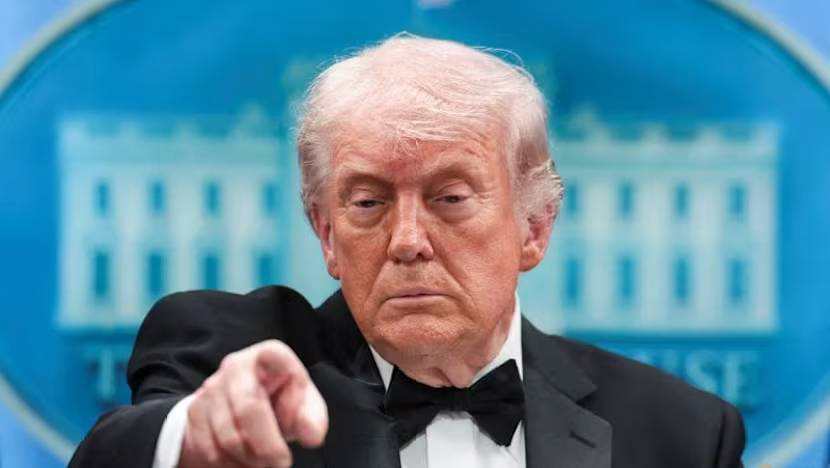
Donald Trump has confirmed his planned visit to China will go ahead, calling it an "amazing event." Chinese analysts, meanwhile, are framing the trip in more cautious terms: a necessary exercise in risk management between two powers navigating a volatile global environment.
The visit marks a significant diplomatic moment between Washington and Beijing, coming at a time when trade tensions, geopolitical friction, and global economic uncertainty have all been running high. Trump's public enthusiasm for the trip signals a desire to project momentum, but Chinese observers appear focused on something more modest, containing downside risks rather than achieving breakthrough deals.
That distinction matters. When leaders of the world's two largest economies meet, markets watch closely for signals on tariffs, technology restrictions, and broader trade frameworks. A summit that stabilises the relationship, even without concrete deliverables, can ease uncertainty for businesses operating across both economies. One that goes poorly can quickly ripple into supply chains, financial markets, and diplomatic calendars elsewhere.
The framing from Chinese analysts, prioritising risk management over grand outcomes, suggests Beijing is entering the summit with tempered expectations. This is a common posture before high-stakes diplomatic meetings: set the floor low, avoid surprises, and preserve the channel for future engagement. It also reflects a broader reality that structural tensions between the US and China, particularly over technology and trade, are unlikely to be resolved in a single visit.
Trump's characterisation of the trip as "amazing" is consistent with his style of building public anticipation, though it leaves the substantive agenda undefined. Whether the meeting produces any formal agreements, joint statements, or policy commitments is not yet known from available details.
For investors and businesses with exposure to US-China trade, the summit's tone will be closely watched. A constructive outcome could ease near-term pressure on sectors caught between the two countries' competing policies. What to watch: any joint communiqué language on tariffs, tech exports, or bilateral investment, and whether the two sides agree to further working-level talks after the visit.
Qatar's foreign ministry said mediators including Qatar, Pakistan, and Oman have reached "very progressive stages" in efforts to end the US-Iran war, pushing Brent crude down more than four percent.
Qatar confirmed it is mediating between the US and Iran but said no direct talks are currently planned. The clarification follows conflicting statements from President Trump, who claimed talks are under way, and Tehran, which denied any dialogue is happening.
Saudi Aramco reported sharply higher second-quarter 2026 profits as the Iran war restricts global oil supply and pushes crude prices up. Other oil supermajors also posted outsized earnings, raising concerns about sustained fuel cost pressure for importing economies.
President Trump called current Iran negotiations the "last chance" to end five months of conflict, pushing oil prices higher. Tehran denied formal talks are taking place, raising the risk of a diplomatic breakdown with direct consequences for global energy markets.