
Qatar Signals Progress in US-Iran War Talks
Qatar's foreign ministry said mediators including Qatar, Pakistan, and Oman have reached "very progressive stages" in efforts to end the US-Iran war, pushing Brent crude down more than four percent.
Key Takeaways
May 8, 2026 · 2 min read · By Rishabh Bhardwaj
·
AI-assisted, human-reviewed · Our editorial standards
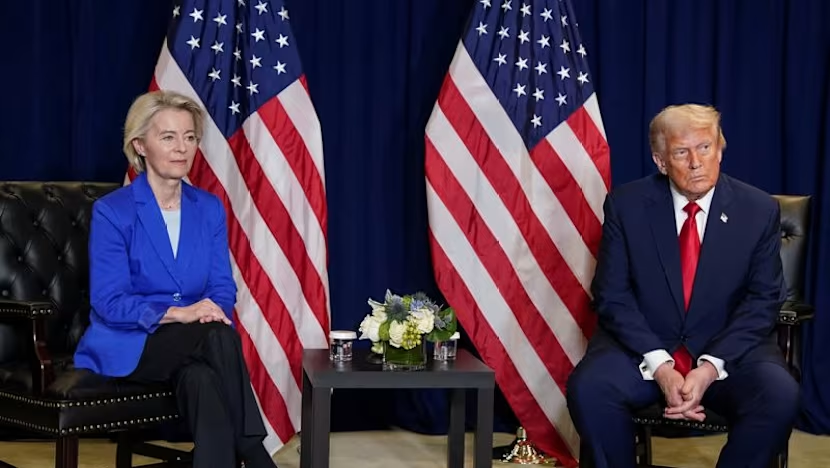
US President Donald Trump has given the European Union a hard deadline of July 4 to ratify a trade deal, warning that tariffs on EU goods will rise if no agreement is locked in by then.
Trump framed the ultimatum in pointed terms, saying he has been "waiting patiently" for the EU to meet its commitments. The July 4 date, American Independence Day, carries obvious symbolic weight, though the practical pressure is real: the US has the world's largest consumer market, and EU exporters, from German carmakers to French luxury goods makers, depend heavily on access to it.
The EU and US have been in an uneasy trade relationship since Trump's first term, when sweeping tariffs on steel and aluminium triggered retaliatory measures from Brussels. This latest deadline suggests those tensions have not been resolved and that Washington is prepared to escalate again.
A tariff hike on EU goods would hit several sectors hard. European automakers already face pressure from slowing demand and the electric vehicle transition. Higher US import duties would squeeze their margins further, since the American market accounts for a significant share of their revenue. Industrial exporters, wine and spirits producers, and pharmaceutical companies would also be in the line of fire depending on where any new tariffs land.
The EU now faces a compressed negotiating window. Brussels tends to move slowly on trade, formal ratification of any agreement requires sign-off from member states and, in some cases, national parliaments. Meeting a July 4 deadline would require either a political fast-track or a narrower deal that sidesteps the full ratification process.
There is no public confirmation yet from EU officials on whether a framework deal exists or how close the two sides are to an agreement. The lack of detail from the White House statement makes it difficult to assess whether this is a genuine negotiating push or a pressure tactic designed to extract concessions ahead of a later deal.
Markets will be watching closely. Any credible signal that tariffs on EU goods will rise could move European equity indices, particularly in auto and industrial sectors, and put fresh pressure on the euro.
Qatar's foreign ministry said mediators including Qatar, Pakistan, and Oman have reached "very progressive stages" in efforts to end the US-Iran war, pushing Brent crude down more than four percent.
Qatar confirmed it is mediating between the US and Iran but said no direct talks are currently planned. The clarification follows conflicting statements from President Trump, who claimed talks are under way, and Tehran, which denied any dialogue is happening.
Saudi Aramco reported sharply higher second-quarter 2026 profits as the Iran war restricts global oil supply and pushes crude prices up. Other oil supermajors also posted outsized earnings, raising concerns about sustained fuel cost pressure for importing economies.
President Trump called current Iran negotiations the "last chance" to end five months of conflict, pushing oil prices higher. Tehran denied formal talks are taking place, raising the risk of a diplomatic breakdown with direct consequences for global energy markets.