
Qatar Signals Progress in US-Iran War Talks
Qatar's foreign ministry said mediators including Qatar, Pakistan, and Oman have reached "very progressive stages" in efforts to end the US-Iran war, pushing Brent crude down more than four percent.
Key Takeaways
June 28, 2026 · 4 min read · By Rishabh Bhardwaj
·
AI-assisted, human-reviewed · Our editorial standards
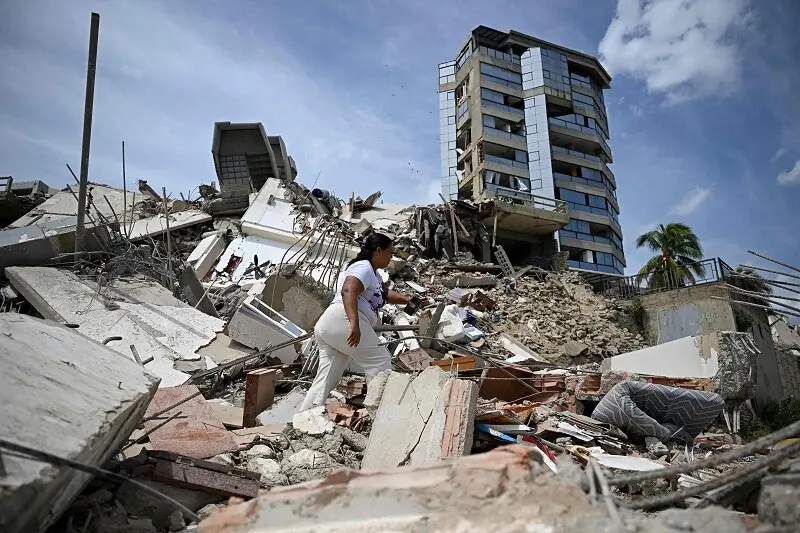
Two powerful earthquakes struck Venezuela on Wednesday, June 25, 2026, killing at least 164 people and leaving thousands more feared dead. The US Geological Survey recorded a magnitude 7.2 quake about 160km west of Caracas, followed less than a minute later by a magnitude 7.5 tremor. The US Geological Survey said its predictive models put the likely death toll in the thousands, with a substantial probability of exceeding 10,000.
The worst damage fell on La Guaira state, which borders Caracas and contains the capital's main airport. Interim President Delcy Rodriguez called it a "true tragedy" and a "disaster zone." Dozens of buildings collapsed in the area, footage from the airport showed ceilings caving in, and the seafront was left in rubble. The small coastal town of Morn near the epicenter in Carabobo state lost water and electricity. At least eight people died there, including three children, according to local mayor Emily Riera.
Many residents were home during a public holiday when the quakes hit, which likely drove up casualties. Caracas already had crumbling infrastructure from years of underinvestment, meaning many buildings had limited resilience. Venezuela sits on a seismically active zone where the Caribbean Plate meets the South American Plate, a boundary that caused a catastrophic quake in 1812 estimated to have killed around 30,000 people.
An opposition-run website tracking missing persons listed more than 24,000 people as unaccounted for by mid-morning on Thursday. Rodriguez confirmed nearly 1,000 injured and said the government was deploying heavy machinery to speed up rescue efforts. UN aid chief Tom Fletcher said a "massive collective effort" would be needed, noting that even before the quakes, 8 million Venezuelans already depended on humanitarian assistance.
The Venezuelan Red Cross said its own headquarters were critically damaged, though it still sent teams to the worst-hit areas. The French embassy also sustained serious damage. School classes were canceled for the rest of the week, and the Caracas stock exchange was closed and repurposed as a staging point for rescue operations.
The UN human rights mission for Venezuela urged the government to lift social media restrictions, calling the issue a "matter of life and death" for people trying to locate missing relatives. Cell service was unreliable across much of the country, and multiple cities near Caracas remained without power through Thursday morning.
The international response moved quickly. US Secretary of State Marco Rubio said rescue teams were being deployed and the Pentagon would send assets to the damaged Caracas airport. Rodriguez said she had spoken with US President Donald Trump and Russian President Vladimir Putin, both of whom offered assistance. Trump described the death toll as "devastating."
Spain and France each committed dozens of specialists. Germany pledged six military transport planes. Switzerland mobilized 80 personnel, eight rescue dogs, and 18 tonnes of equipment. El Salvador readied 300 rescuers and paramedics alongside 50 tonnes of supplies. Mexico dispatched a military team of rescuers and medical personnel, with President Claudia Sheinbaum indicating more help could follow. Chile, Brazil, Cuba, Ecuador, the Dominican Republic, the Czech Republic, Argentina, Costa Rica, and Uruguay all pledged solidarity or material aid. The Netherlands announced a two-million-euro aid package. China and Iran both said they were ready to provide whatever assistance Venezuela requested.
The International Federation of Red Cross and Red Crescent Societies released $2.5 million to support recovery efforts.
On the energy front, the Morn Petrochemical Complex, Venezuela's second-largest operational facility, sustained damage but workers were already restarting it by Thursday. Chevron said all its employees were accounted for and operations at its Venezuela sites were continuing. UK firm Shell, which is evaluating gas field development in the country, confirmed all its staff were unhurt. Other oil infrastructure appeared largely unaffected, limiting the immediate threat to Venezuela's already strained energy output.
The disaster lands on a country already under severe political and economic stress. Annual inflation exceeds 500 percent, and anti-government protests have intensified since January, when the US ordered the capture of President Nicolas Maduro. Rodriguez appealed for national unity as the rescue operation widened. The scale of international deployment suggests weeks of difficult recovery work ahead, with the confirmed death toll expected to rise sharply as rescue teams reach collapsed buildings across La Guaira, Caracas, and surrounding areas.
Qatar's foreign ministry said mediators including Qatar, Pakistan, and Oman have reached "very progressive stages" in efforts to end the US-Iran war, pushing Brent crude down more than four percent.
Qatar confirmed it is mediating between the US and Iran but said no direct talks are currently planned. The clarification follows conflicting statements from President Trump, who claimed talks are under way, and Tehran, which denied any dialogue is happening.
Saudi Aramco reported sharply higher second-quarter 2026 profits as the Iran war restricts global oil supply and pushes crude prices up. Other oil supermajors also posted outsized earnings, raising concerns about sustained fuel cost pressure for importing economies.
President Trump called current Iran negotiations the "last chance" to end five months of conflict, pushing oil prices higher. Tehran denied formal talks are taking place, raising the risk of a diplomatic breakdown with direct consequences for global energy markets.