
Qatar Signals Progress in US-Iran War Talks
Qatar's foreign ministry said mediators including Qatar, Pakistan, and Oman have reached "very progressive stages" in efforts to end the US-Iran war, pushing Brent crude down more than four percent.
Key Takeaways
May 13, 2026 · 4 min read · By Rishabh Bhardwaj
·
AI-assisted, human-reviewed · Our editorial standards
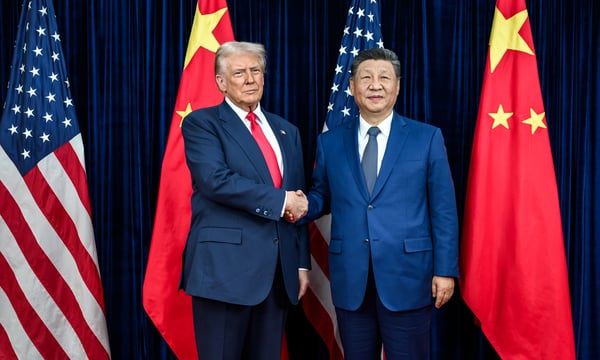
Donald Trump and Xi Jinping are set to meet at a moment when the relationship between the United States and China is under more strain than it has been in decades. Trade barriers, technology restrictions, and competing claims in the Pacific have all built up pressure that neither side has found a clean way to release. The summit offers a rare direct channel between the two leaders, but history suggests managed optics rarely produce durable agreements.
Trump has consistently framed China as an economic rival that must make concessions on trade. His administration has used tariffs as its primary lever, pushing for changes to what it describes as an unfair trade balance. For Beijing, the core priorities are different: preventing further restrictions on Chinese technology companies, maintaining access to American capital markets, and avoiding any formal shift in US policy on Taiwan.
Those priorities do not overlap neatly. The US wants structural economic changes that China has resisted for years. China wants the US to ease pressure on its technology sector, which Washington sees as a national security concern, not a trade irritant. The gap between the two positions is wide enough that a broad deal is unlikely to emerge from a single meeting.
What summits like this typically produce is a temporary lowering of temperature. Both governments signal willingness to talk, working-level officials get renewed mandates to negotiate, and specific flashpoints may get a quiet pause. That is worth something, but it is not a resolution.
Financial markets are sensitive to US-China signals in ways that go beyond trade. Technology supply chains, semiconductor access, and currency policy all carry cross-border exposure. Any sign that relations are stabilizing tends to lift risk assets tied to both economies, while a breakdown in talks can accelerate corporate decisions to shift sourcing or investment away from China.
The technology sector is the sharpest edge. US export controls on advanced chips have already forced Chinese firms to pursue domestic alternatives, and American companies have had to navigate complex rules about what they can sell and to whom. A summit that produces even a narrow agreement on tech trade would change the calculus for dozens of companies currently operating under strict compliance regimes.
Taiwan remains the highest-stakes variable in the room. While formal negotiations on Taiwan's status are not on any public agenda, the tone and framing that each leader uses after the meeting will be read closely in Taipei, Tokyo, and Brussels. Any ambiguity about US commitment to Taiwan's security tends to reverberate through Asian defense planning and alliance structures.
There is also a domestic audience on both sides. Trump faces pressure from parts of his political base to appear tough on China, while Xi is managing an economy dealing with a property sector downturn, sluggish consumer demand, and youth unemployment that has been high enough for authorities to stop publishing the data. Neither leader enters the room from a position of unconstrained strength.
The meeting also carries weight for countries that sit between the two powers. Southeast Asian economies, India, and major commodity exporters all calibrate their own trade and investment postures based on where US-China relations appear to be heading. A productive summit buys those countries more room to maneuver. A confrontational one tends to push them toward faster choices about alignment.
What to watch after the meeting is the joint statement language, if there is one, and the specifics of any working groups or follow-on talks that get announced. Vague commitments to dialogue are standard. Concrete timelines, named officials, and defined issue areas are the markers of a meeting that actually moved something. Without those specifics, the most that can be said is that the two sides chose talking over escalating, which matters, but only as a floor, not a ceiling.
Qatar's foreign ministry said mediators including Qatar, Pakistan, and Oman have reached "very progressive stages" in efforts to end the US-Iran war, pushing Brent crude down more than four percent.
Qatar confirmed it is mediating between the US and Iran but said no direct talks are currently planned. The clarification follows conflicting statements from President Trump, who claimed talks are under way, and Tehran, which denied any dialogue is happening.
Saudi Aramco reported sharply higher second-quarter 2026 profits as the Iran war restricts global oil supply and pushes crude prices up. Other oil supermajors also posted outsized earnings, raising concerns about sustained fuel cost pressure for importing economies.
President Trump called current Iran negotiations the "last chance" to end five months of conflict, pushing oil prices higher. Tehran denied formal talks are taking place, raising the risk of a diplomatic breakdown with direct consequences for global energy markets.