
Qatar Signals Progress in US-Iran War Talks
Qatar's foreign ministry said mediators including Qatar, Pakistan, and Oman have reached "very progressive stages" in efforts to end the US-Iran war, pushing Brent crude down more than four percent.
Key Takeaways
May 11, 2026 · 2 min read · By Rishabh Bhardwaj
·
AI-assisted, human-reviewed · Our editorial standards
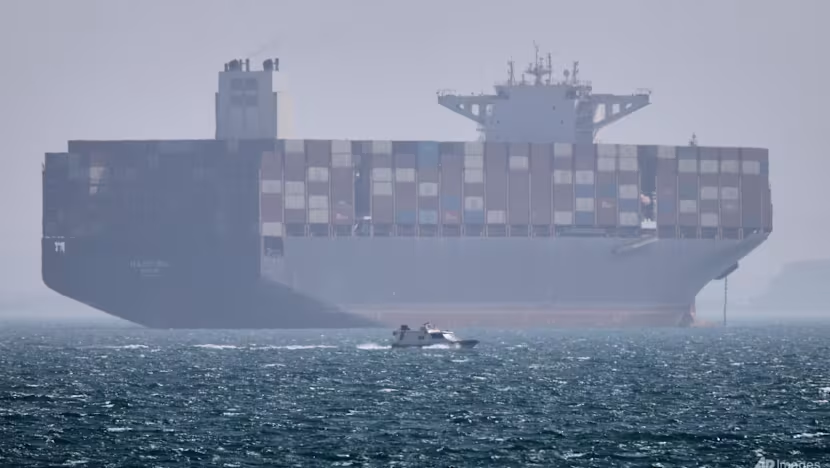
A standoff in the Strait of Hormuz is blocking fertiliser shipments and putting tens of millions of people at risk of hunger, a senior UN official has warned.
The Strait of Hormuz is one of the world's most critical shipping chokepoints, connecting the Persian Gulf to the Arabian Sea. A significant share of global fertiliser exports, including urea and potash, move through this corridor, particularly from Gulf producers. When that flow is disrupted, countries that depend on those imports to grow food face a direct supply crunch.
The UN has flagged countries in Africa and Asia as the most exposed. These regions tend to rely heavily on fertiliser imports and have limited ability to quickly source alternatives or absorb price spikes. Farmers who can't access or afford fertiliser plant less, or plant without adequate nutrients, which cuts yields. Smaller harvests mean tighter food supplies and higher prices, outcomes that fall hardest on lower-income populations.
The mechanism here is straightforward: fertiliser shortages don't cause hunger overnight, but they damage the next growing season. If planting cycles are disrupted now, food output could drop in the months ahead, compressing supply precisely when it is already under stress in several parts of the world.
Global food markets were already fragile before this warning. Previous supply shocks, including disruptions tied to the war in Ukraine, had already strained fertiliser availability and pushed up prices. A Hormuz blockade adds a new layer of risk on top of an already stretched system.
The UN's public warnings serve a practical purpose beyond raising awareness: they pressure parties involved in the standoff and push importing governments to act early, securing alternative supply routes, drawing down strategic reserves, or subsidising farmer access to fertiliser before shortages become acute.
What to watch: whether the standoff eases before the next major planting window in the affected regions, and whether international pressure or alternative supply arrangements emerge quickly enough to prevent yield losses from feeding through to a food crisis.
Qatar's foreign ministry said mediators including Qatar, Pakistan, and Oman have reached "very progressive stages" in efforts to end the US-Iran war, pushing Brent crude down more than four percent.
Qatar confirmed it is mediating between the US and Iran but said no direct talks are currently planned. The clarification follows conflicting statements from President Trump, who claimed talks are under way, and Tehran, which denied any dialogue is happening.
Saudi Aramco reported sharply higher second-quarter 2026 profits as the Iran war restricts global oil supply and pushes crude prices up. Other oil supermajors also posted outsized earnings, raising concerns about sustained fuel cost pressure for importing economies.
President Trump called current Iran negotiations the "last chance" to end five months of conflict, pushing oil prices higher. Tehran denied formal talks are taking place, raising the risk of a diplomatic breakdown with direct consequences for global energy markets.