India to Restore UPI Merchant Fees, PhonePe Gains Most
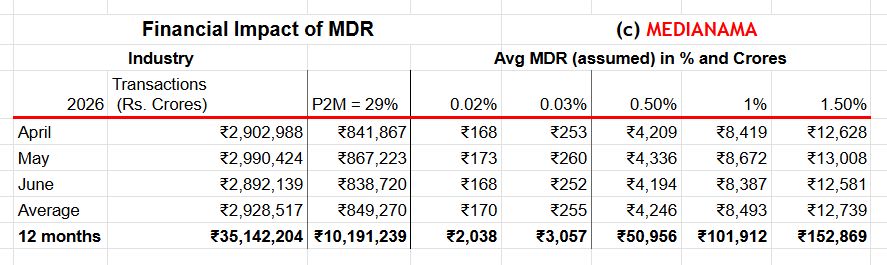
India's government plans to amend the Payment and Settlement Systems Act to restore UPI merchant discount rates, ending the zero-MDR regime in place since January 2020.
Key Takeaways
May 3, 2026 · 2 min read · By Rishabh Bhardwaj
·
AI-assisted, human-reviewed · Our editorial standards
Telangana has announced a six-circuit tourism strategy aimed at accelerating growth and attracting investment into the state's tourism sector. The plan segments the state's destinations into six distinct travel corridors, a structure designed to channel development spending, improve infrastructure, and make the state more appealing to domestic and international visitors.
Organizing tourism around circuits is a well-established approach in Indian state policy. By clustering destinations geographically and thematically, a state can coordinate road access, hospitality investment, and marketing efforts more efficiently than treating each site in isolation. Telangana's six-circuit model follows this logic, though the specific circuits, their anchor destinations, and the budget allocated have not been detailed in the available information.
Tourism policy at the state level typically targets two outcomes: visitor spending that flows into local hotels, transport, and food businesses, and longer-term private investment in resorts, heritage properties, and travel infrastructure. A circuit-based framework gives potential investors a clearer picture of where the government intends to focus, which can help de-risk site selection decisions.
Telangana already has a strong economic identity built around Hyderabad's technology and pharmaceutical sectors. A structured tourism push could diversify that base, particularly in districts outside the capital where economic activity is thinner. Rural and heritage tourism, when backed by reliable infrastructure, tends to create jobs that are harder to offshore and accessible to workers without advanced technical skills.
For investors, a government-backed circuit plan signals policy continuity and possible incentives such as land allocation, fast-track clearances, or subsidized financing for hospitality projects. Whether Telangana's announcement includes such specific incentives is not yet clear from available details.
The practical test for any tourism circuit strategy is execution: whether road and utility upgrades actually follow the plan, whether marketing budgets reach the right audiences, and whether private capital commits at the scale needed to lift visitor numbers meaningfully. Those details will determine whether this announcement translates into measurable economic impact.
India's government plans to amend the Payment and Settlement Systems Act to restore UPI merchant discount rates, ending the zero-MDR regime in place since January 2020.
India's government has introduced the Taxation and Other Laws (Amendment) Bill, 2026, proposing changes to payments regulation, income tax, and the Finance Act to attract FDI and support Make in India. The Bill's final shape will depend on parliamentary debate and committee review.
The government's Taxation and Other Laws (Amendment) Bill, 2026, proposes to replace the blanket UPI MDR ban with a system allowing the Centre to notify which payment modes stay fee-free.
Prime Minister Narendra Modi inaugurated the Rs 5,000 crore Bhogapuram greenfield airport in Andhra Pradesh, built under a public-private partnership model. He also laid foundation stones for infrastructure projects worth nearly Rs 18,000 crore in the state, signalling a broad investment push for the region.