
Qatar Signals Progress in US-Iran War Talks
Qatar's foreign ministry said mediators including Qatar, Pakistan, and Oman have reached "very progressive stages" in efforts to end the US-Iran war, pushing Brent crude down more than four percent.
Key Takeaways
May 9, 2026 · 3 min read · By Rishabh Bhardwaj
·
AI-assisted, human-reviewed · Our editorial standards
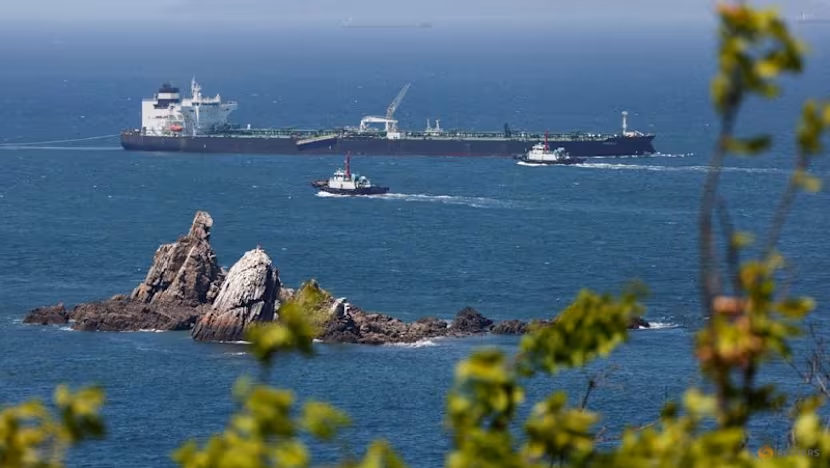
A CIA assessment has concluded that Iran could hold out under a naval blockade for roughly four months, according to reporting on the document's contents. The finding is significant because it undercuts the idea that economic pressure alone, or even a combination of airstrikes and a blockade, would quickly force Tehran to change course.
The report emerged as fighting continued to flare in the region, suggesting the broader conflict context in which US policymakers are weighing their options. American strikes on Iran had already taken place, yet the intelligence assessment found Iran had not been compelled to capitulate, a direct signal that military and economic tools used so far have not broken Iranian resolve.
A four-month window is long enough for Iran to pursue diplomatic off-ramps, absorb domestic pressure, and potentially harden its position. It also gives Tehran time to seek alternative supply routes or financial arrangements that could soften the blow of a blockade further. For US planners, this means a blockade would need sustained international enforcement, something historically difficult to maintain as political will erodes and allied coalitions face their own pressures.
Naval blockades are among the most aggressive short-of-war tools available. They cut off a country's ability to import and export goods by sea, targeting fuel, food, and industrial supplies. Against an economy already under heavy sanctions, a blockade's marginal impact depends on how much Iran has pre-positioned reserves and alternative land-based trade routes, particularly through neighbors like Iraq and Turkey.
The assessment complicates any strategy that bets on a fast Iranian collapse. If four months is the floor before serious pressure builds, the US and any coalition partners would need to sustain a costly and legally complex naval operation through that entire window, and likely longer, since intelligence estimates carry uncertainty in both directions.
For markets, the report reinforces the risk that conflict in or around the Persian Gulf does not resolve quickly. Prolonged instability near one of the world's most critical oil transit chokepoints, the Strait of Hormuz, keeps upward pressure on energy prices and shipping costs. Insurers and tanker operators have already been pricing in elevated risk premiums across the region.
The key things to watch: whether the US moves toward formally imposing or expanding a blockade, how Iran responds diplomatically or militarily in the coming weeks, and whether any allied governments publicly back or distance themselves from the strategy outlined in the intelligence report.
Qatar's foreign ministry said mediators including Qatar, Pakistan, and Oman have reached "very progressive stages" in efforts to end the US-Iran war, pushing Brent crude down more than four percent.
Qatar confirmed it is mediating between the US and Iran but said no direct talks are currently planned. The clarification follows conflicting statements from President Trump, who claimed talks are under way, and Tehran, which denied any dialogue is happening.
Saudi Aramco reported sharply higher second-quarter 2026 profits as the Iran war restricts global oil supply and pushes crude prices up. Other oil supermajors also posted outsized earnings, raising concerns about sustained fuel cost pressure for importing economies.
President Trump called current Iran negotiations the "last chance" to end five months of conflict, pushing oil prices higher. Tehran denied formal talks are taking place, raising the risk of a diplomatic breakdown with direct consequences for global energy markets.