Tamil Nadu Chief Minister and DMK president M.K. Stalin accused the BJP-AIADMK alliance of harboring intentions to divide Tamil Nadu if voted to power, sharpening his party's campaign rhetoric ahead of the state assembly election. Stalin framed the alliance as an existential threat to Tamil Nadu's territorial and political integrity, a charge designed to consolidate sentiment among voters wary of central government influence over southern states. The accusation draws on long-running tensions between Tamil Nadu's regional political identity and the BJP's national positioning, with Stalin deploying the division claim to cast the opposition alliance as an agent of Delhi rather than a defender of state interests. The DMK's electoral strategy appears centered on positioning itself as the sole guarantor of Tamil Nadu's autonomy. Whether the charge gains traction will depend on how the AIADMK and BJP respond publicly, and how voters in key constituencies weigh regional identity concerns against governance performance ahead of polling day.
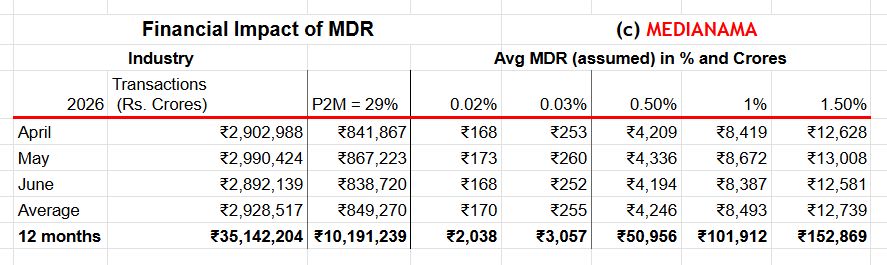
India's government plans to amend the Payment and Settlement Systems Act to restore UPI merchant discount rates, ending the zero-MDR regime in place since January 2020.
India's government has introduced the Taxation and Other Laws (Amendment) Bill, 2026, proposing changes to payments regulation, income tax, and the Finance Act to attract FDI and support Make in India. The Bill's final shape will depend on parliamentary debate and committee review.
The government's Taxation and Other Laws (Amendment) Bill, 2026, proposes to replace the blanket UPI MDR ban with a system allowing the Centre to notify which payment modes stay fee-free.
Prime Minister Narendra Modi inaugurated the Rs 5,000 crore Bhogapuram greenfield airport in Andhra Pradesh, built under a public-private partnership model. He also laid foundation stones for infrastructure projects worth nearly Rs 18,000 crore in the state, signalling a broad investment push for the region.