The Supreme Court declined to examine a petition challenging the Election Commission of India's transfer of 63 IPS officers and 16 senior bureaucrats in West Bengal, citing insufficient time before the scheduled election. The mass reshuffle included top-tier officials, the Director General of Police and the Chief Secretary among them, making it among the most sweeping pre-poll administrative changes in recent state election history. The petitioner argued the transfers were conducted wholesale under the cover of poll-preparedness rather than as a genuine electoral integrity measure. The Court's refusal to intervene on timing grounds effectively allows the ECI's personnel decisions to stand without judicial review ahead of the vote. The outcome matters beyond West Bengal: it signals that pre-election administrative reshuffles, even at scale, are unlikely to be stayed by courts when petitions arrive close to polling dates, handing election bodies broad operational latitude in the final window before elections.
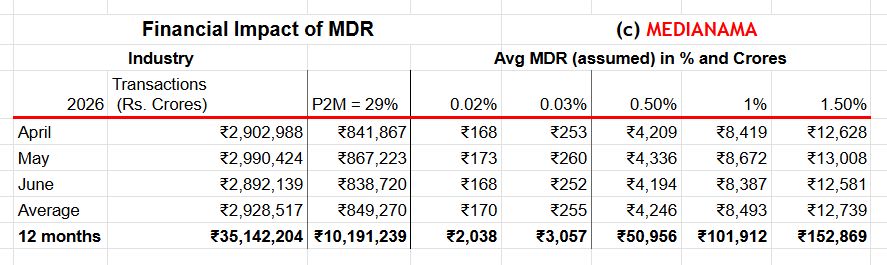
India's government plans to amend the Payment and Settlement Systems Act to restore UPI merchant discount rates, ending the zero-MDR regime in place since January 2020.
India's government has introduced the Taxation and Other Laws (Amendment) Bill, 2026, proposing changes to payments regulation, income tax, and the Finance Act to attract FDI and support Make in India. The Bill's final shape will depend on parliamentary debate and committee review.
The government's Taxation and Other Laws (Amendment) Bill, 2026, proposes to replace the blanket UPI MDR ban with a system allowing the Centre to notify which payment modes stay fee-free.
Prime Minister Narendra Modi inaugurated the Rs 5,000 crore Bhogapuram greenfield airport in Andhra Pradesh, built under a public-private partnership model. He also laid foundation stones for infrastructure projects worth nearly Rs 18,000 crore in the state, signalling a broad investment push for the region.