India to Restore UPI Merchant Fees, PhonePe Gains Most
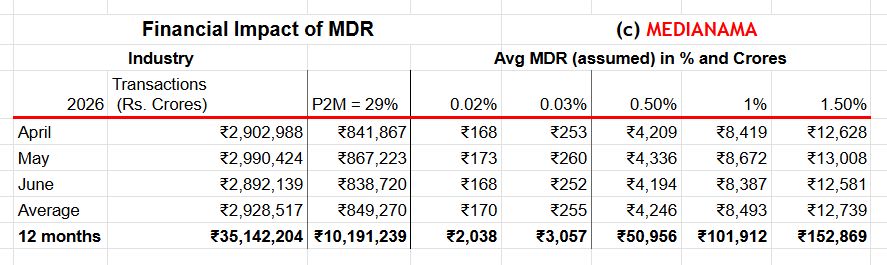
India's government plans to amend the Payment and Settlement Systems Act to restore UPI merchant discount rates, ending the zero-MDR regime in place since January 2020.
Key Takeaways
June 30, 2026 · 3 min read · By Rishabh Bhardwaj
·
AI-assisted, human-reviewed · Our editorial standards

The U.S. Supreme Court has blocked President Donald Trump from removing Federal Reserve board member Lisa Cook, ruling that the Fed's unique legal structure shields its governors from at-will presidential dismissal. In a separate but related decision issued the same day, the Court handed Trump expanded authority to fire leaders of other independent federal agencies, drawing a clear legal line between the central bank and the rest of the executive branch's regulatory landscape.
The two rulings together mark a significant moment in the long-running constitutional debate over how much control a sitting president can exercise over agencies designed to operate at arm's length from the White House. The Court drew a firm distinction: the Federal Reserve is different, and its board members are protected.
The Federal Reserve occupies a singular place in U.S. law. Congress deliberately constructed it with insulation from political pressure, because monetary policy, setting interest rates and managing the money supply, is seen as requiring independence from short-term political cycles. Allowing a president to remove governors mid-term over policy disagreements would fundamentally undermine that design. The Court's ruling affirms that structure holds, at least for now.
Lisa Cook, appointed to the Fed's Board of Governors, had been targeted for removal by the Trump administration. The Court's decision means she stays in her seat. Her term, like those of other Fed governors, runs for a fixed period under statute, and the ruling reinforces that a president cannot cut that short simply because of policy differences or political preference.
The broader decision granting Trump more removal power over other independent agencies is the more sweeping of the two. Independent agencies, think the Federal Trade Commission, the Consumer Product Safety Commission, or similar bodies, have historically been led by commissioners and chairs who could only be dismissed "for cause," meaning proven misconduct or neglect, not mere policy disagreement. The Court's ruling loosens that protection for those agencies, giving Trump and future presidents greater leverage over their leadership.
The practical split matters enormously. For financial markets, the Fed ruling is the more consequential one in the near term. Markets rely heavily on the perception of Fed independence. Any credible threat to that independence tends to rattle bond markets, weaken the dollar, and raise long-term interest rate expectations, because investors price in the risk of politically driven monetary policy. The Court removing that threat for the Fed specifically is likely to be read as stabilizing by market participants.
For the broader regulatory environment, the second ruling opens a new chapter. Agency heads at bodies outside the Fed now sit in a more politically exposed position. A president can more easily reshape the leadership, and therefore the enforcement priorities, of a wide range of regulators. Industries under active regulatory scrutiny, from technology to financial services to consumer products, will be watching closely to see how the administration uses this expanded authority.
The justices were not unanimous in either ruling, reflecting deep disagreement about the constitutional scope of presidential power. The dividing lines among the Court's members signal that further legal challenges to agency independence are likely, and that the boundary the Court drew today between the Fed and other agencies could itself be tested in future cases.
For now, Lisa Cook remains on the Federal Reserve board, monetary policy stays insulated from direct White House removal power, and the rest of the independent agency world faces a meaningfully changed legal landscape. The full consequences of the second ruling will take time to play out, as the administration decides how aggressively to use its newly confirmed authority.
India's government plans to amend the Payment and Settlement Systems Act to restore UPI merchant discount rates, ending the zero-MDR regime in place since January 2020.
India's government has introduced the Taxation and Other Laws (Amendment) Bill, 2026, proposing changes to payments regulation, income tax, and the Finance Act to attract FDI and support Make in India. The Bill's final shape will depend on parliamentary debate and committee review.
The government's Taxation and Other Laws (Amendment) Bill, 2026, proposes to replace the blanket UPI MDR ban with a system allowing the Centre to notify which payment modes stay fee-free.
Prime Minister Narendra Modi inaugurated the Rs 5,000 crore Bhogapuram greenfield airport in Andhra Pradesh, built under a public-private partnership model. He also laid foundation stones for infrastructure projects worth nearly Rs 18,000 crore in the state, signalling a broad investment push for the region.