The U.S. Supreme Court struck down Louisiana's congressional voting map, ruling it an illegal racial gerrymander. The decision limits how much race can be used as a factor when drawing district boundaries, even when the stated goal is to boost minority representation. Louisiana had drawn the map to include a second majority-Black congressional district, arguing the Voting Rights Act required it. The court rejected that justification. The ruling tightens the line between permissible race-conscious redistricting and unconstitutional racial gerrymandering. Lawmakers in states with large minority populations now face a narrower path when designing districts meant to give those communities stronger electoral weight. The decision follows a series of rulings that have gradually narrowed the scope of the Voting Rights Act. States currently under redistricting pressure will need to show that race was not the dominant factor in how their maps were drawn, making future legal challenges to such maps more likely.
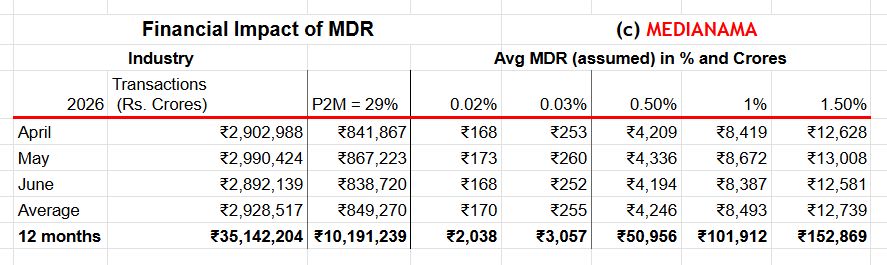
India's government plans to amend the Payment and Settlement Systems Act to restore UPI merchant discount rates, ending the zero-MDR regime in place since January 2020.
India's government has introduced the Taxation and Other Laws (Amendment) Bill, 2026, proposing changes to payments regulation, income tax, and the Finance Act to attract FDI and support Make in India. The Bill's final shape will depend on parliamentary debate and committee review.
The government's Taxation and Other Laws (Amendment) Bill, 2026, proposes to replace the blanket UPI MDR ban with a system allowing the Centre to notify which payment modes stay fee-free.
Prime Minister Narendra Modi inaugurated the Rs 5,000 crore Bhogapuram greenfield airport in Andhra Pradesh, built under a public-private partnership model. He also laid foundation stones for infrastructure projects worth nearly Rs 18,000 crore in the state, signalling a broad investment push for the region.