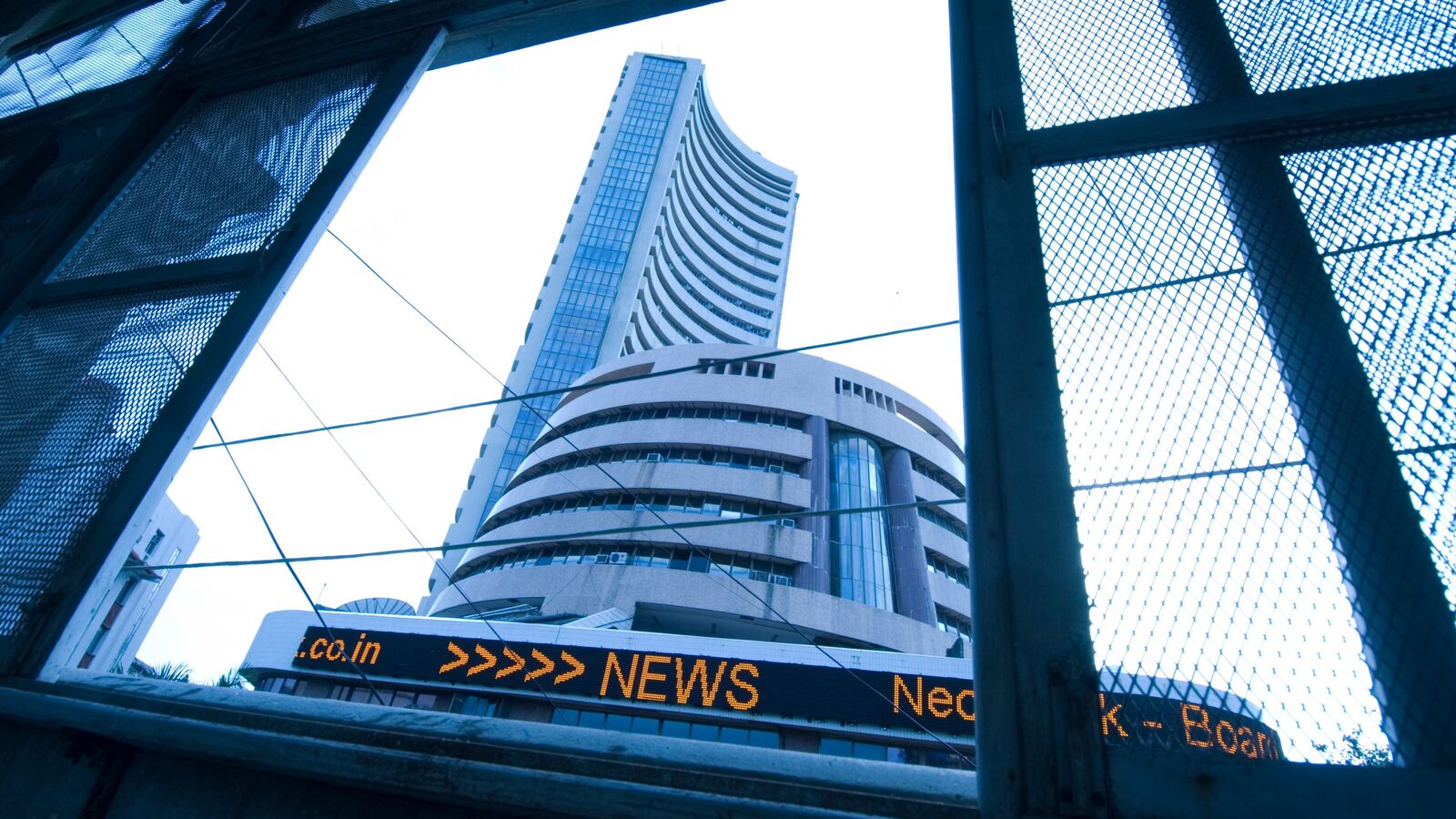
Indian stock markets opened sharply lower on Monday, with the BSE Sensex dropping 821.73 points to open at 73,421.61 and the Nifty 50 falling 286 points to 23,080.70, as rising tensions between the United States and Iran rattled global investor confidence.
The scale of the opening drop placed both benchmarks at their weakest levels in recent sessions. The Sensex shed 1.11% in early trade, while the Nifty 50 slipped 1.22%, breaking below the 23,100 mark that had held as a near-term support level.
What Is Driving the Sell-Off
The immediate trigger is the escalation in US-Iran tensions, which typically sends a predictable shock through global markets. When conflict risk rises in the Middle East, investors move fast to reduce exposure to riskier assets like equities and shift toward safer ones such as gold, US Treasury bonds, or the dollar. That pattern is playing out now across Asian and emerging markets, with India no exception.
Geopolitical flare-ups in that region carry a specific economic threat: disruption to oil supply routes. The Middle East accounts for a large share of global crude output, and any credible threat to shipping lanes or production raises oil prices quickly. India imports roughly 85% of its crude oil needs, so a sustained rise in global oil prices feeds directly into higher fuel costs, wider trade deficits, and pressure on the rupee. Each of these has a knock-on effect on corporate margins and consumer spending.
Beyond oil, conflict-driven volatility tends to trigger risk-off sentiment globally, meaning foreign institutional investors pull money out of emerging markets like India and park it somewhere perceived as safer. That outflow puts additional selling pressure on Indian equities and can weaken the rupee further, compounding the impact on import-heavy sectors.
Who Gets Hit Hardest
Sectors most exposed in this environment include aviation, paints, chemicals, and logistics, all of which rely heavily on crude derivatives as inputs or fuel. Oil marketing companies face margin pressure when crude rises faster than retail fuel prices can be adjusted. Broader consumer-facing sectors could also feel secondary pressure if fuel inflation feeds into overall cost-of-living increases.
Export-oriented sectors such as information technology tend to be relatively more insulated from oil price swings, though a stronger dollar and weaker rupee can cut both ways, helping revenues in rupee terms but complicating the macro picture for the broader economy.
Domestic institutional investors, including mutual funds, often step in during sharp falls to provide some support, a pattern seen repeatedly during global sell-offs in recent years. Whether that cushion is enough depends on the depth and duration of the geopolitical stress.
For retail investors, a drop of this size in a single session looks alarming but is not unusual when a major geopolitical event breaks overnight. The more important question is whether the US-Iran situation escalates further or stabilizes. A quick de-escalation has historically allowed markets to recover most of the lost ground within days. A prolonged conflict or actual supply disruption would be a different and more serious scenario for Indian markets.
Traders and fund managers will be watching crude oil futures closely, along with any diplomatic signals from Washington or Tehran. The rupee's movement against the dollar and foreign institutional investor flow data over the next few sessions will indicate how deep the risk-off sentiment runs. Domestic economic fundamentals remain broadly intact, but external shocks of this kind can override short-term valuations until clarity returns.