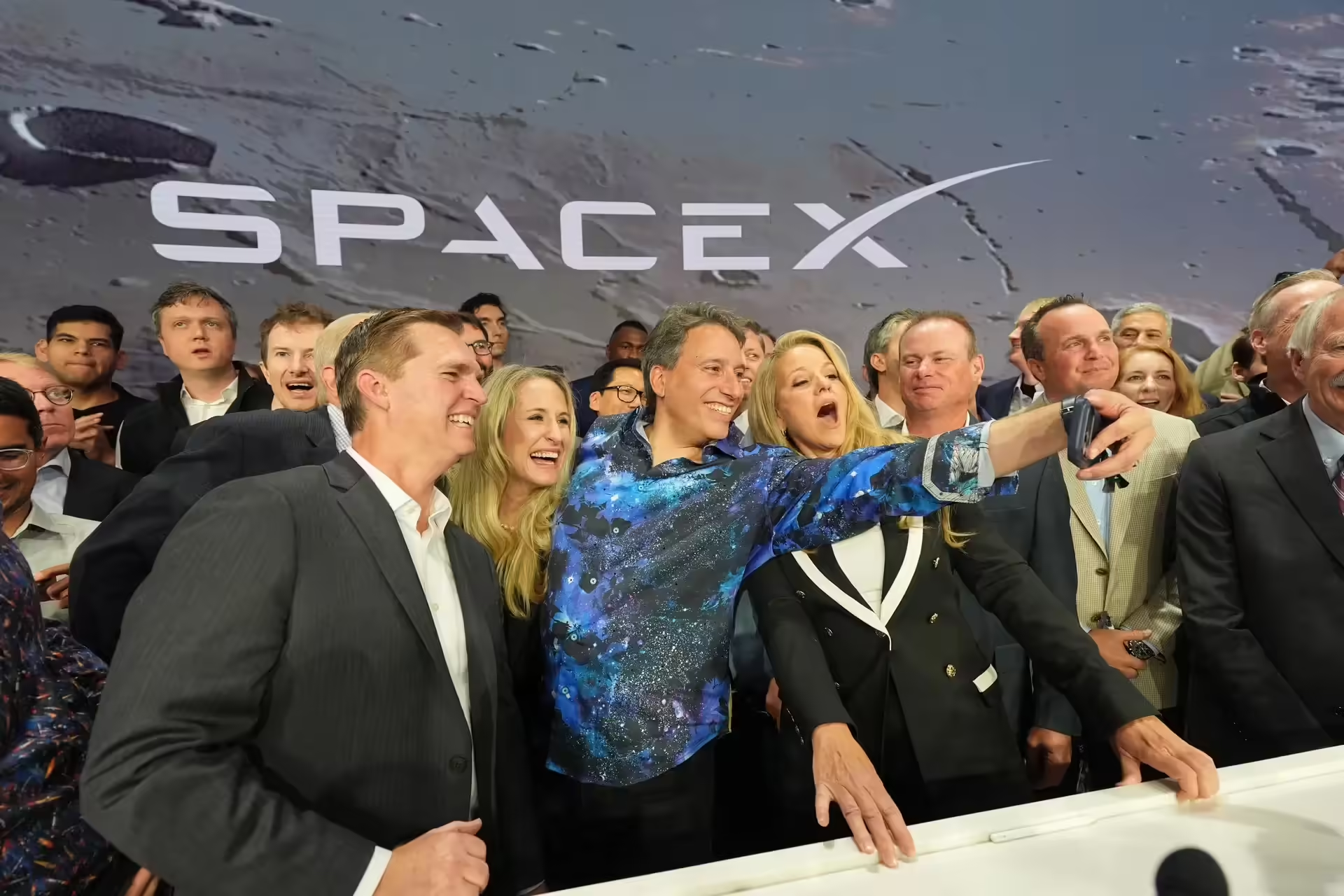
SpaceX shares rose 11% on their Nasdaq debut after the company completed a $75 billion IPO, pushing its total valuation to nearly $1.96 trillion. The listing marks one of the largest public offerings in history, surpassing Saudi Aramco's IPO in total funds raised, and makes Elon Musk the world's first trillionaire.
The debut gives public investors their first direct stake in a company that has reshaped the commercial space industry over two decades. SpaceX was previously accessible only to private and institutional investors through secondary market trades, so the IPO opens a much wider capital base for the company as it pursues increasingly expensive ambitions.
What drove the valuation
Starlink, SpaceX's satellite internet business, is the primary engine behind the company's financial growth. The service now operates one of the largest low-earth-orbit satellite constellations in existence and generates recurring subscription revenue across consumer, enterprise, and government contracts. That predictable revenue stream gives SpaceX a financial profile closer to a technology infrastructure company than a traditional aerospace contractor, which helps explain the scale of investor demand at IPO.
The rocket launch business adds a second, high-margin revenue layer. SpaceX holds dominant market share in commercial and government launch contracts, with its Falcon 9 rocket maintaining a strong reliability record. The Starship program, still in development, is designed to carry both cargo and passengers on deep-space missions, including the Mars colonization goal that Musk has made central to SpaceX's long-term identity.
Together, these two businesses at very different stages of maturity present a mixed but compelling investment case. Starlink offers near-term cash flow visibility. Starship and Mars represent long-horizon bets that carry significant execution and regulatory risk but also the potential for entirely new revenue categories.
Why this listing matters beyond the headline number
A $1.96 trillion valuation puts SpaceX in the company of the world's most valuable public firms, a peer group that includes only a handful of technology giants. The IPO also resets the benchmark for how markets price the commercial space sector, with potential ripple effects on valuations for other private aerospace and satellite companies.
For Musk personally, the listing converts a large portion of his SpaceX equity into publicly priced wealth, crossing the trillionaire threshold. That milestone is largely a function of the IPO's pricing mechanism rather than a liquidity event, since founders typically face lock-up restrictions on selling shares immediately after listing.
Institutional investors who held SpaceX through its private funding rounds now have a clearer path to partial exits, which could generate significant capital recycling back into other venture and growth-stage technology investments.
The Nasdaq listing also subjects SpaceX to public company disclosure requirements for the first time. Quarterly earnings, segment revenue, and capital expenditure data will become publicly available, giving analysts and competitors detailed visibility into a business that has operated largely behind closed doors. That transparency is a meaningful structural change for the broader space industry.
Investors will be watching several near-term signals closely: the pace of Starlink subscriber growth and average revenue per user, the Starship development timeline and any regulatory updates from the Federal Aviation Administration, and how management frames capital allocation between the launch business and longer-range Mars mission spending. The first earnings call after the IPO will likely set the tone for how public markets treat the stock once initial debut enthusiasm settles.