
Qatar Signals Progress in US-Iran War Talks
Qatar's foreign ministry said mediators including Qatar, Pakistan, and Oman have reached "very progressive stages" in efforts to end the US-Iran war, pushing Brent crude down more than four percent.
Key Takeaways
June 23, 2026 · 4 min read · By Rishabh Bhardwaj
·
AI-assisted, human-reviewed · Our editorial standards
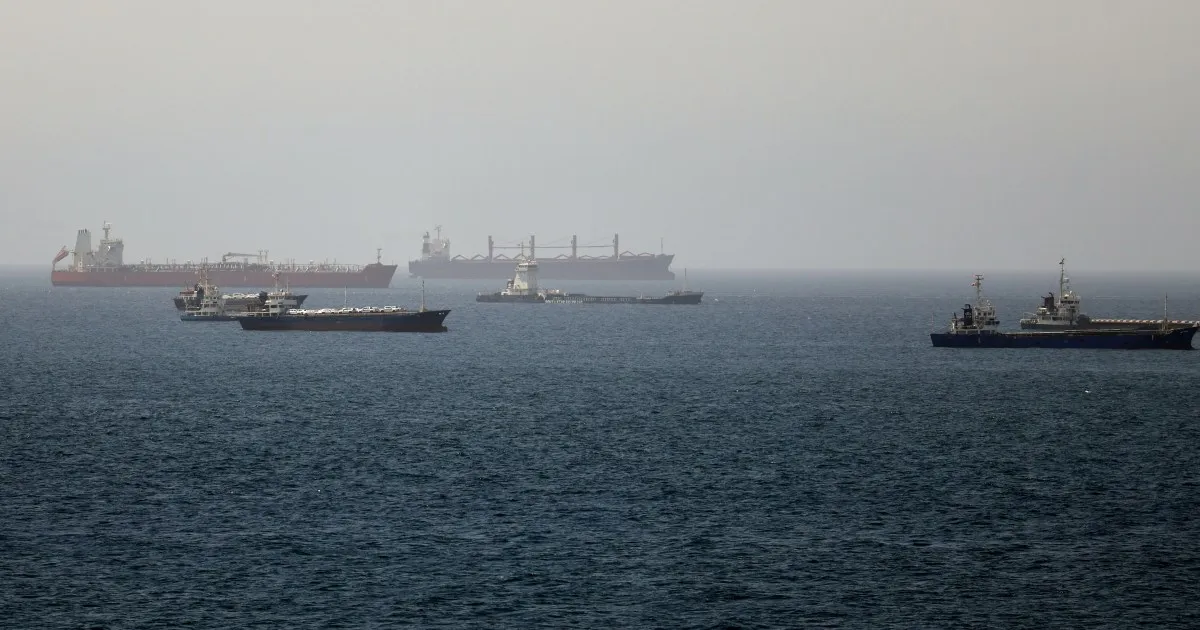
Iran has declared the Strait of Hormuz shut, triggering an immediate and sharp drop in ship transits through one of the world's most critical oil chokepoints, according to vessel tracking data. The move comes as American and Iranian officials hold urgent talks aimed at preserving a fragile ceasefire or peace framework between the two sides.
The Strait of Hormuz is the narrow waterway between Iran and Oman through which roughly 20 percent of global oil supplies pass every day. Any sustained disruption there ripples almost instantly into crude oil prices, shipping insurance costs, and energy import bills for countries from Japan to India to Western Europe.
Ship tracking systems are registering a significant fall in vessels transiting the strait. Tankers, bulk carriers, and container ships appear to be holding position, diverting to longer routes, or awaiting clearance rather than risk passage through a waterway Iran has now formally declared closed. The speed of the drop-off suggests operators are not waiting to see how diplomatic talks unfold before rerouting.
Iran has the military capability to threaten Hormuz through a combination of naval mines, fast-attack boats, anti-ship missiles, and shore-based artillery. An actual physical blockade does not need to be airtight to be effective. Even the credible threat of interdiction is enough to raise war-risk insurance premiums sharply, which in turn makes voyages commercially unviable for many operators without government backing or military escort.
The declaration has landed in the middle of active diplomacy. US and Iranian officials are reported to be in talks designed to hold together a broader peace arrangement. That context cuts two ways. On one hand, the diplomatic channel gives both sides a face-saving path to de-escalate quickly. On the other hand, the closure may be a deliberate pressure tactic by Tehran, designed to demonstrate leverage and extract concessions before any deal is signed.
For energy markets, the uncertainty itself is the primary problem right now. Benchmark crude prices are sensitive to Hormuz news because the strait cannot be easily bypassed at scale. Saudi Arabia and the UAE have some overland pipeline capacity that avoids the waterway, but it is nowhere near enough to absorb full Gulf export volumes. Any extended closure would force buyers to draw down strategic reserves, accelerate purchases of non-Gulf crude, and push freight rates sharply higher on alternative routes around the Cape of Good Hope.
India is particularly exposed. It sources a large share of its crude from Gulf producers, and the Strait of Hormuz is the only practical exit route for most of that oil. A sustained disruption would pressure India's import bill, weaken the rupee against the dollar, and feed through to domestic fuel prices if it persists long enough for hedges and spot inventories to run thin.
Shipping companies face an immediate commercial decision. Sending a vessel through a declared closed zone without clarity on enforcement means potential seizure, damage, or loss. War-risk insurance underwriters in London will almost certainly have already revised their rates upward, in some cases dramatically, meaning the cost of a single voyage through the strait may have jumped by millions of dollars overnight.
The broader supply chain effect extends beyond oil. The Gulf is also a major conduit for liquefied natural gas from Qatar, one of the world's largest LNG exporters. European buyers who have spent the past several years diversifying away from Russian pipeline gas toward Qatari LNG are now watching a second major supply route face uncertainty at the same time.
What to watch next is whether the US-Iran talks produce any public signal of progress in the coming hours or days. A joint statement, a ceasefire extension, or an Iranian announcement walking back the closure would likely unwind much of the immediate market tension. Absent that, every day of reduced transits tightens physical oil supply balances and adds pressure on governments to respond either diplomatically or through strategic reserve releases.
Qatar's foreign ministry said mediators including Qatar, Pakistan, and Oman have reached "very progressive stages" in efforts to end the US-Iran war, pushing Brent crude down more than four percent.
Qatar confirmed it is mediating between the US and Iran but said no direct talks are currently planned. The clarification follows conflicting statements from President Trump, who claimed talks are under way, and Tehran, which denied any dialogue is happening.
Saudi Aramco reported sharply higher second-quarter 2026 profits as the Iran war restricts global oil supply and pushes crude prices up. Other oil supermajors also posted outsized earnings, raising concerns about sustained fuel cost pressure for importing economies.
President Trump called current Iran negotiations the "last chance" to end five months of conflict, pushing oil prices higher. Tehran denied formal talks are taking place, raising the risk of a diplomatic breakdown with direct consequences for global energy markets.