Senators Elizabeth Warren and Richard Blumenthal are formally investigating the National Labor Relations Board after the agency dropped retaliation charges against SpaceX in February. The charges had alleged that Elon Musk's company fired employees in retaliation for protected labor activity, a serious statutory violation under the National Labor Relations Act. The NLRB's decision to withdraw those charges is now the subject of congressional scrutiny, with Warren and Blumenthal seeking to determine whether the dismissal reflected legitimate legal judgment or improper external pressure. The investigation adds to a growing pattern of Democratic lawmakers questioning enforcement decisions at federal labor and regulatory agencies during the current administration. For SpaceX, the dropped charges had already removed immediate legal liability, but congressional attention keeps the underlying conduct in public view. The outcome of the senators' inquiry could pressure the NLRB to account for its reasoning, influence future enforcement posture on labor retaliation cases, and set a precedent for how politically connected employers are treated under federal labor law.
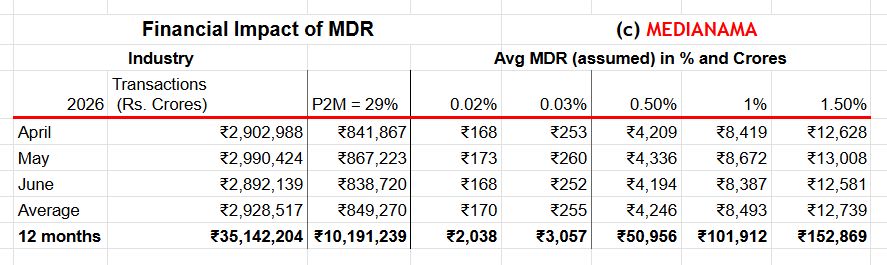
India's government plans to amend the Payment and Settlement Systems Act to restore UPI merchant discount rates, ending the zero-MDR regime in place since January 2020.
India's government has introduced the Taxation and Other Laws (Amendment) Bill, 2026, proposing changes to payments regulation, income tax, and the Finance Act to attract FDI and support Make in India. The Bill's final shape will depend on parliamentary debate and committee review.
The government's Taxation and Other Laws (Amendment) Bill, 2026, proposes to replace the blanket UPI MDR ban with a system allowing the Centre to notify which payment modes stay fee-free.
Prime Minister Narendra Modi inaugurated the Rs 5,000 crore Bhogapuram greenfield airport in Andhra Pradesh, built under a public-private partnership model. He also laid foundation stones for infrastructure projects worth nearly Rs 18,000 crore in the state, signalling a broad investment push for the region.