India to Restore UPI Merchant Fees, PhonePe Gains Most
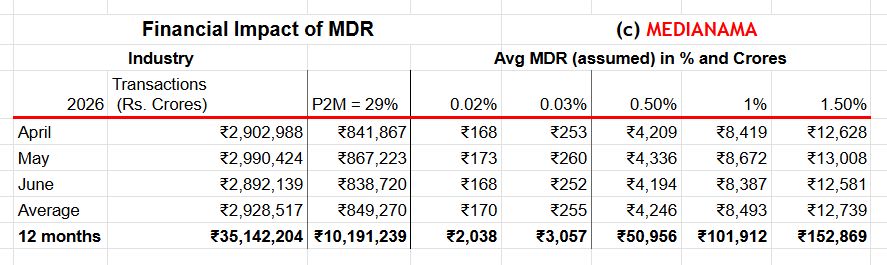
India's government plans to amend the Payment and Settlement Systems Act to restore UPI merchant discount rates, ending the zero-MDR regime in place since January 2020.
Key Takeaways
May 3, 2026 · 2 min read · By Rishabh Bhardwaj
·
AI-assisted, human-reviewed · Our editorial standards
India's markets regulator SEBI has cut the minimum investment threshold for Zero Coupon Zero Principal (ZCZP) instruments under Social Impact Funds from Rs 2 lakh to just Rs 1,000. The move sharply lowers the entry barrier for individual retail investors into a category of financial instruments designed to fund social and development causes.
Zero Coupon Zero Principal instruments are a unique class of securities where investors receive no interest payments and no return of principal. Instead, money goes toward social objectives, think nonprofits, NGOs, or development projects, and the "return" is social impact rather than financial gain. They sit under SEBI's Social Impact Fund framework, which was created to channel market capital toward social causes in a regulated way.
Until now, the minimum application size for subscribing to these instruments under SEBI's ICDR (Issue of Capital and Disclosure Requirements) Regulations, 2018 was Rs 2 lakh, a figure that effectively kept most retail investors out. The new Rs 1,000 floor brings the ICDR threshold in line with the minimum investment value already permitted for individual investors in Social Impact Funds more broadly.
The practical effect is a significant widening of the investor base. At Rs 2 lakh, participation was limited to those with meaningful disposable capital. At Rs 1,000, the instrument becomes accessible to a much larger share of the population, including younger investors and those with modest savings who want to direct money toward social goals.
SEBI's move also removes a regulatory inconsistency. The ICDR minimum and the Social Impact Fund individual investor minimum were misaligned, the regulator has now harmonised the two, tidying up a gap that could have caused confusion about who was actually eligible to invest and under which rule.
For the Social Impact Fund ecosystem, broader retail access could meaningfully increase the pool of available capital for nonprofits and social enterprises that rely on these instruments. Greater participation also improves liquidity prospects for a market that has so far remained niche and relatively illiquid.
The key question going forward is whether awareness and distribution keep pace with the lower entry point. Cutting the minimum is a necessary condition for retail participation, but issuers and intermediaries will need to actively reach smaller investors for the change to translate into real capital flows toward social causes.
India's government plans to amend the Payment and Settlement Systems Act to restore UPI merchant discount rates, ending the zero-MDR regime in place since January 2020.
India's government has introduced the Taxation and Other Laws (Amendment) Bill, 2026, proposing changes to payments regulation, income tax, and the Finance Act to attract FDI and support Make in India. The Bill's final shape will depend on parliamentary debate and committee review.
The government's Taxation and Other Laws (Amendment) Bill, 2026, proposes to replace the blanket UPI MDR ban with a system allowing the Centre to notify which payment modes stay fee-free.
Prime Minister Narendra Modi inaugurated the Rs 5,000 crore Bhogapuram greenfield airport in Andhra Pradesh, built under a public-private partnership model. He also laid foundation stones for infrastructure projects worth nearly Rs 18,000 crore in the state, signalling a broad investment push for the region.