India's markets regulator SEBI will allow companies to revise the size of their IPO fresh issues by up to 50% without submitting a new draft offer document, according to sources. The current threshold requiring a full refile is triggered by any change exceeding 20%, making the new limit a significant relaxation of the existing compliance burden. The change is designed to give issuers more flexibility to respond to shifting market conditions without incurring the cost and delay of a full re-filing process. For companies navigating volatile windows, the ability to upsize or downsize a fresh issue within a wider band means fewer abandoned or delayed listings when market sentiment shifts between filing and launch. Investment bankers and pre-IPO companies stand to benefit most directly, as the rule reduces the operational friction of adjusting capital-raise targets in response to investor demand signals. The practical watch point is whether SEBI formalizes this through a circular and whether the 50% band applies symmetrically to both increases and reductions in issue size.
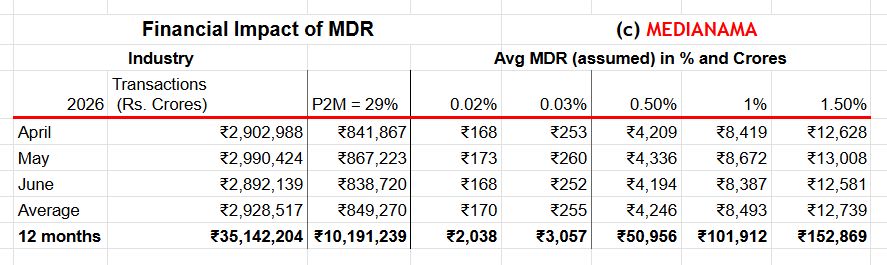
India's government plans to amend the Payment and Settlement Systems Act to restore UPI merchant discount rates, ending the zero-MDR regime in place since January 2020.
India's government has introduced the Taxation and Other Laws (Amendment) Bill, 2026, proposing changes to payments regulation, income tax, and the Finance Act to attract FDI and support Make in India. The Bill's final shape will depend on parliamentary debate and committee review.
The government's Taxation and Other Laws (Amendment) Bill, 2026, proposes to replace the blanket UPI MDR ban with a system allowing the Centre to notify which payment modes stay fee-free.
Prime Minister Narendra Modi inaugurated the Rs 5,000 crore Bhogapuram greenfield airport in Andhra Pradesh, built under a public-private partnership model. He also laid foundation stones for infrastructure projects worth nearly Rs 18,000 crore in the state, signalling a broad investment push for the region.