India to Restore UPI Merchant Fees, PhonePe Gains Most
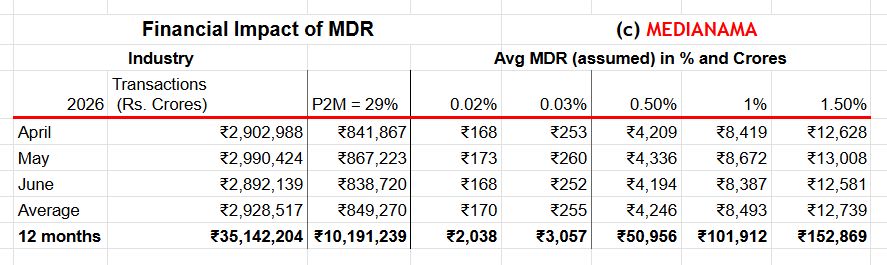
India's government plans to amend the Payment and Settlement Systems Act to restore UPI merchant discount rates, ending the zero-MDR regime in place since January 2020.
Key Takeaways
May 1, 2026 · 2 min read · By Rishabh Bhardwaj
·
AI-assisted, human-reviewed · Our editorial standards

The Supreme Court has ruled that a consortium of Indian banks led by the State Bank of India (SBI) qualifies as financial creditors in the insolvency proceedings against Reliance Infratel. The judgment overturns earlier orders from both the National Company Law Appellate Tribunal (NCLAT) and the National Company Law Tribunal (NCLT), which had removed the banks from that category.
In Indian insolvency law under the Insolvency and Bankruptcy Code (IBC), financial creditors hold a privileged position. They sit on the Committee of Creditors (CoC), which is the decision-making body that approves or rejects resolution plans and controls the fate of a company going through insolvency. Being classified as an operational creditor instead gives a lender far weaker rights, they cannot vote on resolution plans and often recover far less.
By stripping the SBI-led consortium of financial creditor status, the NCLT and NCLAT had effectively removed these banks from the CoC, cutting off their ability to influence how Reliance Infratel's debt is resolved. The Supreme Court's ruling reverses that exclusion and restores the consortium's seat at the table.
With the banks reinstated as financial creditors, the composition and voting dynamics of the Committee of Creditors in the Reliance Infratel case will shift. Any resolution plan already under consideration may need to be re-examined to account for the consortium's vote. SBI and its partner banks will now have a direct say in whether a prospective buyer's plan is approved, rejected, or renegotiated.
Reliance Infratel, part of the Anil Ambani-led Reliance Group, has been under insolvency proceedings for several years. The company holds significant telecom infrastructure assets, making the recovery value a matter of consequence for the lenders involved.
The ruling also carries broader significance for how Indian courts interpret lender classifications in large consortium lending arrangements. Banks that lend together under a shared facility often face disputes about which creditor category applies, and the Supreme Court's position here could shape how similar classification disputes are resolved in other insolvency cases.
Watch for the CoC to reconvene with the reinstated consortium and assess the impact on any pending resolution timeline or plan approval process.
India's government plans to amend the Payment and Settlement Systems Act to restore UPI merchant discount rates, ending the zero-MDR regime in place since January 2020.
India's government has introduced the Taxation and Other Laws (Amendment) Bill, 2026, proposing changes to payments regulation, income tax, and the Finance Act to attract FDI and support Make in India. The Bill's final shape will depend on parliamentary debate and committee review.
The government's Taxation and Other Laws (Amendment) Bill, 2026, proposes to replace the blanket UPI MDR ban with a system allowing the Centre to notify which payment modes stay fee-free.
Prime Minister Narendra Modi inaugurated the Rs 5,000 crore Bhogapuram greenfield airport in Andhra Pradesh, built under a public-private partnership model. He also laid foundation stones for infrastructure projects worth nearly Rs 18,000 crore in the state, signalling a broad investment push for the region.