
Qatar Signals Progress in US-Iran War Talks
Qatar's foreign ministry said mediators including Qatar, Pakistan, and Oman have reached "very progressive stages" in efforts to end the US-Iran war, pushing Brent crude down more than four percent.
Key Takeaways
May 9, 2026 · 3 min read · By Rishabh Bhardwaj
·
AI-assisted, human-reviewed · Our editorial standards
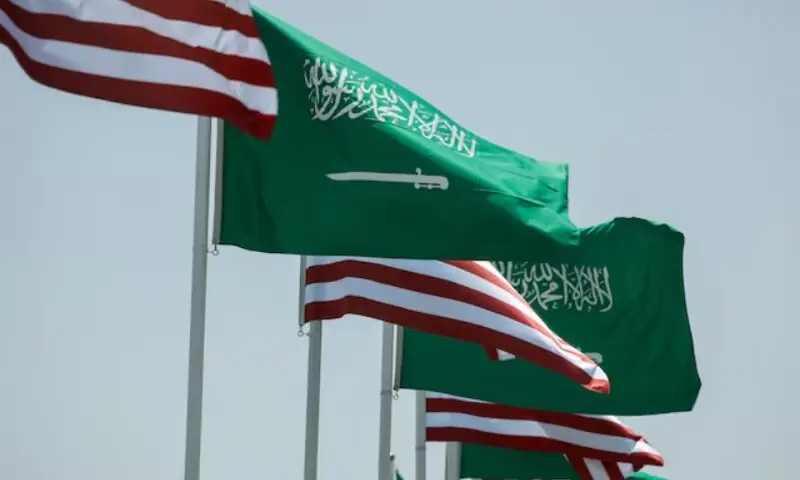
A US military operation to escort commercial ships through the Strait of Hormuz was paused shortly after launch, with an NBC News report citing two US officials who said Saudi Arabia withdrew access to its bases and airspace in response to the surprise announcement.
President Donald Trump unveiled the operation, called Project Freedom, on social media on Sunday. It began on Monday, with additional US military assets deploying to the region and two US-flagged vessels already transiting the strait. But Gulf allies, including Saudi Arabia, were reportedly not briefed in advance.
According to NBC's sources, Saudi Arabia informed the US that it would not allow American aircraft to fly from Prince Sultan Airbase, southeast of Riyadh, or through Saudi airspace to support the mission. A call between Trump and Saudi Crown Prince Mohammed bin Salman did not resolve the dispute. The White House then paused the operation to restore that access, the officials said.
Qatar was also caught off guard. Trump reportedly spoke with Qatari leadership only after the operation had already begun. A Middle Eastern diplomat confirmed that "the US made an announcement and then coordinated with us," but said his side was "not upset or angry."
Riyadh directly denied the NBC account. A source close to the Saudi government said the report "isn't true" and confirmed that the US still has regular access to Saudi bases and airspace. The source said Trump and the Crown Prince "have been in touch regularly" and that Saudi officials were also in contact with Vice President JD Vance, Secretary of State Marco Rubio, and US Central Command. A White House official separately insisted "regional allies were notified in advance."
The Saudi source also said Riyadh is "very supportive" of Pakistan's efforts to mediate between Iran and the United States, a rare public signal of where Saudi diplomacy sits on the broader Iran question right now.
The Strait of Hormuz is one of the world's most critical oil shipping lanes, handling roughly a fifth of global crude supply. Any disruption, or credible threat of disruption, moves energy markets and raises shipping costs globally. Project Freedom was designed to reassert US naval presence there amid ongoing tensions with Iran, but the coordination failure, if confirmed, exposes a gap between Washington's military ambitions in the region and its diplomatic groundwork with key partners.
The immediate question is whether the pause is short-term and logistical, or signals a deeper disagreement about how aggressively the US should posture against Iran. Saudi Arabia, which shares the Gulf with Iran and depends on regional stability for its own oil exports, has strong incentives to avoid escalation, even as it coordinates with Washington on broader Iran policy.
Qatar's foreign ministry said mediators including Qatar, Pakistan, and Oman have reached "very progressive stages" in efforts to end the US-Iran war, pushing Brent crude down more than four percent.
Qatar confirmed it is mediating between the US and Iran but said no direct talks are currently planned. The clarification follows conflicting statements from President Trump, who claimed talks are under way, and Tehran, which denied any dialogue is happening.
Saudi Aramco reported sharply higher second-quarter 2026 profits as the Iran war restricts global oil supply and pushes crude prices up. Other oil supermajors also posted outsized earnings, raising concerns about sustained fuel cost pressure for importing economies.
President Trump called current Iran negotiations the "last chance" to end five months of conflict, pushing oil prices higher. Tehran denied formal talks are taking place, raising the risk of a diplomatic breakdown with direct consequences for global energy markets.